
12,000 tourists evacuated from Le Porge as wildfire rages in southwest France
A fire starting midday Wednesday triggered a Thursday evacuation, with heatwave conditions since May worsening wildfires nationwide.
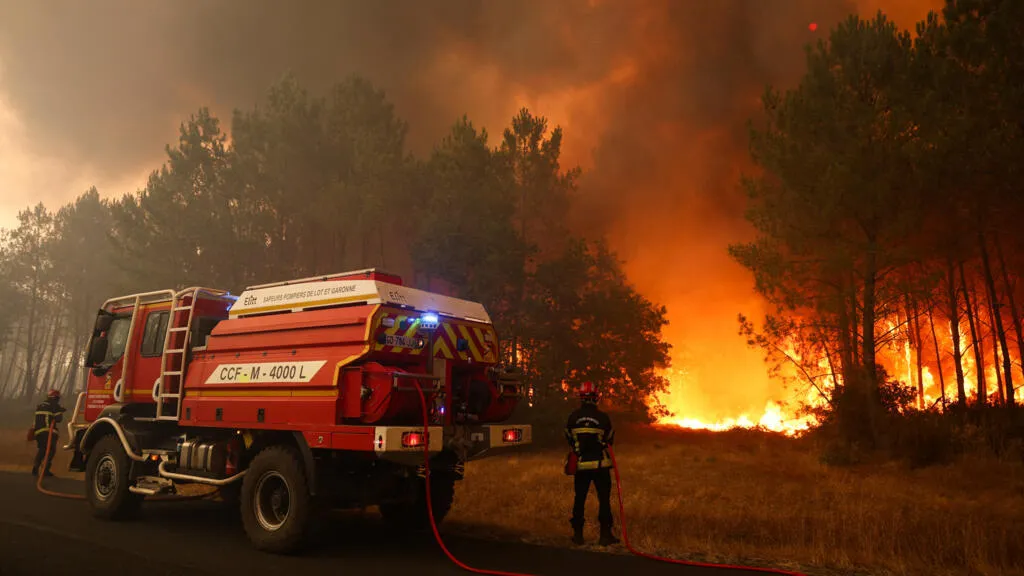
In Le Porge, southwest France, nearly 12,000 people, mostly tourists, were evacuated on Thursday as a wildfire ravaged a forest after starting midday on Wednesday. The event underscores how heatwave-driven wildfire risk can force rapid, high-cost disruptions for tourism, local operations, and emergency planning.
Just under 12,000 people, most of them tourists, were evacuated on Thursday in southwest France after a wildfire ravaged a forest in Le Porge. The timeline is brutal in its simplicity: the fire started midday on Wednesday, and by Thursday authorities had to move nearly 12,000 people out of harm's way.
If you run a business where “customers are on-site” is the whole model, this is the nightmare scenario: your revenue can disappear faster than your staff can get a headcount. This isn’t a theoretical risk. France has already experienced three heatwaves since May, and those conditions have been fuelling wildfires. When heat and dry conditions line up, wildfires stop being local background noise and start becoming an operations problem with immediate knock-on effects.
Hundreds of firefighters have been deployed to the region, signaling a large-scale response rather than a small brush-fire managed in hours. The number matters for decision-makers because it hints at how resource-intensive wildfire suppression is once a blaze escapes early containment. For tourism operators, transportation providers, and hospitality groups, that resource intensity translates into longer uncertainty windows: you do not just plan for evacuation. You plan for road closures, disrupted itineraries, and potential staff displacement while the situation evolves.
There is also a second-order incentive structure at play that executives should recognize. In peak seasons, tourism businesses often optimize for occupancy and throughput, not for contingency capacity. A wildfire changes that calculus instantly. Even if the physical damage is limited to a forest area outside a specific hotel, the evacuation of “most of them tourists” makes it clear the affected population is exactly who those businesses rely on. That means the operational and financial stress is not abstract. It is a direct hit to demand, cancellations, and in many cases insurance and documentation timelines.
For boards and risk leaders, France's pattern since May is the key context. The source notes that France has experienced three heatwaves since May, fuelling wildfires. That matters because it suggests the environment is not a one-off event. Heatwaves can raise baseline risk across regions, making wildfire outbreaks more frequent, more intense, or harder to contain quickly. When the baseline shifts, the cost of being unprepared also shifts, because your “rare” event becomes a “repeatable” event.
Emergency response planning and government capacity are not just humanitarian issues. They are economic infrastructure. The deployment of hundreds of firefighters indicates the state is mobilizing heavily, and that can affect availability elsewhere, even if those areas are not directly hit. For executives, this is a reminder that resilience is interconnected: tourism demand is local, but emergency capacity can be regional and limited.
There is a strategic takeaway for companies that operate across borders as well. Wildfire risk tied to heatwaves does not respect national branding. If you market to or host travelers from France or neighboring countries, or if your supply chain touches affected regions, the disruption can arrive as customer evacuation one day and logistics delays the next. Even without specific details beyond Le Porge, the pattern described in the source is enough to treat wildfires as a recurring operational hazard in a warming climate.
So the stake here is not just the immediate evacuation of “just under 12,000 people.” The stake is the systemic lesson that businesses and boards must plan for: when heatwaves since May fuel wildfires, the line between a weather event and a business continuity crisis can vanish in a day. For executives in tourism, travel, real estate near forests, and any company with on-site human traffic, the question shifts from “will it happen” to “how fast will we be forced to respond, and how well can we keep customers safe while protecting our operations.”
This story's Key Insights and Take-aways are locked.
Create a free account to unlock Executive Actions for one credit.
Register to UnlockAlways free for Executives Club members. Join the Club
More in Politics

LA County: DOJ's 20,000 'noncitizen' voter list is 'unreliable,' includes U.S.-born
Preliminary review by Los Angeles County election officials finds errors in the federal list, raising the stakes for voter roll integrity ahead of November.

Trump's $1.5B Pentagon chip investment lands in North Carolina
A $1.5 billion defense infusion for North Carolina chipmaking signals a new era of Pentagon-backed reshoring - here's what it means for the industry.

Nigeria confirms first Ebola case in Abuja, a woman just off a Uganda flight
Health Minister Muhammad Ali Pate says the patient flew in from Uganda, putting Africa's latest outbreak on Nigeria's doorstep.