
1971: Boys In The Sand made gay porn mainstream, then VHS and AIDS took it down
A $8,000 indie hit sparked critical acclaim and box-office buzz before the genre lost its theater credibility.
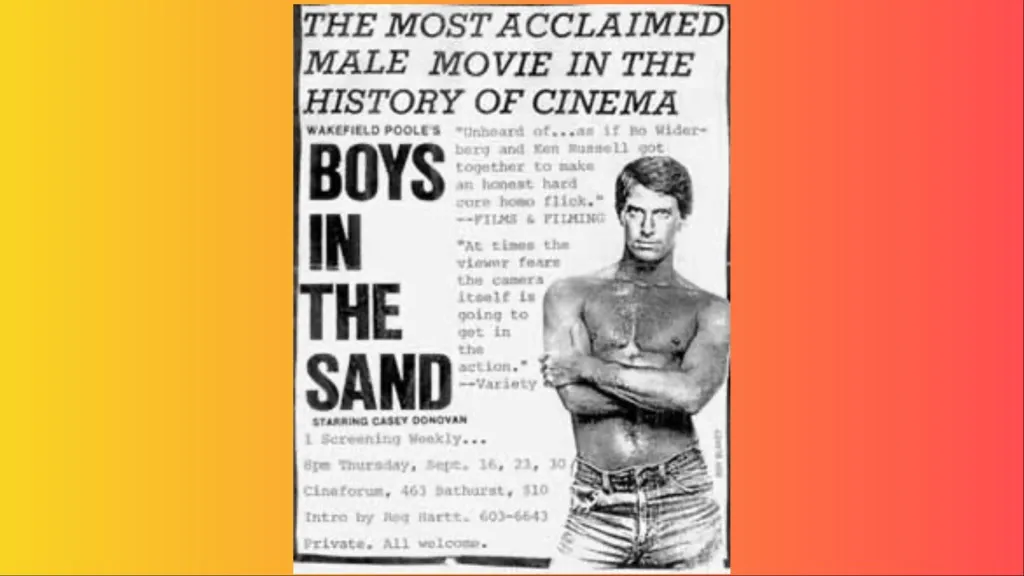
Wakefield Poole’s 1971 film Boys In The Sand, starring Casey Donovan, turned gay porn into an unexpected critical and commercial success on an $8,000 budget. For decision-makers, the lesson is how quickly mainstream momentum can collapse under distribution shifts and health crises.
In 1971, Boys In The Sand did something the porn industry almost never gets to do. It earned mainstream attention, with New York City opening-night lines “down the block,” full-page ads in The New York Times and Variety, and enough momentum that the film “nearly made back its budget on the first day.” Wakefield Poole directed, and the film’s simple premise was three vignettes of star Casey Donovan hooking up with other men, shot on an $8,000 budget. By the end of the week, it had raked in $25,000 and landed on Variety’s list of top-grossing films.
That headline moment was real, and it came with a sort of “wait, what?” cultural framing from mainstream media. Variety announced, “There are no more closets!” and The Advocate gushed, “Everyone will fall in love with this philandering fellator.” The A.V. Club’s point is not that porn suddenly became polite. It’s that, for a brief window, the genre slipped into mainstream conversation with unusually little controversy. That is an executive briefing-worthy detail: when a highly stigmatized product breaks into broader distribution channels, the early signals can look like legitimacy rather than backlash.
So how does something go from underground to widely visible that fast? In this case, Poole didn’t just make a film. He bought visibility in the spaces that confer legitimacy: opening night in New York City, and full-page ads in The New York Times and Variety. The “first showing had lines down the block,” which suggests demand was not the limiting factor. The limiting factors usually come later: distribution scalability, audience reach beyond the initial niche, and whether the category gets a second act. Boys got the first act loud enough to be tracked as box-office performance.
The story’s biggest twist is that it wasn’t built primarily as shock content. The film was controversial mostly for being less controversial than expected. Poole’s motivation matters because it explains the product. He said movies that included gay characters, pornographic or not, tended to be exploitative and reliant on stereotypes. At the dawn of the Gay Rights Movement, there was also “a lot of self-hatred in the gay community,” and media representation often reinforced it. Poole watched Highway Hustler and called it “the worst, ugliest movie I’ve ever seen!” He then set out to make “a film that gay people could look at and say ‘I don't mind being gay-it's beautiful to see those people do what they're doing.’”
In practical terms, that is a positioning strategy disguised as art. By porn standards, Boys together is described as “positively sweet and romantic,” and the film uses fantasy and surreal staging rather than a straightforward stereotype engine. The first two vignettes involve a fantasy man emerging from the water and having sex with a sunbather, first on the beach and then poolside. The third uses a repairman trope, but sex scenes are Donovan’s character fantasizing about the repairman. Only at the end does the repairman come indoors, with a hint that the fantasies might replay as real life. For executives, the relevant point is that the creative structure supported emotional framing. That made the mainstream reception less about tolerance and more about curiosity.
But the “moment in the sun” did not last. VHS, and the shift from theatrical porn to home viewing, changed the economics and credibility of the category. The A.V. Club ties this directly to why the fledgling mainstream acceptance didn’t stick: VHS killed theatrical porn and the fleeting credibility the genre gained. Poole and Donovan would retream for more porn, and Donovan stayed a minor celebrity for years after Boys. However, when they attempted a Boys sequel in 1984, it was “too little, too late.” The category had already lost the distribution platform that allowed it to play like a mainstream product, and that matters for anyone thinking about momentum as an asset.
Then came the health crisis that reshaped everything for the people Poole wanted to celebrate. By the 1980s, AIDS was decimating the community. Donovan died of the disease in 1987. Poole quit filmmaking because “I lost my fanbase to AIDS.” The article also notes Poole’s own claim that he avoided the virus only because he was such a heavy cocaine user he was unable to have sex. Even if you treat that as a personal explanation rather than a systemic fix, the underlying impact stands: the audience pipeline collapsed, not because demand disappeared, but because the community Poole represented was being hit directly.
One more industry detail makes the second-order stakes unavoidable. The A.V. Club argues that Boys may have created a trope of porn movies spoofing titles of other films. Boys is a reference to Mart Crowley’s play The Boys In The Band, about gay male friends. That means mainstream visibility can also create cultural knockoffs. When categories break through, they often spawn imitators that dilute the original product. By the time VHS and AIDS changed the baseline, the category’s ability to protect quality and meaning from commodification was likely limited.
For today’s executives and boards, the throughline is not “porn went mainstream.” It’s what happened to the mainstream window. Boys had distribution leverage, supportive publicity, and an emotional product premise that reduced backlash. Then the business environment shifted (VHS replacing theaters), and then the human environment shifted (AIDS decimating the community). The result was a collapse in both credibility and audience continuity. If you build in a category that depends on cultural openness, remember how fast “no more closets” can turn back into closed doors when distribution models change and when a community is under direct threat.
This story's Key Insights and Take-aways are locked.
Create a free account to unlock Executive Actions for one credit.
Register to UnlockAlways free for Executives Club members. Join the Club
More in Entertainment
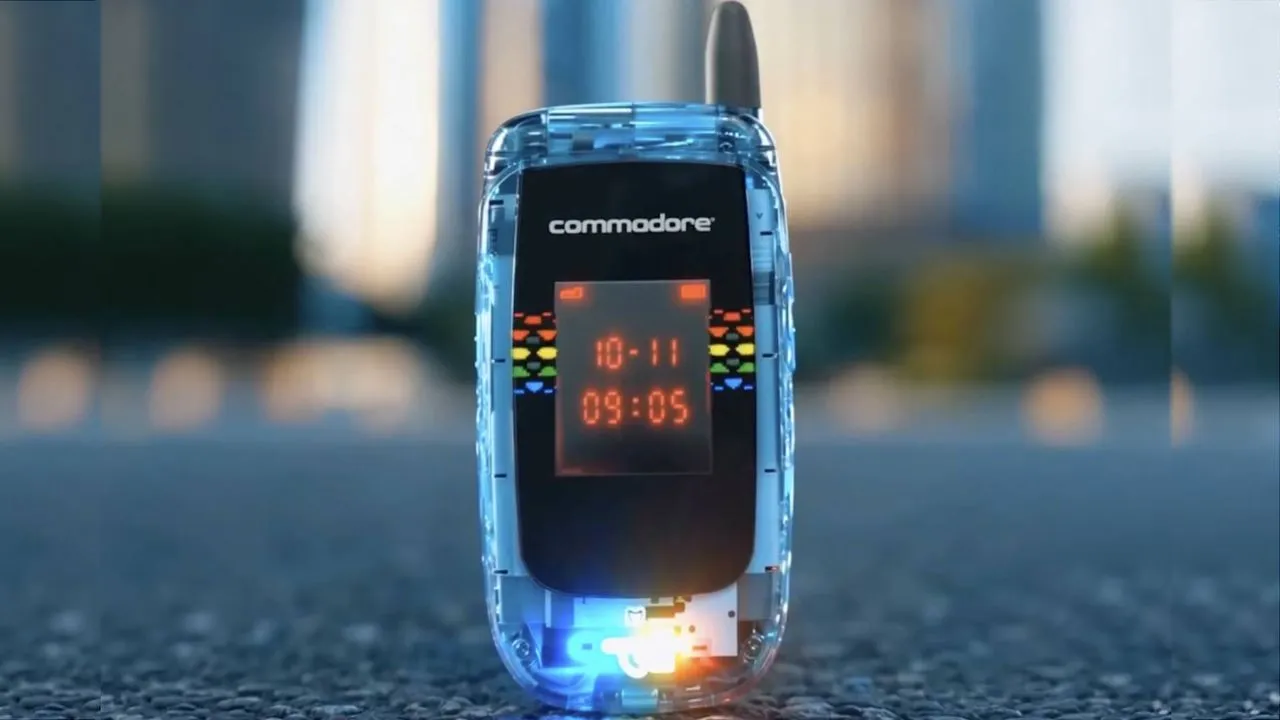
Commodore Callback 8020: a flip phone built for UK under-16s social ban and Android apps
A new Commodore phone targets doomscroll avoidance, while keeping Android compatibility as UK kids get gated from major platforms.

Dave Grohl turned Otoboke Beaver into a stadium opener for Foo Fighters
The Tokyo quartet says meeting Grohl and getting the hype changed everything, starting with a trip over seas.

Hiro Murai says his A24 samurai film Bushido is still in the works
The Atlanta and Widow's Bay filmmaker confirms Bushido, keeping A24’s next prestige bet alive.