
A Futurama swap-machine plot forced a new math proof, not a joke
A cartoon body-swap rule becomes a real reasoning engine for figuring out who can return to their own body.
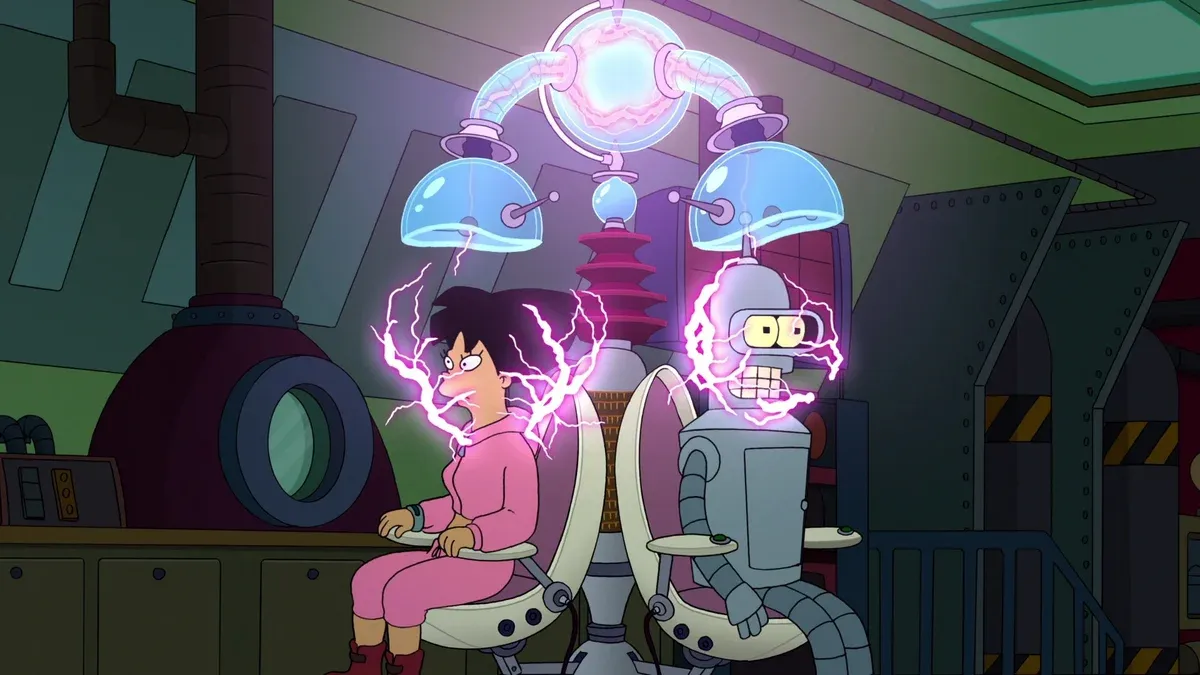
Scientific American explains how a Futurama episode, featuring a machine that swaps bodies, inspired a totally new math proof. For decision-makers, it is a reminder that constraints from unlikely places can sharpen rigorous problem-solving.
A Futurama body-swap machine can move characters to each other's bodies, but it comes with a brutal rule: they cannot switch back using the same person. That single constraint is the seed of a “totally new math proof,” according to Scientific American. The cartoon premise is playful, but the logic is serious. If you can swap bodies only in certain ways, then returning everyone to their original bodies becomes a puzzle about what is possible, and what is forbidden.
The proof is driven by exactly what makes the episode tricky. In the plot, the characters return to their original bodies only when the math is used to map the allowed swaps. The key is that the restriction prevents simple reversals. You cannot just undo each move with the same counterpart. Instead, you need a structured way to trace swaps and show that a full restoration is achievable under the rules. In other words, the episode does not just create a “gotcha.” It sets up a constraint-satisfaction problem where the solution depends on reasoning, not hope.
Why should anyone outside of math-land care? Because “constraints-first” thinking is how a lot of real-world systems survive contact with reality. Markets, operations, and compliance rarely allow clean, symmetrical fixes. When you are rolling out software, running a supply chain, or designing internal controls, you often get to do a change only through approved pathways. Undoing a decision is usually possible only under restrictions, and the restrictions matter. The Futurama rule is cartoonish, but it mirrors a common real dynamic: you can transform a system, but you cannot always reverse it with the same mechanism.
There is also a governance angle here. In corporate settings, boards and executives deal with systems that have “cannot do that” rules. Think about access controls, audit requirements, or regulator-imposed limits on how certain decisions may be reversed or remediated. When the easy reversal is blocked, the organization has two choices: either declare defeat, or build a proof-like plan for how outcomes can still reach the desired state. The episode becomes a mini case study in that exact move. The characters do not just rely on the machine. They rely on mapping the possibilities so they can complete the restoration.
From an incentives standpoint, puzzles like this reveal why formalism works when intuition fails. A human brain tries to pair off swaps and “cancel” moves, but the “no switching back with the same person” constraint kills the naive cancelation strategy. That is where math earns its keep. The proof helps all the characters return to their original bodies by showing a route through the space of valid transformations. That means the proof is not just about one successful sequence. It is about demonstrating that the sequence exists because the rules permit it.
Second-order implications for executives show up in a place you might not expect: how you frame problem-solving under restriction. Many teams treat compliance or system limitations as obstacles to work around. But the Futurama example suggests a different mindset. Treat the limitation as a variable, then reason about it until it becomes part of the solution structure. In regulated environments, this is often the difference between a brittle workaround and a durable process. The proof offers a metaphor for designing “allowed moves” so the organization can still reach the endpoint, even if the path is not reversible in the simple way.
Finally, this story underscores a broader truth about innovation. A math proof can emerge from a cartoon plotline, and that is not as strange as it sounds. Complex reasoning ideas often travel through unexpected channels first, because creativity spotlights a constraint you would otherwise ignore. Scientific American highlights that the path from fiction to formal proof can be direct: the episode supplies the rules, the math supplies the certainty. For founders, operators, and investors, the strategic stake is clear. If you want to build or govern systems that work under real constraints, you should expect to need rigorous thinking. And you should be open to learning from places that look unserious at first glance, because the constraint that makes a plot funny might also be the constraint that makes a solution inevitable.
This story's Key Insights and Take-aways are locked.
Create a free account to unlock Executive Actions for one credit.
Register to UnlockAlways free for Executives Club members. Join the Club
More in Entertainment

12TB Steam 'teraleak' goes beyond Valve: GTA 3, Mafia 2 prototypes exposed
A 12-terabyte dump of Steam data reveals prototypes and builds of third-party classics like GTA 3 and Mafia 2, plus unreleased Valve content, rewriting game history.

LinkedIn's romance problem: 1 in 4 workers say dating on it is fair game
A new survey shows a quarter of U.S. employees treat the professional network as fair game for romance, even as LinkedIn bans it and removes hundreds of thousands of offending posts.

Enhypen's first No. 1 album breaks K-pop's Billboard 200 streak
The K-pop group's 98,000-unit debut tops the chart while Dolly Parton's catalog reentry shows how death reshapes streaming.