
A Hulu documentary says a 26-year-old discovered Charles Manson was her grandfather
Genealogy matched her family line to the cult leader, turning private questions into a public reckoning.
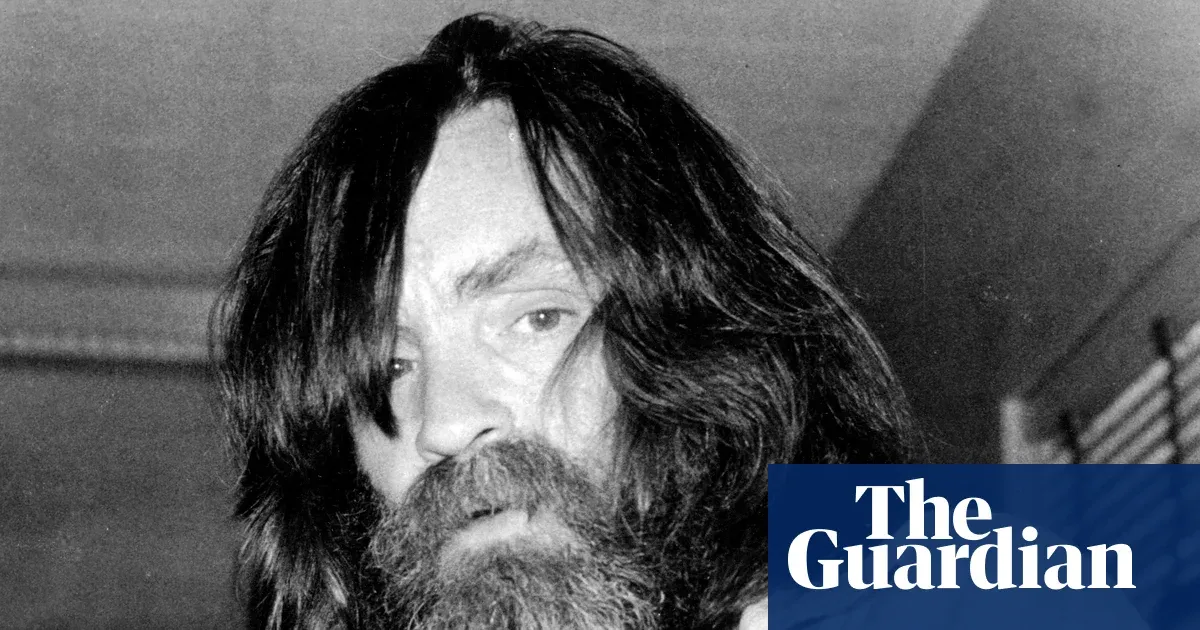
A difficult new Hulu documentary follows a 26-year-old woman’s startling discovery that her grandfather was Charles Manson. The revelation, found via a genealogy website match, forces decision-makers to think about how data tools reshape identity stories with real-world consequences.
A difficult new Hulu documentary is putting a modern tech-driven mystery on the screen: a 26-year-old woman says she discovered that Charles Manson, the notorious cult leader and criminal, was her grandfather. The story is not about Manson’s notoriety, it is about what happens when a private family question meets a public-facing platform, and the answer is someone history taught you to fear.
According to the film, she spent her life hearing from her father that he had never met his father. As a child, she says he would tuck her into bed and tell her how much he wanted to know him. Then, four years ago, she connected the dots through a genealogy website match. That search did not just offer a “maybe” or a distant clue. It delivered a hard line: her father’s father, her grandfather, was Charles Manson.
That is the first-order shock. The second-order complication is what genealogy tools do to the timeline of family secrets. In this documentary, the father’s absence, and the longing behind it, becomes an identity event powered by a database. The moment is also intensely personal, but it is framed through a process executives in media, tech, and data governance understand: you upload or match records, probabilistically infer relationships, and then treat the result like truth once it is “close enough” to be actionable. In other words, modern identity can arrive pre-chewed, delivered by an algorithm that does not know the emotional stakes it is triggering.
The Hulu documentary’s core premise is that the woman did not arrive at the discovery through folklore, community rumor, or a long-forgotten document. She arrived via a match on a genealogy website. The film emphasizes that the revelation came after a search that started with an informational gap: her father had never met his father. When the match finally surfaced, the family story flipped from unanswered to answered, but not in a way that brings closure. It brings a named criminal figure into the family tree, turning a hidden past into a direct relationship with a person whose crimes are historically documented.
For decision-makers who care about risk, incentives, and responsibility, this is where the story gets bigger than one family. Platforms that enable genealogy are built on scale and user curiosity. Users want to find roots. Companies want engagement. But when those systems connect someone to an infamous individual, the platform effect becomes hard to ignore: private identity disclosures can become public narratives. That creates questions boards and counsel should be asking across the consumer data landscape, even if the specific documentary is in entertainment rather than a regulated health or financial setting.
There is also an unavoidable cultural aftershock. Charles Manson is not just a name; he is a symbol of a murderous cult and a public reckoning that has echoed through decades. A discovery like this forces audiences to revisit how people inherit stories, not only genetics. It also raises the uneasy point that algorithms can collapse time. A family could go generations without knowing a fact. Then, in four years, a match turns the unknown into an explicit connection. When identity becomes that deterministic, the emotional experience shifts from curiosity to confrontation.
And in the background is the media mechanics: Hulu is making the narrative “difficult” and “stark,” not because it disputes the genealogy match, but because it understands the emotional violence of the premise. The documentary is built on the tension between a person’s private sense of self and a history that can swallow that self whole. For peers in film, streaming, and data-adjacent storytelling, the strategic stake is clear. If you are telling stories powered by data matching, you are not just entertaining. You are translating an algorithmic output into lived meaning, and that translation can change how viewers, subjects, and families understand their own reality.
Executives looking at similar products, partnerships, or content themes should treat this as a reminder that the boundaries between “personal discovery” and “public impact” are thinner than they look. A genealogy website match may feel like a personal breakthrough, but the downstream implications can touch reputation, mental health, family stability, and the way society re-litigates historical harm. The documentary’s central fact is simple and heavy: the woman says her father never met his father, and then a genealogy match revealed that her grandfather was Charles Manson. The strategic question for leaders is what other “simple and heavy” matches are sitting in databases right now, waiting for the right curiosity to turn them into a story.
This story's Key Insights and Take-aways are locked.
Create a free account to unlock Executive Actions for one credit.
Register to UnlockAlways free for Executives Club members. Join the Club
More in Science
2026 Nikon Small World Winners Reveal the Hidden Machinery of Everyday Life
A mycologist's frozen Edinburgh garden became the backdrop for vivid views inside cells, a reminder of what advanced imaging now makes visible to researchers and the industries built on biology.

Study: 1 in 4 depression cases may be a body-clock problem, not a chemical one
A 10,000-person study finds standard antidepressants often fail these patients, but melatonin and morning sunlight may hit the real root cause.

Start-Up Says A.I. Designed a Virus to Attack One Patient's Superbug
If the claim holds up, personalized phage therapy could become a new frontline weapon against antibiotic resistance - but proof is far from final.