
Acer's Project DualPlay Mini flips from handheld to tiny laptop
Acer's concept 2-in-1 gaming device could redefine portability, but it's still a concept.
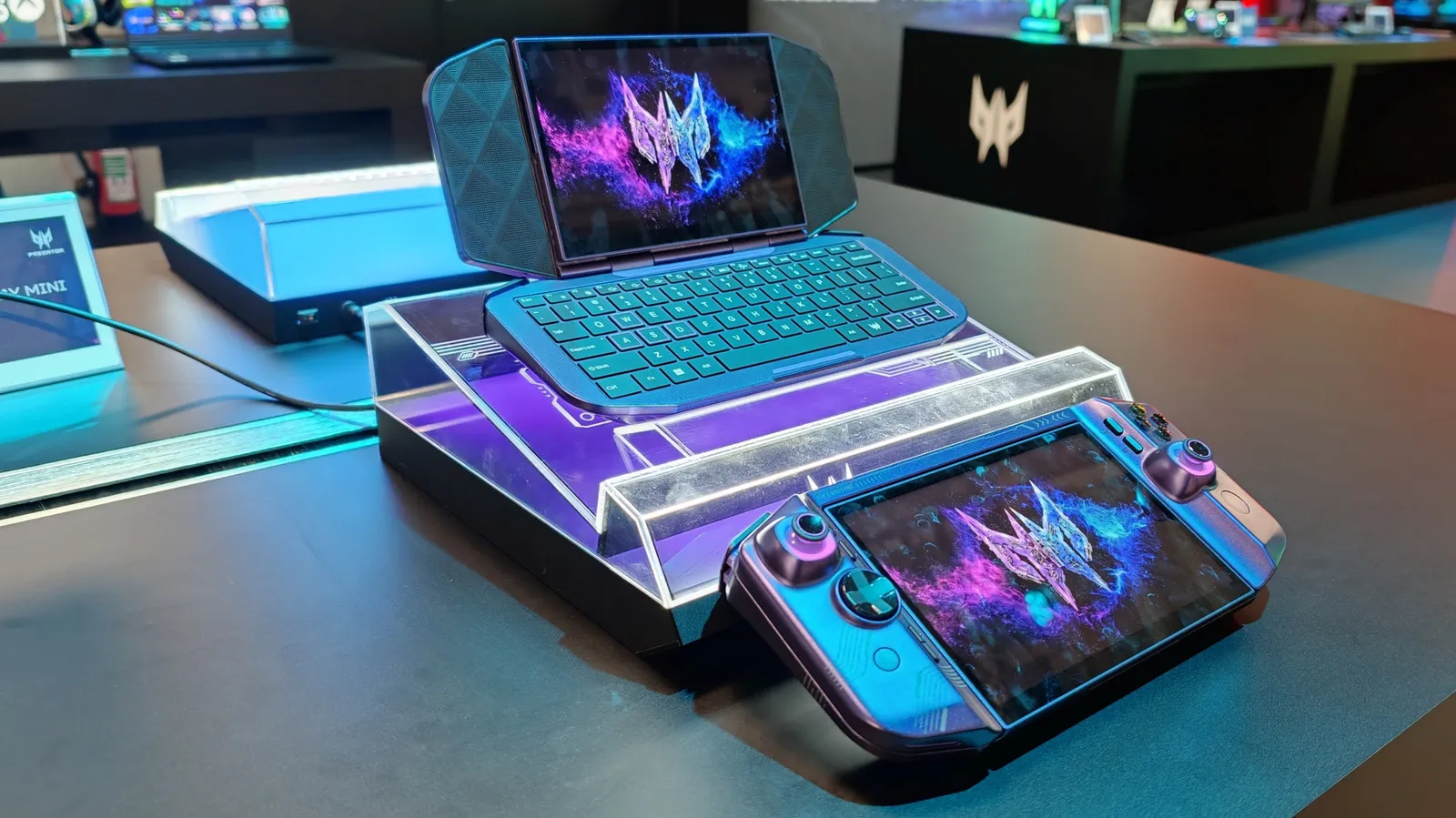
Acer unveiled Project DualPlay Mini, a concept handheld gaming PC that flips into a mini laptop, at a recent event. For decision-makers, this signals a potential shift in portable gaming form factors, though commercial viability remains unproven.
Acer's Project DualPlay Mini is a concept device, sure, but there's something intriguing about the handheld gaming PC and laptop 2-in-1. The device, first shown as a hands-on at an Acer event, flips from a powerful handheld into a powerful tiny laptop, offering a dual-mode experience that could appeal to gamers and professionals alike. While it's not a product you can buy today, the concept hints at where Acer sees the future of portable computing: a single device that adapts to how you work and play, without forcing you to carry two separate machines.
The core appeal of Project DualPlay Mini is its versatility. In handheld mode, it functions like a traditional gaming handheld, with built-in controls and a screen that fits in your palms. Flip it open, and it transforms into a compact laptop, complete with a keyboard and trackpad, ready for productivity tasks or more traditional computing. This isn't just a gimmick; it's a response to a growing demand for devices that bridge the gap between gaming and work, especially among younger users who want one device for everything. For executives in the PC and gaming industries, this concept is a signal that form factor innovation is far from over, and that the next big thing might not be a faster chip but a smarter design.
Acer has a history of experimenting with unconventional designs, from dual-screen laptops to gaming rigs with integrated projectors. Project DualPlay Mini continues that tradition, but it also reflects a broader industry trend: the blurring of lines between categories. Handheld gaming PCs, like the Steam Deck and Asus ROG Ally, have proven there's a market for portable gaming beyond Nintendo's Switch. Acer's concept takes that idea further by adding a laptop mode, potentially making it a more practical daily driver. For consumers, this could mean fewer devices to buy and carry; for manufacturers, it's a chance to differentiate in a crowded market.
However, the concept faces significant hurdles before it can become a real product. Battery life, thermal management, and weight are all critical factors in handheld devices, and adding a keyboard and trackpad increases complexity. Acer hasn't announced specs, pricing, or a release date, so it's unclear if the concept will ever make it to market. Historically, many concept devices remain just that - concepts - used to gauge consumer interest and showcase engineering prowess. For now, Project DualPlay Mini is a glimpse of what's possible, not a promise of what's coming.
For executives, the strategic takeaway is about innovation pipelines. Acer's willingness to experiment with form factors is a reminder that hardware differentiation still matters, even as software and services dominate the tech narrative. In a market where incremental upgrades are common, a bold design can generate buzz and attract attention from a younger, experience-driven audience. But the risk is high: if the concept fails to deliver on performance or usability, it could damage the brand's reputation. The key is to balance innovation with practicality, ensuring that any new form factor solves a real problem rather than creating new ones.
Looking at the broader landscape, Project DualPlay Mini also raises questions about the future of work and play. As remote and hybrid work becomes the norm, devices that seamlessly transition between productivity and entertainment are increasingly valuable. Acer's concept, if realized, could appeal to professionals who want a single device for meetings, emails, and gaming sessions. It could also influence how other manufacturers approach their own designs, potentially sparking a wave of hybrid devices that challenge the traditional laptop and handheld categories.
For now, the device remains a concept, and Acer has not committed to a commercial release. But the fact that they're showing it off suggests they're serious about exploring this direction. For competitors like Asus, Lenovo, and even Apple, this is a signal to watch. If Acer can pull off a successful hybrid, it could reshape consumer expectations and force others to follow suit. For investors and industry watchers, the concept is a reminder that innovation in hardware is alive and well, even if it takes time to reach store shelves.
Ultimately, Project DualPlay Mini is a bold bet on the future of portable computing. It's not a product you can buy today, but it's a vision of what could be. For executives, the lesson is clear: don't underestimate the power of form factor innovation. In a world where technology is increasingly commoditized, design can be a powerful differentiator. Whether Acer's concept becomes a reality or not, it's a conversation starter that could shape the next generation of devices.
This story's Key Insights and Take-aways are locked.
Create a free account to unlock Executive Actions for one credit.
Register to UnlockAlways free for Executives Club members. Join the Club
More in Technology

Google quietly links your phone number to every Android account on your SIM
Adding a SIM now ties your phone number to all Google accounts - and future accounts inherit it. Here's the security and privacy stakes.

Hijacker AI 'Skynet mode' runs 100,000 attack steps against exposed models
Symantec caught a criminal AI agent that borrows other models, steals data, and mines crypto; the only relief is no confirmed victims yet.

Nvidia's AI-financier shift faces its first big test as neoclouds stumble
A rout in neocloud stocks is forcing investors to weigh Nvidia's hidden exposure as both supplier and lender to the AI buildout.