

AI agents could stop EV charger energy theft and prevent damage to grid infrastructure
Researchers in Spain propose an agent-based system to detect misuse early, protecting chargers and the energy backbone behind them.
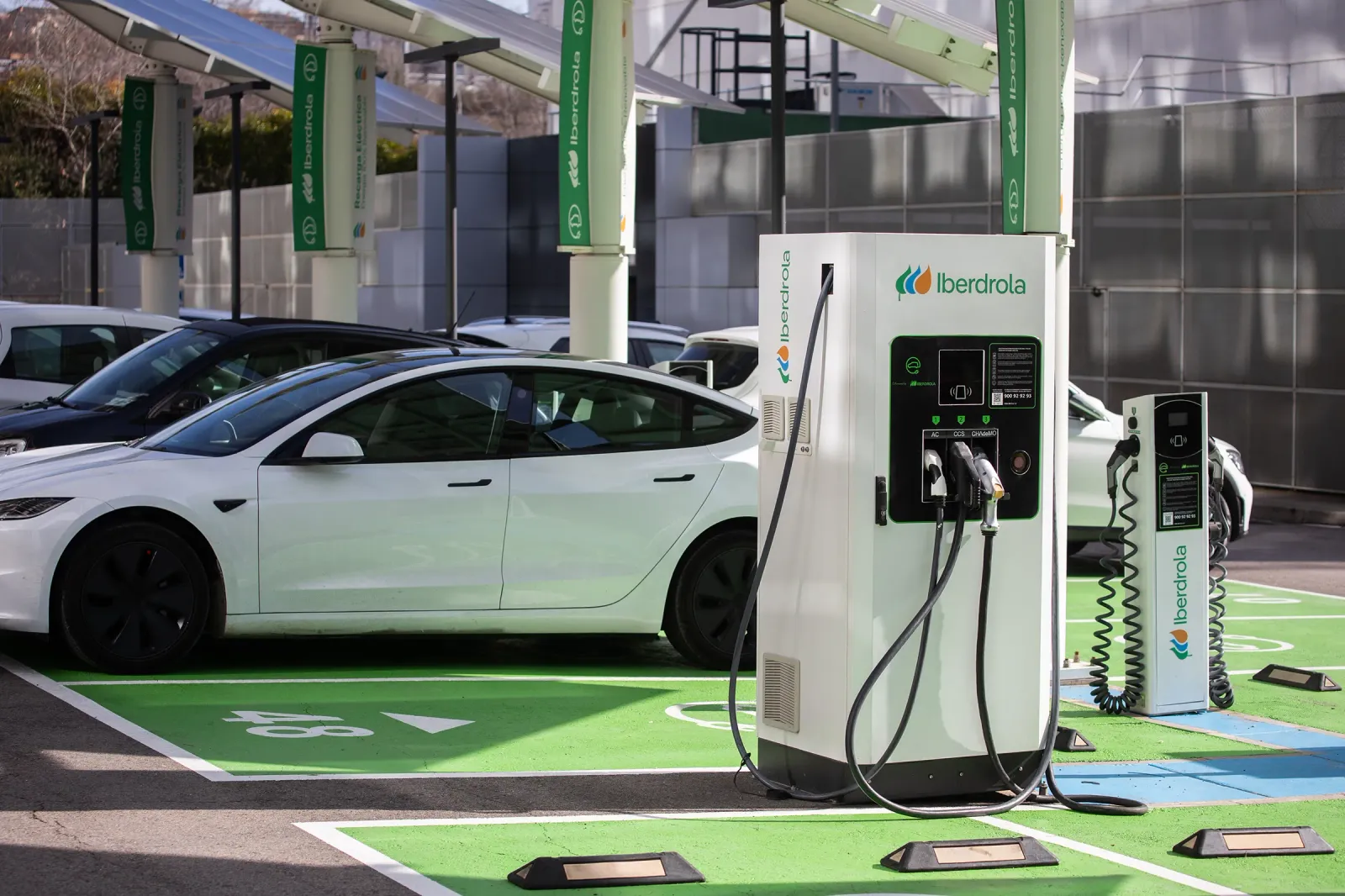
Researchers in Spain proposed an AI agent system aimed at preventing energy theft and damage to EV chargers and the critical energy infrastructure that powers them. For decision-makers, the pitch matters because charger uptime and grid safety are now board-level risks, not just operational annoyances.
EV charging is supposed to be as boring as possible: plug in, charge, and get out of the way. But in real deployments, that electricity has to travel through expensive hardware and, increasingly, through critical energy infrastructure. The problem is that theft and tampering are not rare “edge cases” when you scale across neighborhoods, parking lots, and highways. WIRED reports on a proposed workaround that goes beyond traditional monitoring, using AI agents to help prevent energy theft and damage to EV chargers, and even the grid infrastructure that powers them.
The core idea, as described by WIRED, is an AI agent system proposed by researchers in Spain. The researchers aim to stop energy theft and prevent damage not only to the chargers themselves, but also to the critical energy infrastructure that supplies them. That combination matters because it reframes the target. Instead of treating EV chargers as standalone endpoints, the proposal treats them as nodes in a larger system where misuse at one point can cascade into reliability, safety, and cost problems elsewhere.
To understand why this is strategically interesting, zoom out one layer. EV charging companies live and die by uptime. Every charger that goes down costs money directly through lost sessions and indirectly through reputational damage that spreads faster than most operators would like. Meanwhile, the energy side is tightly coupled to the charging experience. Even when the charger hardware is solid, the power delivery chain can become a weak link if it is exposed to irregular demand patterns, electrical faults, or outright malicious interference. In that world, energy theft is more than lost revenue. It is a stressor that can complicate load management, degrade equipment, and create conditions where damage is more likely.
Historically, many infrastructure security efforts focus on perimeter controls and after-the-fact detection. You lock the enclosure. You log events. You investigate anomalies once enough data accumulates. But EV charging is different in one key respect: the “security” problem is often electrically and operationally entangled with the thing people use every day. If an operator only catches theft after the damage is done, they are stuck paying for both the lost power and the repairs, and they may still face secondary impacts like outages or service interruptions. AI agent systems, by contrast, suggest a more dynamic approach, where decisions can be made through automated monitoring and response logic.
That is where the “agent” framing becomes important. An AI agent system is not just a dashboard that shows what happened. The concept implies autonomous or semi-autonomous behavior, where the system can take actions based on observations. In the EV charging context described by WIRED, that means the agents are designed to help prevent theft and damage, and not just report on it. If successful, this could reduce the time between detection and intervention, which is the gap that typically decides whether problems remain contained or become expensive failures.
There is also a regulatory and compliance angle hiding in plain sight. EV charging infrastructure sits at the intersection of energy regulation, grid reliability expectations, and consumer-facing reliability standards. Even when the legal regime varies by country and local utility, the operational reality is similar: operators are expected to maintain safe, reliable service and protect critical infrastructure from disruptions. A system that explicitly targets energy theft and damage to both chargers and the critical infrastructure behind them aligns with that framing. It signals that the risk is being managed at the system level, not just at the equipment level.
For executives and boards, the second-order implications are where this becomes a governance story. First, if theft and tampering are reduced, revenue protection improves, and so does forecasting. Second, fewer incidents often means fewer outages and fewer reactive maintenance cycles, which can stabilize cash flow. Third, because EV charging networks increasingly involve partnerships, utilities, and site hosts, better security can lower friction in those relationships. A system that protects critical energy infrastructure also gives operators a stronger position in discussions with stakeholders who worry about reliability and safety.
The strategic stakes are simple: EV charging is scaling fast, and every incident competes with growth. A proposed AI agent system that can prevent energy theft and damage to chargers and the energy infrastructure that powers them addresses a risk that, if left unmanaged, can erode margins and undermine network trust. If this approach translates from research concept to deployed capability, it could help shift EV charging from “install and monitor” to “install and continuously defend,” with boards treating resilience as a core operational KPI rather than a background worry.
This story's Key Insights and Take-aways are locked.
Create a free account to unlock Executive Actions for one credit.
Register to UnlockAlways free for Executives Club members. Join the Club
More in Technology

OpenAI says 10,000 agents cracked a 90-year math problem in 88 hours
The company's claim is audacious, but one mathematician is pushing back. Here's what it means for AI-driven discovery.

Meta still serves child sexual abuse ads on Instagram in India - BBC report
A new report following the BBC Eye investigation says the ads are still there - what it signals for every platform with a self-serve ad engine.
White House yanks 'Build the Wall' game after Tetris Company copyright warning
The administration's arcade game vanished in hours - and the takedown playbook every brand can learn from.