

AI Val Kilmer resurrected for a western - Hollywood is split on what comes next
A digital Val Kilmer stars in 'As Deep as the Grave' while fake actress Tilly Norwood lands a feature - here's what experts say about AI actors going mainstream.
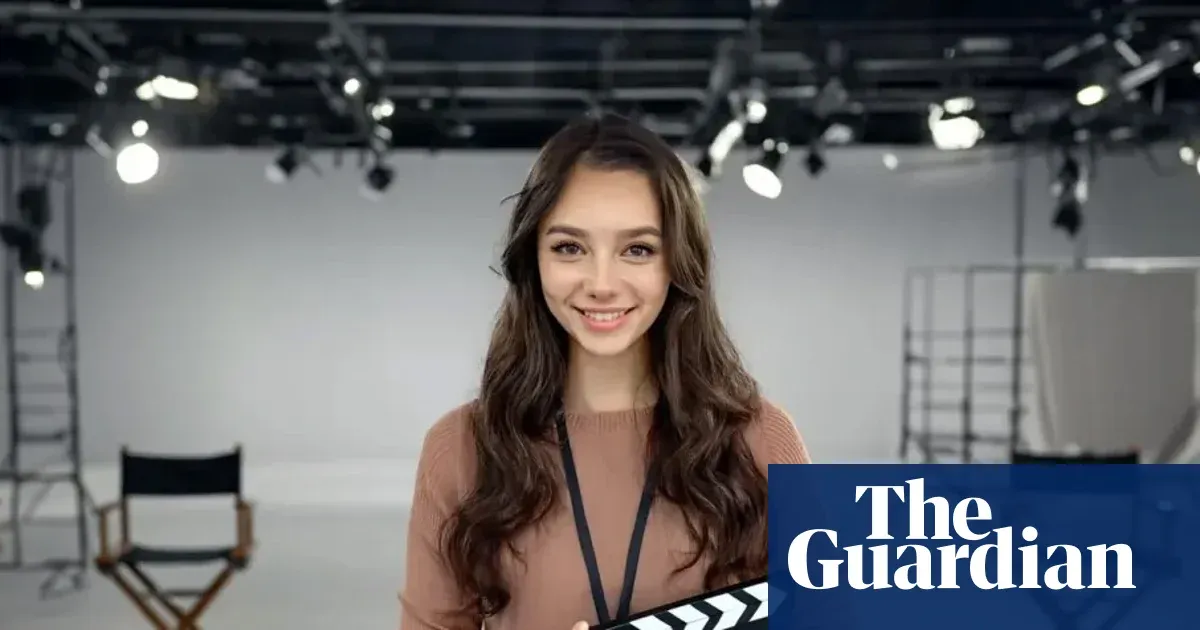
Director Coerte Voorhees has released a new western starring a computer-generated replica of Val Kilmer, approved by the late actor's estate, while synthetic starlet Tilly Norwood prepares for her feature debut. For studios and talent agencies, the twin debuts signal that AI-driven performances are moving from novelty to possible standard, with the only open question being timing.
Yes, there is a digital Val Kilmer on screen again, and he is not quite dead and not quite alive. That is the baiting line from the trailer for the new western 'As Deep as the Grave': 'Don't fear the dead - and don't fear me.' Director Coerte Voorhees is behind the project, which uses an AI-created version of the late actor that his estate signed off on, citing Kilmer's enthusiasm for new technology that expands storytelling. But the early footage, released earlier this year, offers a harsh verdict on the tech: the on-screen Kilmer looks like a thirtysomething robot sent back to the 1920s American wilderness, strangely rigid and missing not only his voice but his signature air of spacey shrewdness. The Guardian dryly notes that Kilmer himself 'surely would have been dismayed by this freaky doppelganger.'
The Kilmer experiment is not happening in isolation. At the same time, a faux starlet named Tilly Norwood is set for her feature debut, a synthetic actress built entirely by AI. That pairing is exactly why the experts quoted in the original reporting are split on whether mainstream adoption of AI performers is a long way down the line or just around the corner. For anyone running a studio, casting agency, or talent law firm, the question is no longer hypothetical: the supply chain of film and television performers is facing a potential disruption that could rewrite contracts, residuals, and the very definition of an actor's likeness.
The controversy around 'As Deep as the Grave' is easy to dismiss as a gimmick, but it sits on a continuum of digital manipulation that Hollywood has already accepted. De-aging, posthumous cameos, and fully digital stunt doubles are established practices in big-budget production. What is new is the cost curve falling fast enough that an independent western can feature a dead actor as its lead. The Guardian's article notes the 'heap of controversy' around this particular use, and for good reason: this is no longer a one-off VFX effect applied for a few seconds of screen time. It is a leading performance generated by software, sanctioned by an estate, and marketed as a feature film.
For decision-makers, the immediate problem is ownership. When an actor dies, who controls their digital likeness in perpetuity? The Kilmer estate signed off here, but what happens when an estate declines, or when the actor never consented at all? The source does not answer that question directly, but it flags the legal vacuum. The Guardian points out that the Kilmer doppelganger's voice was not convincingly recreated, which raises a separate issue: an AI performance is only as good as the data it was trained on. If rising studios cannot afford the best voice and motion libraries, early AI features will keep falling short, delaying mainstream acceptance. But if the data quality improves, as it has with other generative technologies, the uncanny valley could close quickly.
The strategic stakes go beyond aesthetics. AI performers do not age, do not unionize, do not require trailers, and can be available on any schedule. For franchise producers who have spent years managing the schedules and health of aging stars, the appeal is obvious. Yet the Guardian's report also hints at a countervailing pressure: audiences might reject the artificiality. The trailer for 'As Deep as the Grave' drew attention not because it looked seamless but because it looked robotic, a miscalculation that proves the bar for acceptance is high. Executives who bet too early on full AI casts risk a reputational hit if the quality fails, much like early 3D movies that gave audiences headaches.
For peers in media and entertainment, the takeaway is to watch the next six to twelve months closely. If a studio successfully markets a fully AI actor as a premium, emotionally resonant lead, the business model shifts from casting to training data. If, on the other hand, 'As Deep as the Grave' sinks and Tilly Norwood's debut fizzles, the timeline for disruption stretches out. The smart play is to build licensing language now that covers digital twins, posthumous performances, and synthetic extras, before a test case sets the precedent. In Hollywood, as in any sector, the future does not arrive with a warning label. It arrives as a low-budget western with a line that dares the audience: 'Don't fear the dead.'
This story's Key Insights and Take-aways are locked.
Create a free account to unlock Executive Actions for one credit.
Register to UnlockAlways free for Executives Club members. Join the Club
More in Technology
Google quietly links your phone number to every Android account on your SIM
Adding a SIM now ties your phone number to all Google accounts - and future accounts inherit it. Here's the security and privacy stakes.
Hijacker AI 'Skynet mode' runs 100,000 attack steps against exposed models
Symantec caught a criminal AI agent that borrows other models, steals data, and mines crypto; the only relief is no confirmed victims yet.
Nvidia's AI-financier shift faces its first big test as neoclouds stumble
A rout in neocloud stocks is forcing investors to weigh Nvidia's hidden exposure as both supplier and lender to the AI buildout.