

Alphabet asks to release 32 million sterile male mosquitoes in California and Florida
A small regulatory request could decide whether mass biotech-style field trials become a new public health playbook.
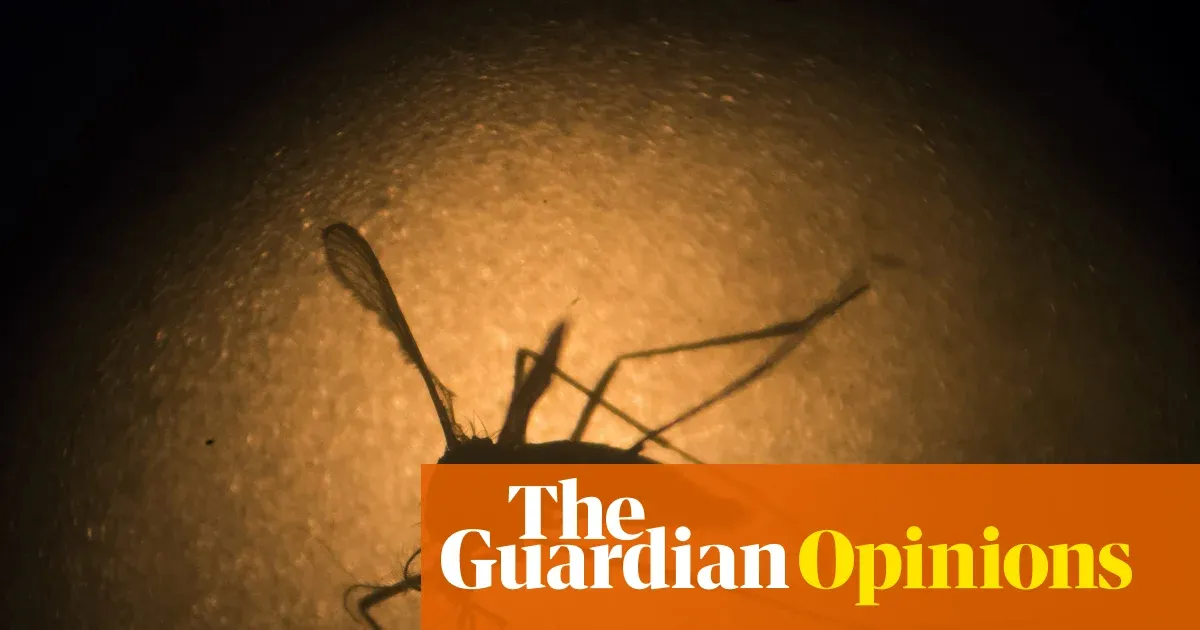
Alphabets (then Google) Debug initiative has asked the federal government for permission to release up to 32 million sterilised male mosquitoes in California and Florida. The request matters because the strategy depends on regulators letting a large-scale release happen.
Alphabet (formerly Google) is seeking federal permission for a very specific, very large field test: releasing up to 32 million sterilised male mosquitoes in California and Florida through its Debug initiative.
This is not a “mosquitoes everywhere” stunt. The biological detail is the point. Male mosquitoes do not bite or carry disease. The theory is that these sterilised males will mate with disease-carrying females, the eggs will not hatch, and mosquito numbers will fall over time. If approved, the initiative would turn a public health problem into an experiment at industrial scale, with regulators as the gatekeepers.
To understand why this is a governance and decision-making story, zoom out one layer. Mosquito-borne disease control is usually a mix of surveillance, habitat management, and targeted interventions, often using chemical or mechanical approaches. Debugs approach is different: it aims to reduce population levels by disrupting reproduction rather than directly killing large numbers of adult mosquitoes. That distinction makes regulatory framing crucial. Regulators do not only ask, “Does it work in theory?” They ask how it behaves in the real world, what risks might emerge, and whether the public health benefit outweighs those risks.
The request is also a reminder that large technology companies are now comfortable entering domains that used to be mostly public sector. Alphabet describes itself primarily as a software and AI company, but Debug shows it is willing to run experiments that look more like biotech than consumer tech. And when a major corporation asks government permission for an outdoor release, boards and executives in adjacent industries take notice. It is a signal that field trials, partnerships, and approvals could become part of the competitive landscape, even for companies that do not traditionally operate in agriculture, biosecurity, or public health.
There is another second-order consequence hiding in plain sight: this kind of release tests the “social license” as much as the science. Sterilised male mosquitoes are designed to be harmless because they do not bite or transmit disease. Still, the very concept of releasing millions of insects into environments where people live, work, and spend time creates political and community questions. Even when the intervention is aimed at reducing disease risk, critics can focus on consent, monitoring, and accountability. That is why permission from the federal government is the immediate pressure point. Approval would not just greenlight an experiment; it would set a precedent for how regulators might treat similar proposals later.
For decision-makers, the strategic stake is bigger than Debug itself. If the federal government grants permission for a 32 million mosquito release in two states, other projects using sterile males, genetic approaches, or mass field interventions gain a clearer path. If approval is delayed or denied, it will push these efforts back toward smaller trials, more constrained geographies, or different risk mitigation plans. Either way, the outcome becomes a reference point for how quickly “outside-the-lab” public health tech can scale.
There is also a portfolio lesson for boards. When companies move into regulated environments, outcomes often hinge on factors the company does not fully control, like the pace and standards of review. That means executives should treat regulatory permission as a critical path item, not an afterthought. The biological premise in Debugs plan is straightforward: sterilised males, no biting, mating with disease-carrying females, eggs do not hatch, mosquito numbers drop. The uncertainty is not the mechanics, it is the approval and the real world outcomes under regulatory scrutiny.
In the end, Debugs request is a test of whether an evidence-backed reproduction disruption strategy can earn permission to operate at human scale. For executives and investors watching public health, biotech partnerships, and outdoor experimentation, this is the kind of moment that changes what becomes possible next. If permission lands, mass interventions could accelerate. If it stalls, the path to scale gets longer and more expensive, and the next proposal will likely face even tighter questions about monitoring, safeguards, and proof.
This story's Key Insights and Take-aways are locked.
Create a free account to unlock Executive Actions for one credit.
Register to UnlockAlways free for Executives Club members. Join the Club
More in Technology

Google quietly links your phone number to every Android account on your SIM
Adding a SIM now ties your phone number to all Google accounts - and future accounts inherit it. Here's the security and privacy stakes.

Hijacker AI 'Skynet mode' runs 100,000 attack steps against exposed models
Symantec caught a criminal AI agent that borrows other models, steals data, and mines crypto; the only relief is no confirmed victims yet.

Nvidia's AI-financier shift faces its first big test as neoclouds stumble
A rout in neocloud stocks is forcing investors to weigh Nvidia's hidden exposure as both supplier and lender to the AI buildout.