
Amazon cuts Samsung's 2TB 990 Pro SSD to a near-record low
The flagship drive is nearly 40% off, a reminder that premium storage pricing can swing fast when retail demand gets aggressive.
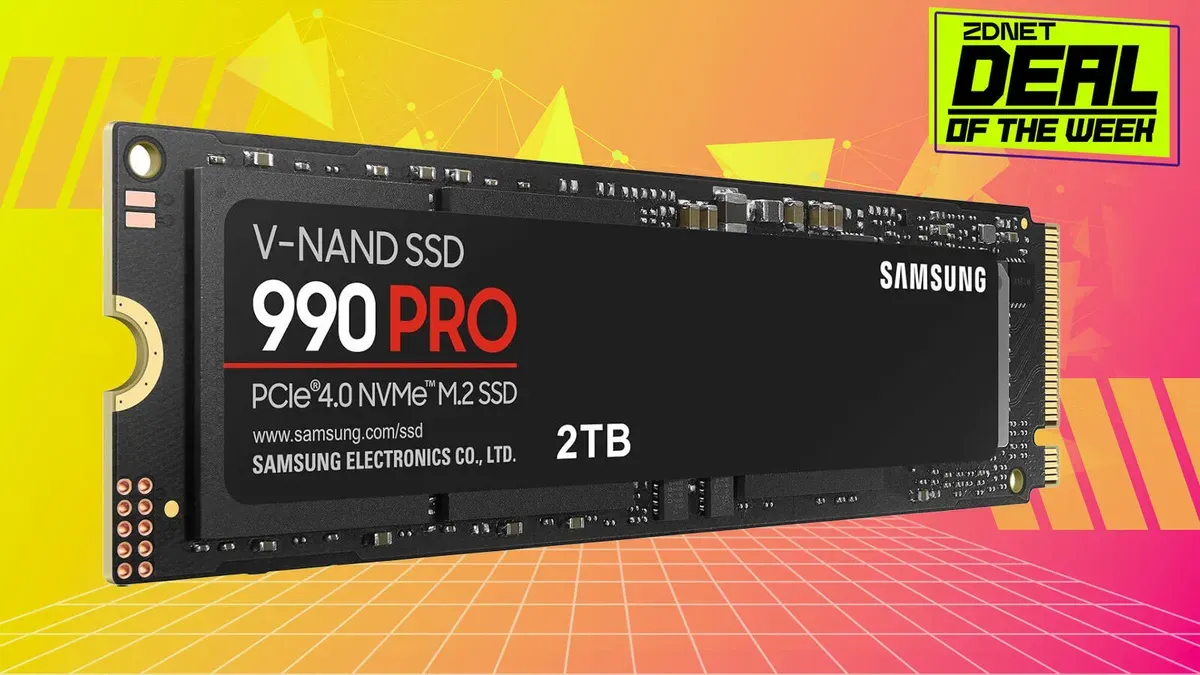
Samsung's flagship 990 Pro SSD is now listed at a near-record low price on Amazon, with the 2TB model nearly 40% off. For buyers and IT decision-makers, that means high-end PC storage can suddenly become a timing game, where a discount window can materially change upgrade economics.
Amazon is currently selling Samsung's flagship 990 Pro SSD in a 2TB configuration at a price that is nearly 40% below its usual level, and that is the whole story in one sharp little package: a premium drive is suddenly cheap enough to make a lot of upgrade plans look smarter today than they did yesterday. ZDNet describes the price as a near-record low, which matters because SSD pricing does not move like software pricing. Storage hardware tends to fall in steps, not smoothly, so when a flagship model drops this far, it signals a real retail clearance moment rather than a routine markdown.
The product at the center of it all is Samsung's flagship 990 Pro SSD, and the source is specific about the configuration: 2TB. That matters because 2TB is the sweet spot where many buyers stop treating storage as a nice-to-have and start treating it as a performance and workflow decision. For PC users, more space usually means fewer compromises, less juggling files, and less relying on slower external storage. For professionals, creators, and anyone working with large media libraries or heavy projects, the difference between waiting for a full-price cycle and buying at a near-record low can be the difference between stretching a system another year or making the upgrade now.
There is also a simple market lesson hiding in the discount. Flagship SSDs are often priced for speed, brand trust, and early adopters first, then pulled down by competition and retail promotion later. When a model like the 990 Pro lands at nearly 40% off, it shows how quickly consumer electronics can swing from premium positioning to bargain bin energy without the underlying product changing. That is useful context for anyone tracking hardware spend, because it suggests that timing matters just as much as specs. If you are a buyer, the same component can look overpriced on Monday and obvious on Friday. If you are a manager making procurement decisions, that volatility means purchase calendars are not just administrative, they are financial.
For executives and operators, the broader takeaway is less about one SSD and more about how discounting reshapes customer behavior. Retail promotions can pull forward demand, especially for products that sit near the boundary between enthusiast and mainstream purchase. A flagship drive discounted this aggressively can attract buyers who were not planning to upgrade, which is exactly why brands and retailers use these price moves so heavily. It is a reminder that in consumer tech, the shelf price is not merely a number. It is a lever that changes whether someone buys now, waits, or chooses a competing product. For companies watching hardware categories, that means promotions can distort short-term demand signals and make last quarter's pricing assumptions look stale fast.
The source does not suggest any defect, recall, or product change here, and that is important. This is not a cautionary tale about quality. It is a plain pricing story, which in tech can be just as revealing. Samsung's 990 Pro is still framed as a flagship SSD, and Amazon's discount simply reveals how aggressively the market can reprice even premium hardware once the right listing, retailer, and moment line up. In a world where buyers often compare storage across brands, capacities, and performance tiers, a near-record low on a recognizable model can become the kind of nudge that overrides a longer shopping list.
For peers in consumer hardware, PC building, and IT procurement, the practical implication is clear: pay attention to retail price drops because they can move faster than product roadmaps. A 2TB flagship SSD at nearly 40% off is not just a deal for bargain hunters. It is a signal that premium components can become suddenly accessible, reshaping what counts as a reasonable purchase for individuals and teams alike. If you are responsible for budget, refresh cycles, or even just your own workstation setup, this is the kind of moment where waiting for a better price and acting at the right time can meaningfully change the economics of the buy.
This story's Key Insights and Take-aways are locked.
Create a free account to unlock Executive Actions for one credit.
Register to UnlockAlways free for Executives Club members. Join the Club
More in Technology

OpenAI says 10,000 agents cracked a 90-year math problem in 88 hours
The company's claim is audacious, but one mathematician is pushing back. Here's what it means for AI-driven discovery.

Meta still serves child sexual abuse ads on Instagram in India - BBC report
A new report following the BBC Eye investigation says the ads are still there - what it signals for every platform with a self-serve ad engine.

White House yanks 'Build the Wall' game after Tetris Company copyright warning
The administration's arcade game vanished in hours - and the takedown playbook every brand can learn from.