
Amazon's Proteus robot speaks plain language and lands in Europe in 2027
Amazon is betting warehouse automation gets easier to scale when workers can talk to robots like teammates, not programmers.
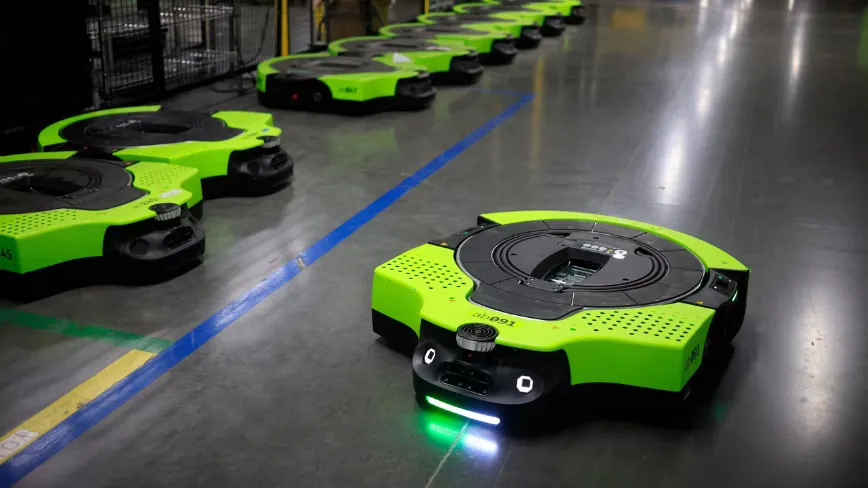
Amazon unveiled a next-generation Proteus robot at its Delivering the Future event at the Dartford fulfilment centre east of London on 4 June. The robot takes instructions in plain language with no technical commands or programming interface, and Amazon says it is headed to Europe in 2027, signaling a new phase of warehouse automation for operators watching labor, productivity, and deployment speed.
Amazon just showed off a warehouse robot that does not want your code. At its Delivering the Future event at the Dartford fulfilment centre east of London on 4 June, the company unveiled a next-generation Proteus robot that takes instructions in plain language, with no technical commands and no programming interface. That is the headline move here: Amazon is trying to make warehouse automation feel less like software engineering and more like giving directions to a coworker.
And the Europe part matters too. Amazon said the new Proteus is headed to Europe in 2027. For executives, that is not just a product note, it is a deployment signal. If Amazon is pushing a conversational robot into one of the toughest environments in logistics, it suggests the company thinks the next step in automation is not just more machines, but easier machine adoption. That lowers the friction of using robots in complex operations, where speed, labor availability, and training costs all shape whether automation actually pays off.
The source is short on technical detail, but the strategic frame is clear. Amazon has spent years building warehouse automation into its fulfillment network, and Proteus fits that broader pattern: use robotics to move goods faster, reduce repetitive tasks, and make fulfillment centers more efficient. What is new is the interface. A robot that takes plain-language orders removes a layer of specialized command input, which matters because operational software often becomes a bottleneck when only a small number of people know how to use it. If a frontline manager can direct a robot without a programming interface, the robot becomes easier to deploy, easier to train around, and potentially easier to scale across sites.
That is why this announcement is worth attention beyond Amazon itself. Warehouse robotics usually live or die on implementation, not hype. The machines can be impressive, but if they require heavy customization, specialized staff, or long onboarding, adoption slows down. Amazon's pitch for Proteus suggests it wants to reduce those hidden costs. In plain English, the bet is that natural language makes automation more usable. And usability is often what turns a flashy demo into a real operational advantage.
There is also a second-order labor implication here. Amazon did not frame Proteus as a replacement story in the source, and it would be wrong to pretend it did. But any tool that makes warehouse instructions simpler can shift how work is organized on the floor. Instead of routing tasks through dedicated technical operators, companies may be able to spread more of that control across regular teams. That can change training, management structure, and the mix of skills a warehouse needs. For operators, that is interesting because the winning model may not be the most advanced robot, but the one that integrates cleanly into messy real-world workflows.
The Europe timeline is a practical clue. A 2027 rollout gives Amazon time to refine the system and align it with regional operations before broader deployment. Europe is not one uniform market, either. Warehousing footprints, labor rules, and operational expectations can vary widely by country, so a future launch there is meaningful even without extra details in the source. For other logistics players, the message is simple: Amazon is still iterating on the human-machine interface inside fulfillment, and it is doing so with enough confidence to attach a date and geography to the next phase.
For decision-makers, the bigger takeaway is not that Amazon built another robot. It is that Amazon is trying to make robots less specialized and more conversational, which is often how technology moves from pilot projects to standard operating procedure. If that works, the advantage is not just cleaner warehouse floors or faster pick rates. It is the ability to deploy automation with less dependence on niche technical knowledge, which can speed adoption across large networks. That is the kind of infrastructure shift that does not always sound dramatic at first, but quietly changes who can move fastest, train cheapest, and scale widest in logistics.
This story's Key Insights and Take-aways are locked.
Create a free account to unlock Executive Actions for one credit.
Register to UnlockAlways free for Executives Club members. Join the Club
More in Technology

OpenAI says 10,000 agents cracked a 90-year math problem in 88 hours
The company's claim is audacious, but one mathematician is pushing back. Here's what it means for AI-driven discovery.

Meta still serves child sexual abuse ads on Instagram in India - BBC report
A new report following the BBC Eye investigation says the ads are still there - what it signals for every platform with a self-serve ad engine.

White House yanks 'Build the Wall' game after Tetris Company copyright warning
The administration's arcade game vanished in hours - and the takedown playbook every brand can learn from.