

America250’s 250-year time capsule needs damp-proof engineering, not vibes
A new capsule program built to survive centuries shows how storage engineering, materials, and governance collide.
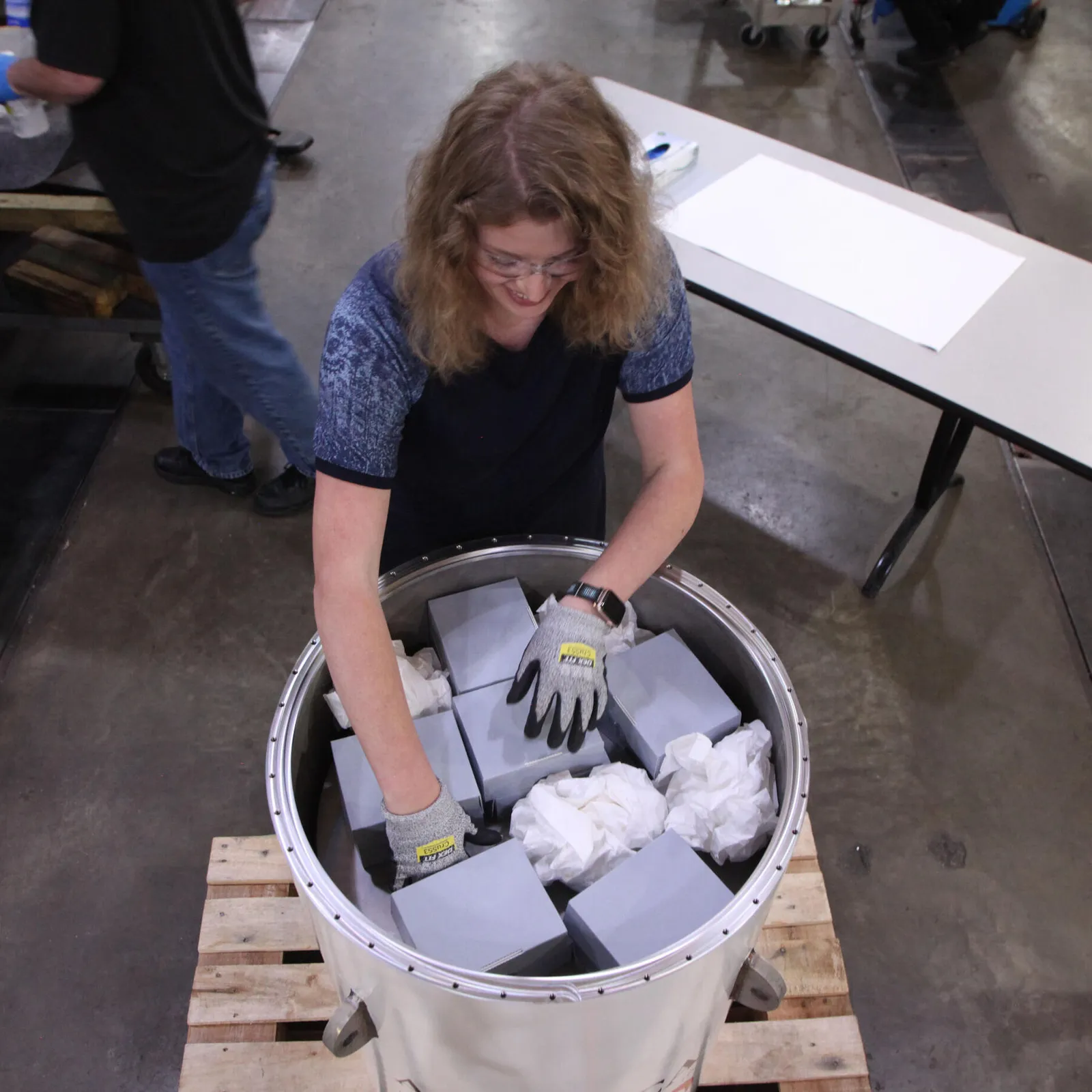
The New York Times reports that the America250 time capsule will hold dozens of historical treasures and must be designed to avoid dampness and other hazards. For decision-makers, the implication is clear: long-horizon preservation is an engineering and oversight problem, not a curatorial afterthought.
The America250 time capsule is meant to last 250 years, and it is not basically a decorated box with a date. The plan, according to the New York Times, is to place dozens of historical treasures inside a carefully engineered capsule designed to avoid dampness and other dangers. In other words, the story is less “heritage, but make it cute” and more “industrial-grade preservation with a timeline that makes corrosion engineers sweat.”
So what actually has to be true for something to endure for two and a half centuries? The capsule has to manage the quiet enemies that destroy documents and artifacts before people think about them. Dampness is the headline threat in the reporting, alongside other hazards that typically accelerate chemical breakdown, mold, and physical degradation. That is the engineering core. The capsule is only as credible as the environmental controls and construction choices that can keep those threats at bay for a timeframe far beyond normal storage, far beyond routine cataloging, and far beyond the typical lifespan of whatever policies or maintenance plans the program starts with.
This is where long-horizon projects get interesting for executives. Most organizations plan on business cycles, not generational cycles. Standard document storage assumes that someone will intervene within years, maybe decades. A 250-year target flips that assumption. It forces leaders to think about failure modes that are not emotionally intuitive, like slow moisture ingress through small gaps, material interactions over time, or container behavior under shifting temperature and humidity. When the New York Times frames the need for “lots of engineering” to avoid dampness and other dangers, it is basically pointing to the same truth that keeps showing up across industries: the hardest part of durability is not the headline feature. It is preventing the boring, inevitable ways things decay.
There is also a governance angle hiding in plain sight. If you are responsible for a program like this, you cannot treat preservation as a purely curatorial decision. The moment you commit to 250 years, you are implicitly choosing a standard of accountability that outlives the people currently making the call. That raises the board-level question: what evidence and testing would be enough to justify the design? Time capsules are often framed as cultural artifacts, but for a capsule to physically survive, the oversight has to behave more like a product safety or critical infrastructure review. Engineering controls, materials selection, and validation testing become the “compliance” work of the project, even if the legal framework is different from, say, medical devices or aviation.
Regulatory context matters too, even when the reporting does not list specific agencies. Programs involving public heritage, government-associated anniversaries, or broadly visible civic initiatives often sit in a world where public accountability is the constraint. In practical terms, that can translate into procurement discipline, documentation, and stakeholder sign-off. Even if no single regulation “requires” a 250-year capsule, the public nature of the project creates its own version of regulatory pressure: if the capsule fails, it becomes an institutional credibility problem. And the longer the horizon, the higher the consequence for getting the basics wrong, because you cannot just “patch” a moisture problem after the fact.
Second-order implications ripple outward. When an effort like America250 emphasizes dampness and other hazards, it is highlighting a transferable capability: designing storage systems that can tolerate harsh time-based uncertainty. That same design mindset maps to corporate archives, museums, and even data preservation, where the enemies look different but the failure mechanics rhyme. Organizations that treat preservation as a one-time event often end up with expensive regret. Organizations that treat it as an engineered lifecycle process, complete with risk analysis and evidence, tend to get outcomes that survive scrutiny, not just celebration.
For peers in leadership roles, the strategic stakes are straightforward. If your organization is building something meant to outlast normal stewardship, you need to adopt the America250 lesson early: engineer for the threats that work quietly. Commit to durability as a measurable target. Pressure-test the design assumptions against real degradation modes like moisture ingress. And ensure the project governance can support the kind of documentation and validation that a 250-year claim demands. The capsule will hold dozens of historical treasures, but the real product is the environment inside the container. Get that right, and the contents have a shot at being legible to the future. Get it wrong, and the most meaningful artifacts in the world end up as a damp lesson.
This story's Key Insights and Take-aways are locked.
Create a free account to unlock Executive Actions for one credit.
Register to UnlockAlways free for Executives Club members. Join the Club
More in Science

2026 Nikon Small World Winners Reveal the Hidden Machinery of Everyday Life
A mycologist's frozen Edinburgh garden became the backdrop for vivid views inside cells, a reminder of what advanced imaging now makes visible to researchers and the industries built on biology.

Study: 1 in 4 depression cases may be a body-clock problem, not a chemical one
A 10,000-person study finds standard antidepressants often fail these patients, but melatonin and morning sunlight may hit the real root cause.

Start-Up Says A.I. Designed a Virus to Attack One Patient's Superbug
If the claim holds up, personalized phage therapy could become a new frontline weapon against antibiotic resistance - but proof is far from final.