

Andreeva reaches first major final at 17, and Kostyuk falls at Roland Garros
Mirra Andreeva’s run to her first major final shows how young talent can force a fast-moving reset in tennis’s competitive hierarchy.
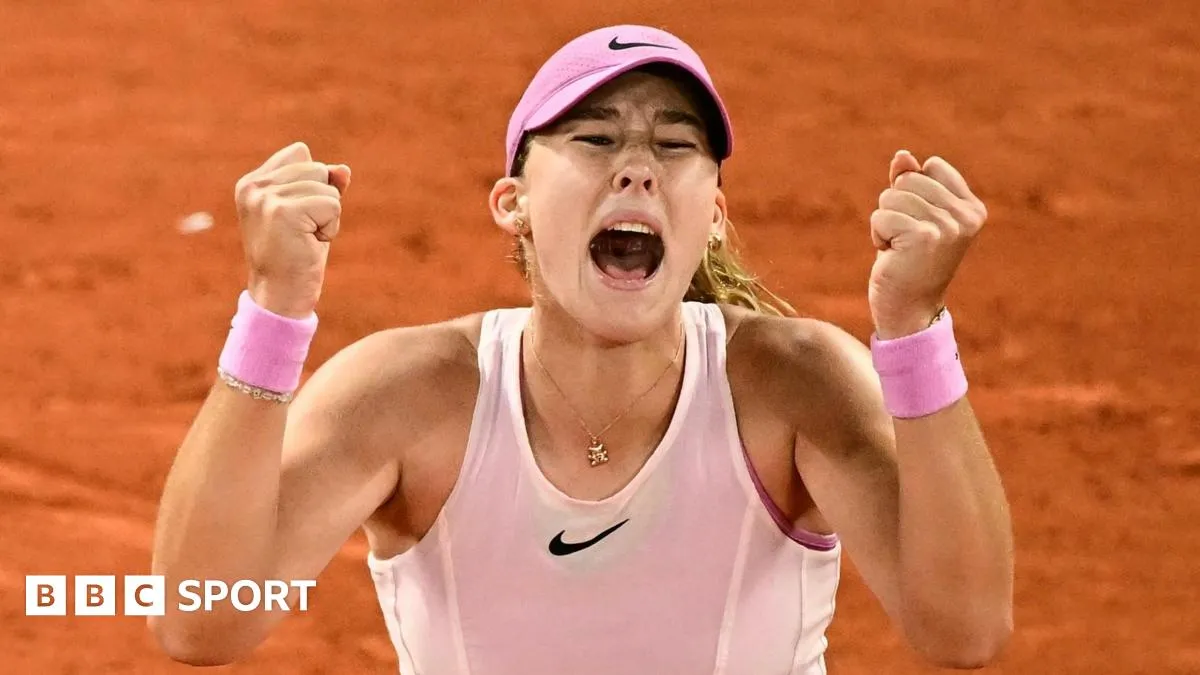
Russian teenager Mirra Andreeva reached her first major final with a dominant victory over Ukraine's Marta Kostyuk at the French Open. For decision-makers, the result is a reminder that breakout performance can arrive early and reshape expectations fast, especially when a young competitor converts momentum into a landmark stage.
Mirra Andreeva just did the part that turns a promising season into a real arrival. The Russian teenager reached her first major final at the French Open with a dominant victory over Ukraine's Marta Kostyuk, and the scale matters: this was not a narrow escape, a lucky draw, or a match that hinged on one fluke point. It was a clear statement on one of tennis’s biggest stages, and it put Andreeva one match away from a Grand Slam title before many players her age have even settled into the tour's grind.
That is the headline here for anyone watching elite competition closely. A teenager made it all the way to her first major final by beating a seasoned opponent in a high-pressure setting, and she did it in convincing fashion. In business terms, this is what a breakout looks like when the signal is too strong to ignore: the market, the field, the audience, and the veterans all get forced to update their model of who matters now. Andreeva’s run at Roland Garros is not just a single result, but a reminder that new entrants can move from intriguing to unavoidable very quickly when they convert opportunity into proof.
The French Open is one of tennis's four majors, which means every deep run carries extra weight. You are not just collecting ranking points or a nice headline. You are doing it on the sport's brightest stage, under the sort of scrutiny that can speed up a player’s rise, change how opponents prepare, and alter the conversation around future favorites. For a teenager, making a first major final is especially significant because it compresses the usual timeline. It suggests the player is not merely developing for later, but already capable of sustaining the level required to survive the second week of the biggest events. That is what makes Andreeva’s victory over Kostyuk feel bigger than one scoreline.
Kostyuk’s role in the story also matters. Beating Ukraine's Marta Kostyuk in a dominant match means Andreeva did not need a marathon to validate her place. She earned it decisively. In high-level sport, dominance matters because it changes the way a result is interpreted. A tight win can be filed away as an upset or a fortunate swing. A dominant win says the winner owned the terms of the contest. For peers, sponsors, coaches, and rival players, that is the part that sticks. It suggests the breakthrough is not only about nerves or momentum, but about a level that can be repeated against quality opposition.
That makes the strategic read pretty straightforward for anyone who tracks competitive markets, whether in sports, media, or consumer brands. Early proof points are powerful because they attract attention, confidence, and expectation all at once. A first major final can accelerate a player's profile overnight, and profiles matter. They shape seeding conversations, draw interest, broadcast value, and the tone of every future matchup. Once a young athlete shows she can win deep into a major, she stops being treated as a curiosity and starts being treated as a real constraint on everyone else's plans. That is the quiet but important second-order effect of Andreeva’s win.
There is also a broader lesson in how quickly the hierarchy can move. Tennis often rewards patience, but it also occasionally produces a player who arrives earlier than the schedule says she should. That can scramble the assumptions of rivals who expect a longer runway, and it can force established names to prepare differently. The French Open is especially unforgiving because the stakes rise with every round. By reaching the final, Andreeva has already crossed the line from promising teenager to proven contender on one of the sport's most important stages. For decision-makers in any competitive arena, that is the part worth paying attention to: once the proof exists, the conversation changes. Andreeva has now given everyone else a reason to revise how they think about the next wave of talent, and she has done it with the sort of result that does not leave much room for debate.
This story's Key Insights and Take-aways are locked.
Create a free account to unlock Executive Actions for one credit.
Register to UnlockAlways free for Executives Club members. Join the Club
More in Entertainment

Christopher Nolan’s “The Odyssey” posts his biggest Tuesday haul, surpassing “The Dark Knight’s” record
The film’s Tuesday breakout reframes Nolan’s box-office ceiling and forces competitors to rethink timing, budgets, and release strategy.

Kacey Musgraves cancels Aug. 20, 29, Sept. 2 Middle of Nowhere shows
Ticketmaster emails are telling fans refunds are coming, while the tour still starts Aug. 21 in Chicago.

Billie Joe Armstrong launches Epiphone Les Paul Junior and Marshall 1959BJA signature gear
Two limited releases turn decades of Green Day’s tone into branded hardware, including Marshall’s first artist amp in 14 years.