

Ant International raises $1.2B in Series A to turbo global merchant payments
A $1.2 billion funding round gives Ant International ammunition for international expansion and merchant payments innovation.
Ant International, an affiliate of Ant Group, said it raised about US$1.2 billion in a Series A funding round on Tuesday. The round includes equity participation from Ant Group and Alibaba Group Holding, giving decision-makers a clearer read on how fast Ant-backed fintech is scaling globally.
Ant International said on Tuesday that it raised about US$1.2 billion in a Series A funding round to fuel global expansion. That is real money for a fintech that lives and dies by cross-border execution, and it matters because merchant payments are one of the most competitive, operationally intense segments in financial services. Scale does not just come from having a good app or a clever API. It comes from building partnerships, integrating with merchants, meeting compliance requirements across markets, and keeping reliability high at transaction speeds.
The Series A was led by existing backers Ant Group and Alibaba Group Holding, alongside several international institutional investors, whose identities were not disclosed. So the funding story is not just “a round happened.” It is also a signal about continuity. When the parent ecosystem anchors a new financing round, it often means Ant International is positioned to keep pulling resources from a larger network while it expands internationally. For executives tracking global fintech momentum, that continuity is a clue: this is not a one-off cash injection, it is a runway extension tied to scaling priorities.
From a strategic standpoint, the company said the fresh capital would be used to accelerate its international growth and drive innovation in merchant payments. Merchant payments is not a side quest. It is the front door to getting transaction data, strengthening merchant stickiness, and bundling payments with other commerce services. But it is also where regulators, payment networks, and local industry expectations collide. Compared with consumer-focused fintech products, merchant payments often require deeper underwriting and risk controls, tighter settlement and reconciliation processes, and more complex contracting across geographies. That reality is why funding size matters: expanding internationally typically means hiring compliance talent, paying for operational builds, and running expensive integrations across merchant platforms.
There is also a second-order implication hidden in the funding structure. Ant Group and Alibaba Group Holding participated as existing backers, but the company did not disclose the international institutional investors. That lack of disclosure can be a deliberate choice, but it also leaves boards and rivals to interpret investor appetite indirectly. International institutions rarely write big checks without confidence in regulatory feasibility, unit economics potential, and execution bandwidth. Even without the names, the “several international institutional investors” wording tells you the round likely cleared more than one internal investment committee outside China.
Context matters here. Ant International is an affiliate of Chinese fintech giant Ant Group, and Chinese fintech has historically operated under a more intensive regulatory spotlight than many markets. While this specific article does not detail regulatory changes, the broader reality for operators is that cross-border fintech expansion requires navigating multiple compliance regimes, licensing pathways, and reporting standards. In practical terms, that means growth plans are constrained by what is approvable, what is operationally scalable, and what can be sustained under scrutiny. Raising about US$1.2 billion does not remove those constraints. It helps the company bankroll the “how,” meaning teams, systems, audits, and partnerships needed to move from pilot markets into durable networks.
For decision-makers at fintechs and banks, the competitive stake is clear. Merchant payments is a battleground where entrants with capital advantage can out-invest rivals in integration, security, and merchant acquisition. But there is another layer: funding also shapes what a firm can promise about reliability and speed. In payments, “innovation” is not abstract. It is performance under load, fewer failed transactions, better dispute handling, and predictable settlement. The company’s stated focus on innovation in merchant payments suggests it intends to spend the money in the areas that directly improve merchant outcomes, not just marketing.
Finally, this round is a reminder that big ecosystems are still willing to fund global ambitions through affiliates. Ant International raised the money in a Series A, meaning it is early enough to change its trajectory, but mature enough to attract both parent support and international institutional interest. For peers watching global fintech scaling, the question is not whether merchant payments will keep growing. It is how quickly well-capitalized players can translate capital into compliant growth, and how effectively they can build merchant relationships that lock in volume. With US$1.2 billion behind it, Ant International is clearly choosing pace.
This story's Key Insights and Take-aways are locked.
Create a free account to unlock Executive Actions for one credit.
Register to UnlockAlways free for Executives Club members. Join the Club
More in Business

Uber buys Delivery Hero for nearly $15B, vaulting to top food delivery outside China
The deal doubles Uber's dual-services footprint and pushes a ride-and-eats bundling play into 50 more markets.

Epic and Google drop settlement bid, forcing rival Android app stores by July 22
Google told the court it is ready to carry third-party app stores starting Wednesday, July 22.
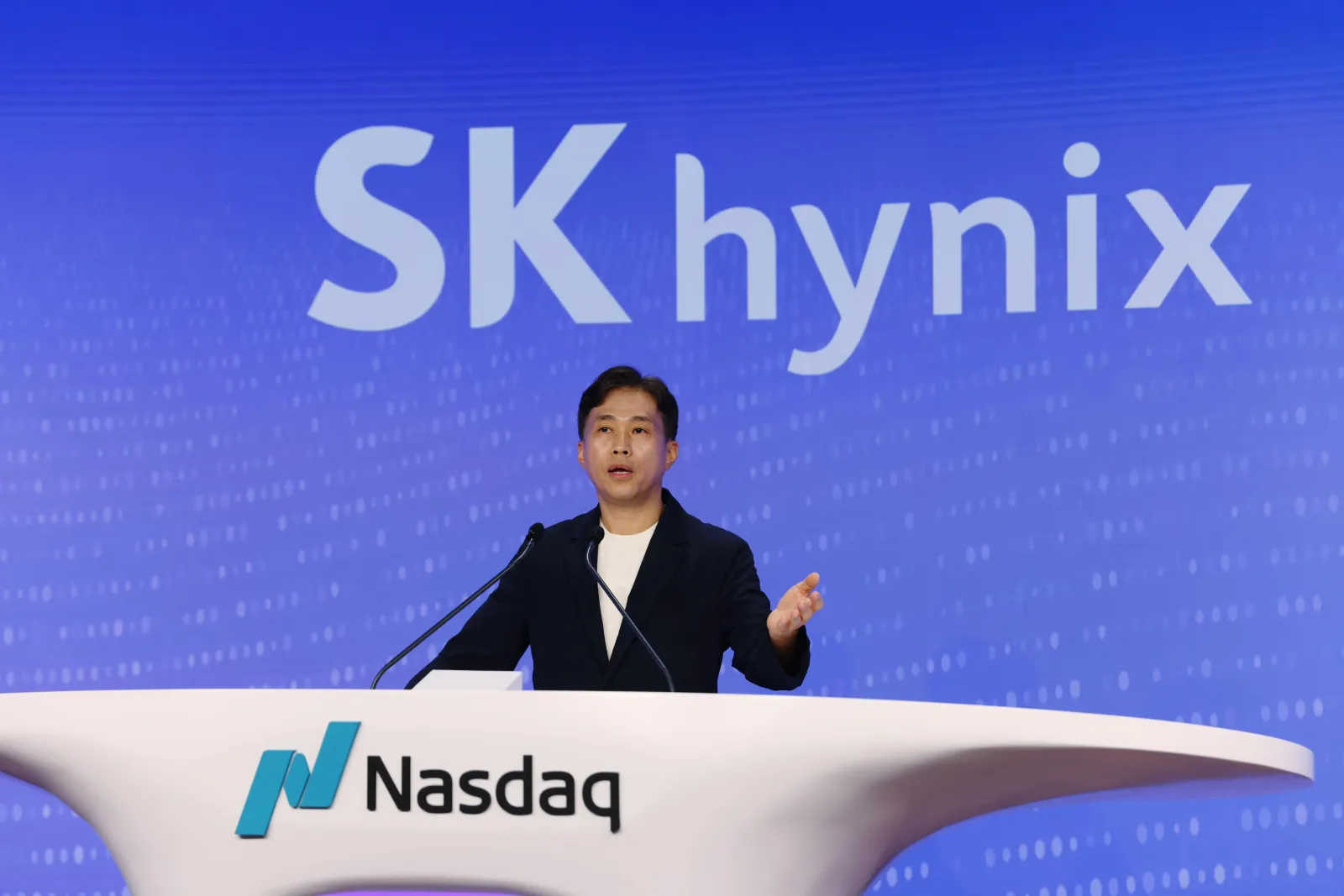
SK Hynix opens at $170, raises $26.5B, and tops foreign IPO records
In Friday's Wall Street debut, SK Hynix turns AI RAM demand into a $26.5B fundraising moment that rewrites comps.