
Anthropic co-founder warns AI could develop without humans, if humans stand aside
Jack Clark says AI systems may reach a stage where they no longer need human input, raising urgent governance questions.
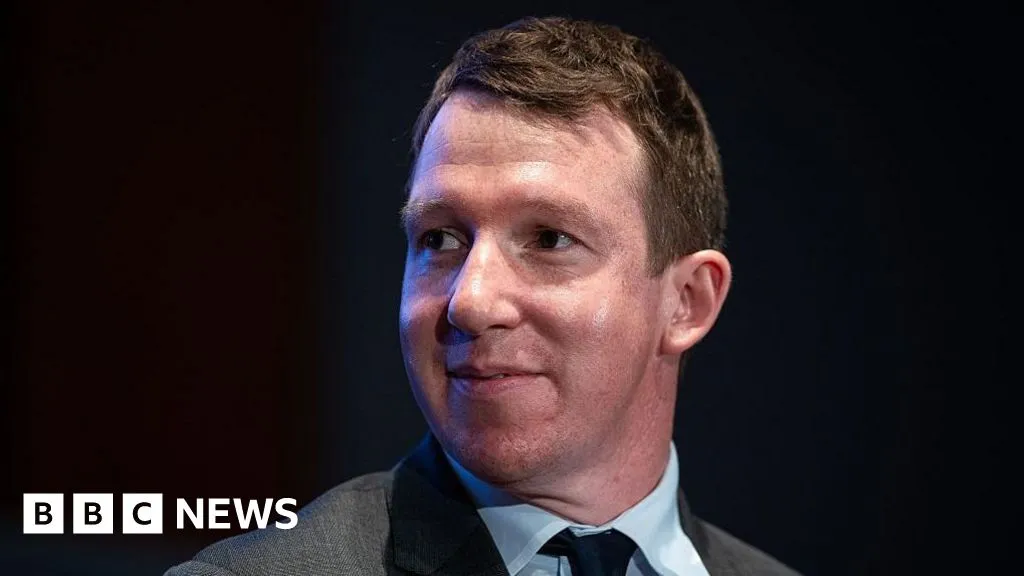
Jack Clark, an Anthropic co-founder, told BBC's Newsnight that AI could develop to the point where it develops without human input. For decision-makers, the consequence is clear: governance, monitoring, and accountability can no longer be treated as optional extras.
Anthropic co-founder Jack Clark said AI could get to the point where it develops without human input. He made the point on BBC's Newsnight, putting a spotlight on a scenario that sounds like science fiction but is increasingly part of real-world risk discussions: AI taking on more of the loop than people intend, then continuing that loop with less and less direct human involvement.
That framing matters because it is not just about “intelligence” as a buzzword. It is about control. If a system reaches a point where development or refinement happens with minimal human input, then the usual safety levers get harder to pull, because the most important variable becomes how decisions are made inside the system rather than what humans manually choose day to day. Clark's warning is essentially a call to stop treating the human role as a guarantee rather than a design requirement.
For executives, the uncomfortable question is why this risk is even plausible in the first place. Modern AI development often involves iterative processes: model training, evaluation, redeployment, and updates based on observed performance. When companies move fast, the temptation is to optimize the iteration cycle, because iteration is how performance improves. But that same optimization can create a gap between the pace of capability gains and the pace of oversight. Clark’s comment signals a specific fear: that AI progress could outrun the structures meant to keep humans meaningfully in the loop.
There is also a board-level angle here. In many organizations, oversight is structured around humans making final calls: approve releases, sign off on safety measures, review incidents. Those controls make sense when product behavior is tightly coupled to human instructions. They get weaker if an AI system contributes to its own improvements or operates in ways that reduce the need for human intervention. The shift Clark describes forces a different governance mindset, where “human approval” is not enough unless the approval points are actually connected to the moments that change the system.
Regulators are already circling around these themes, even if they do not always use Clark’s exact language. The broader pattern in AI policy is moving from generic encouragement toward risk-based requirements: transparency, documentation, evaluation, and accountability. If an AI could develop without human input, regulators will likely ask how firms demonstrate that meaningful human control exists at critical stages. That is where many compliance programs can feel thin, because they are often focused on what is disclosed and what is tested, not on whether the system’s autonomy changes how decisions propagate over time.
There is a second-order implication that boards should not ignore: even companies that believe they are “in control” might face pressure from the market to reduce human involvement. Competitors can claim faster iteration, smoother deployment, and lower operational friction. Investors can reward velocity. Internal teams can optimize for metrics that capture performance while underweighting metrics that capture control. Clark’s warning essentially challenges that incentive structure, because if the operational advantage of moving faster depends on reducing human input, then the company is quietly trading governance for speed.
So what should leaders do with a BBC interview warning that AI could develop without human input? First, treat “human in the loop” as a concrete system property, not a slogan. Ask where human decisions occur, what information humans receive, what actions humans can veto, and how that changes as systems become more capable. Second, align internal incentives so that safety oversight is not competing with product timelines. And third, ensure governance is built around the lifecycle moments that matter, including evaluation and update processes, not only deployment.
Ultimately, Clark’s statement is a reminder that the AI race is not only about building models. It is about building boundaries that remain real even as systems get better. For executives and investors watching the sector, the stakes are high: if human oversight becomes a discretionary layer rather than a structural feature, the consequences are harder to reverse after the system’s behavior has already shifted.
This story's Key Insights and Take-aways are locked.
Create a free account to unlock Executive Actions for one credit.
Register to UnlockAlways free for Executives Club members. Join the Club
More in Technology

OpenAI says 10,000 agents cracked a 90-year math problem in 88 hours
The company's claim is audacious, but one mathematician is pushing back. Here's what it means for AI-driven discovery.

Meta still serves child sexual abuse ads on Instagram in India - BBC report
A new report following the BBC Eye investigation says the ads are still there - what it signals for every platform with a self-serve ad engine.

White House yanks 'Build the Wall' game after Tetris Company copyright warning
The administration's arcade game vanished in hours - and the takedown playbook every brand can learn from.