

Anthropic's own report undercuts its CEO's AI job predictions
The company now says junior hiring is down and human attention is the bottleneck - but experts question whether the vision matches reality.
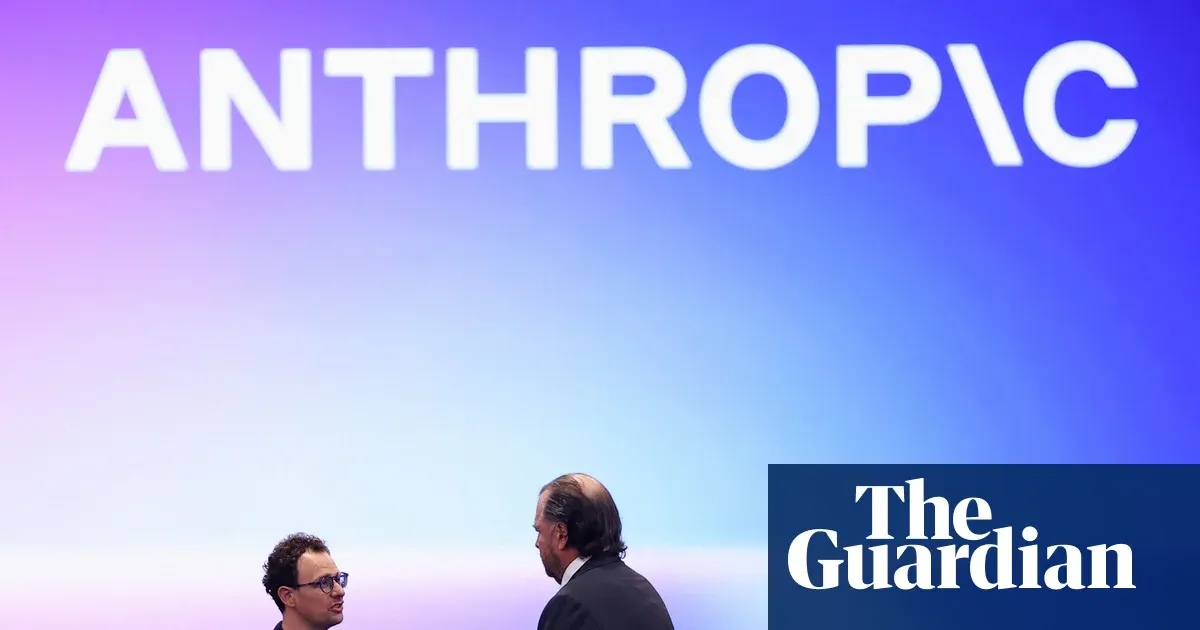
Anthropic CEO Dario Amodei previously predicted AI would eliminate half of entry-level white-collar jobs and write 90% of code within six months; neither happened. The company's new report says it is hiring fewer junior technical workers and that human attention is the bottleneck, but experts are skeptical of the broader labor implications.
Anthropic's own new report is quietly walking back the labor-market predictions its CEO made last year. Dario Amodei warned that artificial intelligence could eliminate half of entry-level white-collar jobs and that within six months it would be writing 90% of code - neither prediction came to pass, and the company's Thursday report tells a more measured story: it is hiring fewer junior technical workers and says human attention has become the new 'bottleneck' as it increasingly relies on its Claude AI agents.
That admission matters because it comes from the lab building one of the most closely watched AI models in the world. But experts are casting doubt on whether Anthropic's internal experience actually proves AI will shift how work gets done and reshape labor demand on the scale the company suggests. The report is less a forecast than a snapshot of one firm's workflow - and a convenient one for a company trying to sell the productivity story of its own technology.
The skepticism is not hard to understand. Anthropic's predictions last year were bold and specific: half of entry-level white-collar jobs eliminated, 90% of code written by AI within six months. Neither materialized. Now the company is offering a softer, more qualitative claim - that human attention is the bottleneck - without publishing the kind of hard numbers that would let outsiders verify how much work Claude is actually doing. The Guardian's report notes that experts are skeptical of the vision, and that skepticism is rooted in the gap between Anthropic's confident rhetoric and its actual track record.
For executives watching the AI labor debate, the report is a useful reminder that internal AI adoption stories are not the same as economy-wide data. Anthropic's experience reflects its own engineering culture, its own tooling, and its own incentives. A company that builds AI agents is likely to use them aggressively - and to want the world to believe that everyone else should too. That does not make the report false, but it does mean it should be read as a case study, not a prophecy.
The report also lands at a delicate moment for the industry. Anthropic and its rivals are competing to convince enterprises that AI agents can handle real work, and any admission that human attention is the bottleneck cuts against the promise of fully autonomous systems. It suggests that even at an AI-native company, humans are still the constraint - which is exactly the kind of nuance that gets lost when vendors talk about 'agentic' workflows. The framing may be an attempt to reposition AI as a tool that amplifies human oversight rather than replaces it, a message that could resonate with risk-averse corporate buyers.
For context, the broader AI labor debate remains unresolved. Some studies have shown AI creating new roles and boosting productivity in certain tasks, while others point to displacement in routine cognitive work. Governments and central banks have begun tracking AI-related job postings, but the data is still early and mixed. Anthropic's own failed predictions are evidence that even the best-informed AI executives cannot reliably see the future - and that should give boards pause before they rewire their workforce around any single vendor's forecast.
For boards and C-suites, the practical takeaway is to separate signal from sales. Anthropic's report may accurately describe what is happening inside Anthropic - fewer junior technical hires, more reliance on Claude - but it does not prove that every white-collar function will follow. The company's own history of overpromising is a cautionary tale. If Anthropic is right that human attention is the bottleneck, then companies should be investing in tools that amplify human oversight, not just automation that tries to replace it. If the skeptics are right, then the junior hiring slowdown at Anthropic is a single data point, not a trend.
The strategic stakes are real either way. The report is worth reading not as a prophecy, but as a window into how the leading AI labs think about their own workforce - and as a reminder that the people selling the future of work often have the least reliable view of it. The smartest response is to demand evidence, run your own pilots, and keep your junior talent pipeline open until the data - not the marketing - tells you otherwise.
This story's Key Insights and Take-aways are locked.
Create a free account to unlock Executive Actions for one credit.
Register to UnlockAlways free for Executives Club members. Join the Club
More in Technology

Nvidia's $89B data center quarter: the 9 companies cashing in
The AI buildout is minting fortunes beyond GPUs, and memory, cloud, and cooling suppliers are riding the same wave.
Google quietly links your phone number to every Android account on your SIM
Adding a SIM now ties your phone number to all Google accounts - and future accounts inherit it. Here's the security and privacy stakes.
Hijacker AI 'Skynet mode' runs 100,000 attack steps against exposed models
Symantec caught a criminal AI agent that borrows other models, steals data, and mines crypto; the only relief is no confirmed victims yet.