

Artemis II hits Mach 39, but NASA admits space travel makes speed hard to measure
The crew returns with an “Mach 39” emblem after a 10-day Moon loop, and NASA explains the measurement fight.
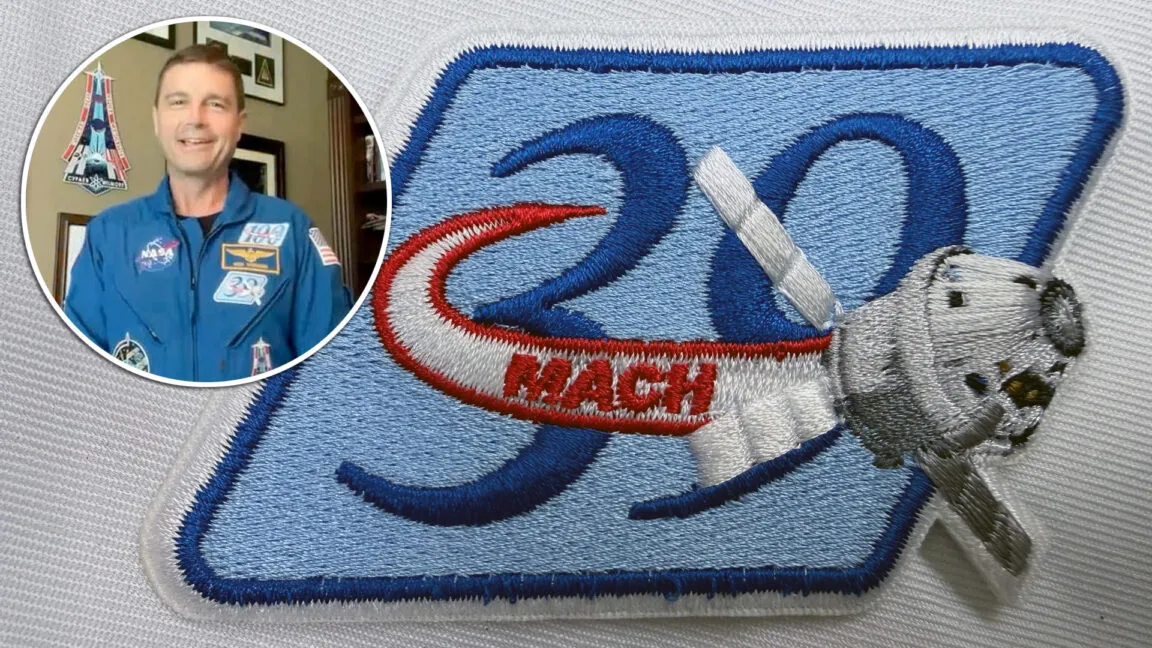
NASA’s Artemis II Commander Reid Wiseman, pilot Victor Glover, and mission specialists Christina Koch and Jeremy Hansen earned a new patch after traveling at about Mach 39. The consequence for decision-makers: even when performance is stunning, proving it precisely in real operations is its own technical and governance challenge.
NASA’s Artemis II crew are the fastest people alive, and now they have a patch to prove it. Mission Commander Reid Wiseman, pilot Victor Glover, and mission specialists Christina Koch and Jeremy Hansen (the latter with the Canadian Space Agency) spent 10 days in early April flying by the Moon. On the trip out and back, their mission turned into a measurement showdown: it is actually challenging how you measure Mach from space.
That is the real twist behind the new “Mach 39” emblem. After reaching farther from Earth than any humans have gone, 52,756 miles (406,771 km), the crew sped up on the return aboard their Orion spacecraft Integrity, reentering the atmosphere at about 24,664 miles per hour (39,693 k/ph). In other words, the patch is a public-facing simplification of an operational reality, backed by a fast, hard-to-verify performance envelope.
To understand why this matters beyond the novelty of a stitched emblem, you have to look at what “Mach 39” means in space-to-atmosphere transitions. Mach is about speed relative to the speed of sound in a given medium. But in the context of spaceflight and reentry, the environment is changing fast, and the reference conditions that make Mach meaningful are not static. That is exactly what NASA flagged, per the source: “It is actually challenging how you measure [Mach] from space.” The point is not that Artemis II is “less impressive.” The point is that turning a furious real-world trajectory into a single clean number that holds up for records is harder than it sounds.
Still, the mission’s numbers are not vague celebration. The crew went 52,756 miles (406,771 km) from Earth, then hit about 24,664 miles per hour (39,693 k/ph) during reentry. The source also anchors this in historical context: only three other people in history have traveled faster. NASA’s Apollo 10 astronauts Thomas Stafford, John Young, and Eugene Cernan set the record for the highest speed attained by a crewed vehicle relative to the Earth’s surface at 24,791 mph (39,897 kph) on May 26, 1969. That comparison is the governance-friendly kind of evidence: it is specific, it is dated, and it is about a defined reference frame, namely speed relative to Earth’s surface.
Now connect that to how real organizations behave when they are trying to translate engineering performance into credible reporting. When a mission produces a headline-grabbing figure like “Mach 39,” boards, auditors, regulators, and oversight bodies ask a normal question in abnormal settings: what exactly did you measure, how, and against what definition. The Artemis II crew’s patch is a visible artifact of performance communication, but NASA’s note about measuring Mach from space is the behind-the-scenes reality. In other words, the emblem is the outcome; the measurement nuance is the process risk.
This is where second-order implications kick in for any executive overseeing complex systems, not just space agencies. High-stakes platforms, whether they are aerospace, defense, energy, or medical devices, all face the same issue: impressive results can become fragile when the metric is ill-posed or the reference environment is shifting. Even when the underlying physics is indisputable, the governance system cares about traceability. NASA explicitly acknowledging the measurement challenge is effectively a reminder that measurement definitions are part of operational integrity.
There is also a strategic communication element. Artemis II is built to demonstrate capability. The faster-than-record framing is an attention magnet, and the patch gives the crew something concrete to carry. But NASA’s explanation that “it is actually challenging how you measure [Mach] from space” signals that NASA is not treating the number as marketing wallpaper. It is giving the public a number while still respecting the technical limits of how that number is produced and validated.
For peers in similarly serious roles, the lesson is direct: when you ship a metric, you inherit the burden of definition. Artemis II’s Mach 39 emblem is fun, but it is also a case study in performance reporting under changing conditions, where the most important work happens before anyone ever stitches the patch. If you are a founder, investor, or board member backing complex missions or systems, you should expect that the hardest question in the room will not be whether the system worked. It will be whether everyone agrees on what “worked” means in measurable terms.
This story's Key Insights and Take-aways are locked.
Create a free account to unlock Executive Actions for one credit.
Register to UnlockAlways free for Executives Club members. Join the Club
More in Technology

OpenAI says 10,000 agents cracked a 90-year math problem in 88 hours
The company's claim is audacious, but one mathematician is pushing back. Here's what it means for AI-driven discovery.

Meta still serves child sexual abuse ads on Instagram in India - BBC report
A new report following the BBC Eye investigation says the ads are still there - what it signals for every platform with a self-serve ad engine.

White House yanks 'Build the Wall' game after Tetris Company copyright warning
The administration's arcade game vanished in hours - and the takedown playbook every brand can learn from.