
Assassin's Creed Black Flag Resynced sells 2 million copies on launch day
A two-million-copy first-day debut signals strong demand and sharper execution for Ubisoft's re-synced release strategy.
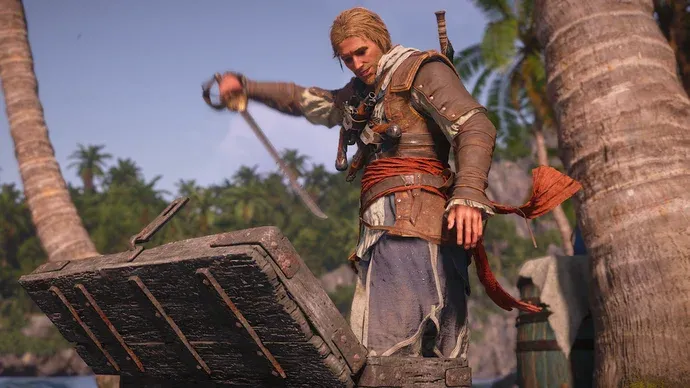
Assassin's Creed Black Flag Resynced has sold two million copies on launch day, which Eurogamer describes as a strong start. For decision-makers, that early sales velocity is the clearest scoreboard for whether this resynced approach is working financially.
Assassin's Creed Black Flag Resynced is off to a “strong start,” selling two million copies on launch day, according to Eurogamer. That first-day number is more than a headline-friendly milestone. It is a practical signal about whether the market is paying attention right now, not after the next discount cycle.
Why does “two million” matter in the first place? Because launch-day sales are when a game’s strongest levers are still fully engaged: audience awareness, storefront prominence, streamer velocity, and the willingness of players to buy without waiting. If a re-synced release can reliably drive that kind of early pull, it suggests Ubisoft is finding a repeatable way to monetize an established franchise while reducing some of the uncertainty that comes with brand-new IP. The early demand also acts like a feedback loop for internal planning, from marketing spend to platform prioritization.
To put this in industry context, games are increasingly treated like scalable entertainment products, not one-off bets. A franchise such as Assassin’s Creed already has a built-in audience, but the question is always whether a new release format will convert that attention into purchases at launch. Resynced is shorthand for a strategy that leans on existing assets and audience familiarity, aiming to refresh value without starting entirely from scratch. The appeal to executives is straightforward: if you can strengthen performance at launch with lower creative and production risk, your revenue predictability improves, and your forecasting confidence goes up.
There is also a board-level subtext here. Companies do not only want revenue. They want revenue that comes quickly enough to support cash planning and justify future pipeline decisions. Launch-day success can influence how leaders talk about the next release window. It can justify continuing investment in similar projects, and it can shift internal capital allocation away from purely incremental “maybe later” experiments toward the formats that are already proving they can move units.
Now, a key point for decision-makers: two million copies on launch day is an outcome, but it is also a constraint. Early success increases expectations. Once players, media, and business partners see a strong debut, the company faces pressure to sustain momentum rather than fade after the first wave of committed buyers. In consumer markets, “strong start” is good. “Strong trend” is better. The executives reading this should treat the launch as the opening quarter of a longer story.
Regulatory and compliance angles can matter indirectly in entertainment, even when the article does not mention regulators by name. For context, game publishers operate in jurisdictions with consumer protection rules, labeling requirements, and in some cases scrutiny over loot mechanics, platform practices, and digital rights. While Eurogamer’s report focuses on sales performance, strong initial traction typically affects how intensively a company might be scrutinized for marketing claims and how aggressively it scales promotions. When the numbers look good, companies also tend to push harder on monetization, and that can bring more scrutiny. The operational takeaway is not that regulation is in the way, but that scaling after success can raise the temperature of oversight.
For peers in similar roles, the strategic stakes are clear: launch-day velocity can reshape pipeline confidence. It can change how leaders evaluate their own re-releases, remasters, reworks, and franchise renewals. It can also sharpen bargaining power with platform partners, marketing channels, and distribution stakeholders, since early performance provides the best proof of demand. If Ubisoft is getting two million copies moving on day one, other publishers watching the same charts will ask a similar question: can we turn audience familiarity into measurable, time-bound sales without betting the company on an entirely new product.
Bottom line: Eurogamer reports that Assassin's Creed Black Flag Resynced sold two million copies on launch day and is off to a “strong start.” That is the kind of early metric executives track because it affects everything after it. Planning, budget decisions, momentum management, and how confidently leadership can back the next project all ride on whether launch-day interest turns into sustained performance.
This story's Key Insights and Take-aways are locked.
Create a free account to unlock Executive Actions for one credit.
Register to UnlockAlways free for Executives Club members. Join the Club
More in Entertainment

12TB Steam 'teraleak' goes beyond Valve: GTA 3, Mafia 2 prototypes exposed
A 12-terabyte dump of Steam data reveals prototypes and builds of third-party classics like GTA 3 and Mafia 2, plus unreleased Valve content, rewriting game history.

LinkedIn's romance problem: 1 in 4 workers say dating on it is fair game
A new survey shows a quarter of U.S. employees treat the professional network as fair game for romance, even as LinkedIn bans it and removes hundreds of thousands of offending posts.

Enhypen's first No. 1 album breaks K-pop's Billboard 200 streak
The K-pop group's 98,000-unit debut tops the chart while Dolly Parton's catalog reentry shows how death reshapes streaming.