
Astronomers confirm two “super-puff” planets lighter than cotton candy, still Jupiter-sized
Their extreme, lightweight atmospheres and rare orbital pairing could rewrite how the weirdest gas giants form.
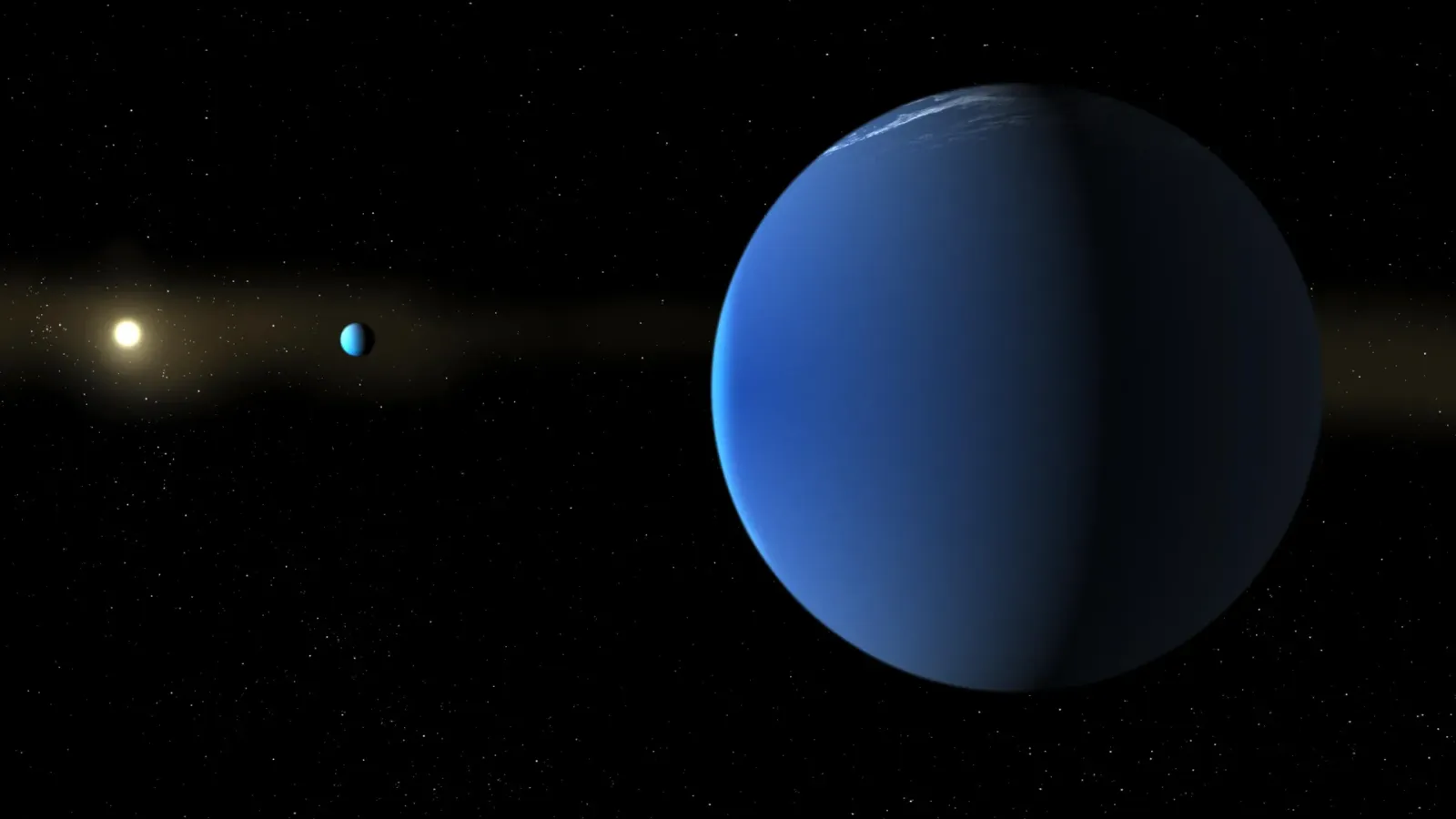
Astronomers have newly confirmed two rare “super-puff” planets that are about the size of Jupiter but less dense than cotton candy. The discovery matters because their unusual orbital relationship and enormous, lightweight atmospheres may clarify how some of the strangest planets in the galaxy come to exist.
Astronomers have newly confirmed two “super-puff” planets so diffuse they are less dense than cotton candy, even though each is about the size of Jupiter. That contrast is the whole story, and it is hard to overstate how counterintuitive it sounds: same ballpark diameter as a familiar giant, yet built like something you could almost imagine floating.
The key follow-on is not just that these planets are light. It is that they appear to be light in a specific, explainable way: through their enormous, lightweight atmospheres, plus a rare orbital relationship. In other words, these planets are not merely “puffy.” Their puffiness is the signal, and the signal points to how such extreme gas giants could assemble and settle into stable orbits.
To executives and board members who live in a world of incentives, it helps to translate the astronomy into business logic. Think of density as “material cost per unit size.” Typically, bigger is heavier and harder to launch. Here, the universe is showing you a product that is the same size but somehow refuses the expected weight. That makes the formation pathway the important variable. If the atmospheres are enormous and lightweight, then the usual assumptions about composition and interior structure are likely incomplete, at least for this class.
There is also a governance angle, even if it is not a boardroom. Scientific findings like this usually land in communities that behave like stakeholder networks: multiple teams, competing models, and follow-up observations that test whether the “super-puff” label holds up across datasets. The phrase “newly confirmed” is doing real work. Confirmation implies that earlier candidates have been tightened into objects that researchers are confident enough to build models around. When you see a category like “super-puff” get two new members, it can be a credibility boost to the underlying observational methods and to the theoretical frameworks trying to explain them.
The source also frames why this pair is particularly valuable: their “rare orbital relationship.” Orbital dynamics are the space version of constraints. You can have similar atmospheres and still end up with different outcomes depending on how planets move relative to each other and relative to their star. A rare orbital pairing suggests the system geometry or timing is unusual, which can influence atmospheric retention, heating, and the balance between inflows and escape. So the planets are not only extreme in a static sense. They are extreme within a particular dance.
Regulatory background is not an obvious fit for planet formation, but the parallel is still useful. In any regulated environment, you cannot act on a single unverified signal. You need repeatability, measurement standards, and confidence intervals. Astronomy has its own equivalents: instrument calibration, verification across observations, and models that explain the measurements without hand-waving. When ScienceDaily reports these planets as “newly confirmed,” it is essentially telling the community that the confidence bar has been cleared enough to start treating the discovery as evidence rather than curiosity.
Second-order implications matter here too, especially for decision-makers who track cutting-edge science because it often spills into adjacent industries. While the source does not claim direct commercial outcomes, there is an obvious strategic value in getting planet formation right. Understanding how some of the strangest planets in the galaxy come to exist can change which systems astronomers prioritize, which targets telescopes schedule, and which modeling approaches receive funding. In a world where observational time is scarce and expensive, “rare” discoveries are resource multipliers.
For peers in scientific leadership, adjacent research management, or capital allocation into space and deep tech, the strategic stakes are straightforward. If the universe can produce Jupiter-sized planets with cotton-candy-level lower density, then the range of plausible formation scenarios is wider than many people assume. That means strategies that optimize for “typical” planet architectures may miss the outliers that teach the most. These two newly confirmed super-puffs are not just weird. They are data points that could sharpen the entire playbook for explaining planetary diversity.
This story's Key Insights and Take-aways are locked.
Create a free account to unlock Executive Actions for one credit.
Register to UnlockAlways free for Executives Club members. Join the Club
More in Science
2026 Nikon Small World Winners Reveal the Hidden Machinery of Everyday Life
A mycologist's frozen Edinburgh garden became the backdrop for vivid views inside cells, a reminder of what advanced imaging now makes visible to researchers and the industries built on biology.

Study: 1 in 4 depression cases may be a body-clock problem, not a chemical one
A 10,000-person study finds standard antidepressants often fail these patients, but melatonin and morning sunlight may hit the real root cause.

Start-Up Says A.I. Designed a Virus to Attack One Patient's Superbug
If the claim holds up, personalized phage therapy could become a new frontline weapon against antibiotic resistance - but proof is far from final.