
Astronomers will watch a SpaceX rocket piece crash on the Moon
A planned observation campaign turns an uncontrolled lunar impact into data scientists and regulators can use.
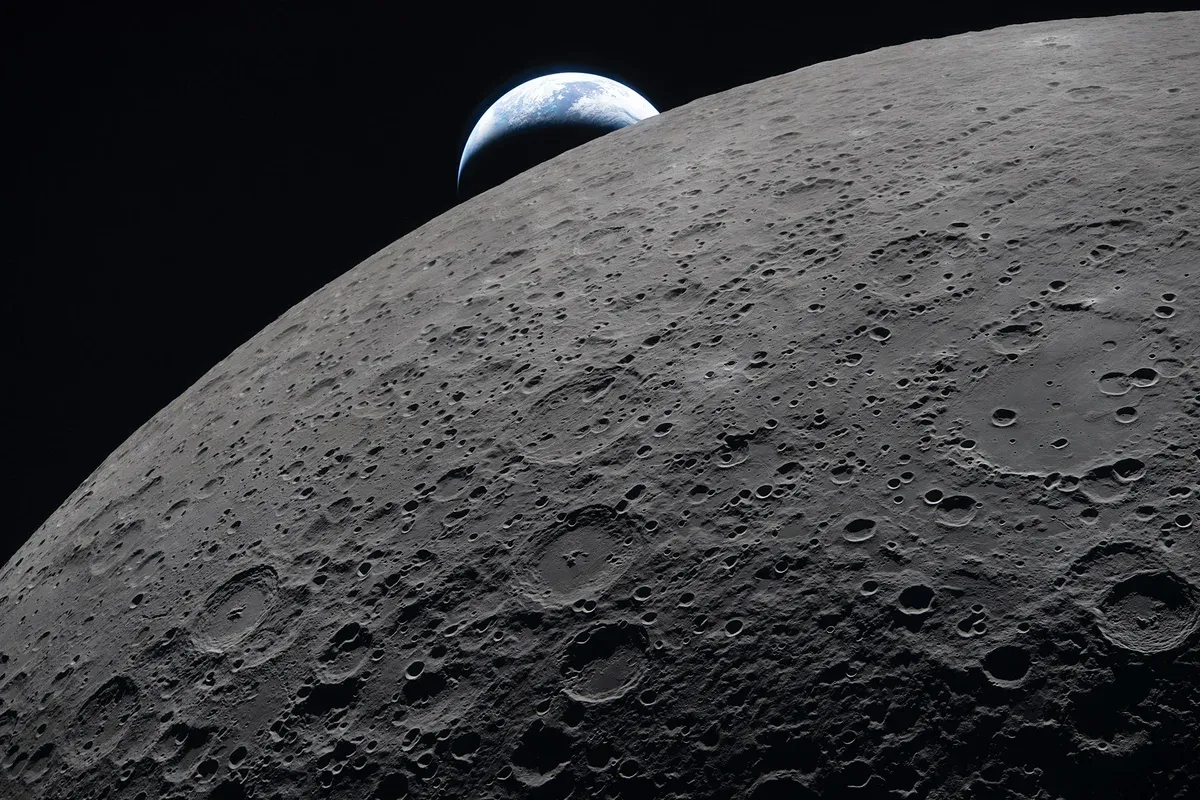
Astronomers have a plan to observe an errant piece of a SpaceX rocket as it hits the Moon. The result is a better look at what impact events do, and how the scientific community can study them in near real time.
Astronomers are preparing to observe an errant piece of a SpaceX rocket as it hits the Moon. The goal is straightforward but unusually time-sensitive: watch the impact event itself so scientists can better understand how lunar collisions play out.
This is not just curiosity for curiosity's sake. Impact events can tell researchers a lot about surface conditions, energy transfer, and the immediate aftermath of collisions, all of which matter for how we interpret the Moon as an evolving environment. By getting eyes on the moment of contact, astronomers hope to turn a messy, uncontrolled arrival into measurable information rather than pure speculation.
For decision-makers, the bigger story is how the space sector is learning to live with uncertainty while still producing scientific value. Launches involve complex trajectories, and not every element ends up where planners intended. When an object goes “errant,” it creates a problem for operators and potentially a regulatory or public-safety question. But it can also create an opportunity for the research community, if there is a credible plan to monitor, record, and analyze what happens.
That dynamic sits at the intersection of science, operations, and oversight. Space regulators and industry stakeholders often focus on controlled missions, predicted reentry or disposal outcomes, and risk management. When outcomes deviate from plans, the spotlight shifts toward understanding what actually happened and whether the event was within expected risk boundaries. In that sense, the astronomers' observation plan is a bridge between two worlds: real-world operational variance and the scientific imperative to collect data that improves future interpretation.
There is also a media and funding angle here, even if the source text stays focused on the observation plan. Impact events are visible and newsworthy. If the astronomical community can systematically observe the crash and publish clear findings, it can strengthen the case for continued investment in lunar observation capabilities, from telescopes and tracking networks to rapid analysis pipelines. That matters because lunar research does not just live in academic journals. It influences how companies and agencies plan future missions, how they model hazards, and how they validate safety assumptions.
Zoom out further and you can see second-order implications for boards and executives across the sector. The space industry is scaling quickly, and the Moon is no longer a distant destination limited to a few flagship missions. As more objects are launched, more mission stakeholders will inevitably face cataloging and monitoring events that were not fully planned. That means governance questions will show up more often: How prepared are monitoring systems? Who coordinates observations when outcomes are uncertain? And how do operators and researchers share information quickly enough to turn impacts into actionable learning rather than historical footnotes?
Finally, consider what this particular plan signals about the relationship between private spaceflight and public science. SpaceX launches are frequently discussed in terms of engineering and cost, but here the emphasis is on what astronomers can extract from the consequences of an errant piece making contact. If scientists can observe and analyze impact events effectively, it strengthens the feedback loop between missions and understanding. For peers in adjacent roles, the strategic stake is clear: turning unavoidable messiness into reliable measurement can influence both scientific output and how the industry earns trust over time.
This story's Key Insights and Take-aways are locked.
Create a free account to unlock Executive Actions for one credit.
Register to UnlockAlways free for Executives Club members. Join the Club
More in Science

2026 Nikon Small World Winners Reveal the Hidden Machinery of Everyday Life
A mycologist's frozen Edinburgh garden became the backdrop for vivid views inside cells, a reminder of what advanced imaging now makes visible to researchers and the industries built on biology.

Study: 1 in 4 depression cases may be a body-clock problem, not a chemical one
A 10,000-person study finds standard antidepressants often fail these patients, but melatonin and morning sunlight may hit the real root cause.

Start-Up Says A.I. Designed a Virus to Attack One Patient's Superbug
If the claim holds up, personalized phage therapy could become a new frontline weapon against antibiotic resistance - but proof is far from final.