
Atlas V lifts 29 Amazon Leo satellites off Florida, hitting Atlas V payload weight record
A July 2 launch deploys 29 more Amazon Leo broadband satellites, advancing a 3,200-satellite plan in LEO.
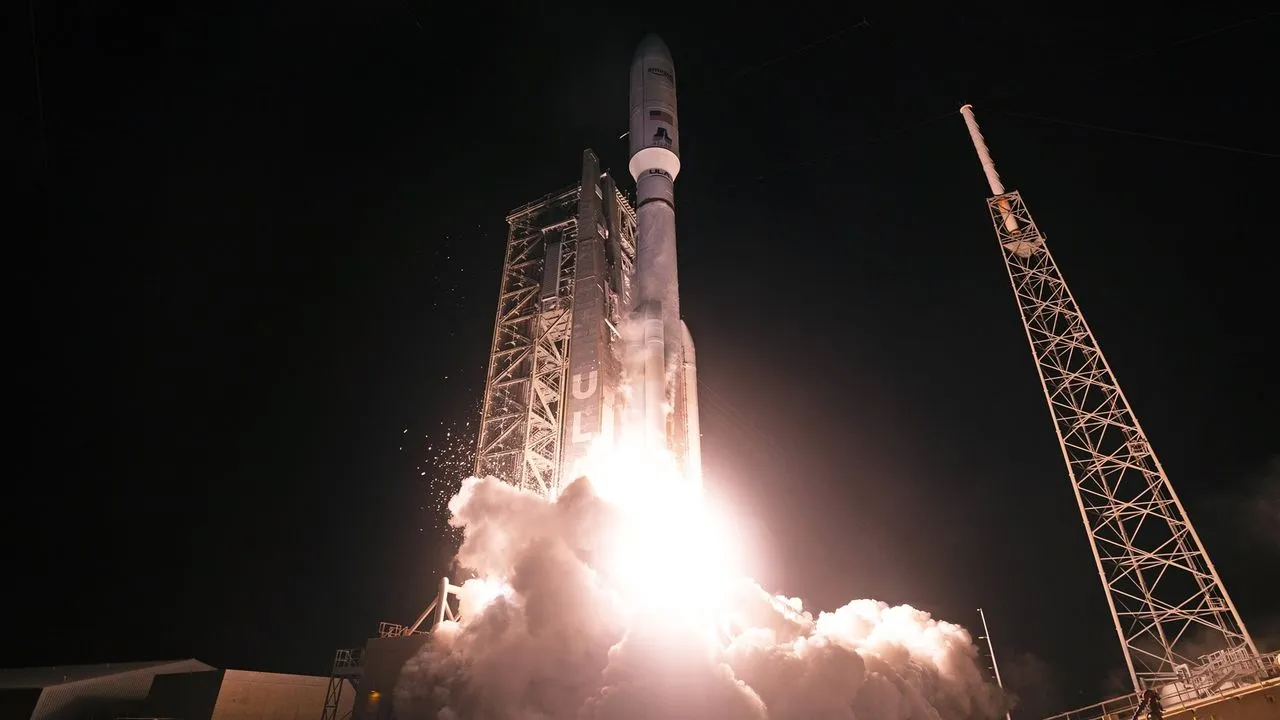
United Launch Alliance launched an Atlas V rocket carrying 29 Amazon Leo spacecraft from Cape Canaveral Space Force Station early July 2. The successful deployment into low Earth orbit advances Amazon's Project Kuiper-like megaconstellation push and adds competitive pressure to Starlink.
United Launch Alliance’s Atlas V rocket launched 29 more Amazon Leo satellites into low Earth orbit early Thursday morning, July 2, from Florida’s Cape Canaveral Space Force Station. Liftoff happened at 12:30 a.m. EDT (0430 GMT), and ULA said all satellites were successfully deployed in LEO as planned, 70 minutes after liftoff.
This is not just another space news line. Amazon Leo is part of a much larger broadband bet: the constellation is expected to consist of about 3,200 satellites. Today’s deployment matters because constellations do not scale linearly. Each successful run tightens the production-to-launch-to-deployment pipeline, and it accelerates a competitive timetable that investors and regulators both watch.
Amazon Leo, as the source notes, is Amazon’s broadband megaconstellation in LEO, which is why the name points directly at what the system is built to do. It is designed to compete with SpaceX’s Starlink, which currently has nearly 11,000 satellites and continues to grow. In other words, Amazon is not entering an empty sandbox. Starlink is already operating at large scale, and the competitive gap is measured in satellite counts, deployment cadence, and how quickly services can reach meaningful coverage.
The launch also highlights how the “delivery layer” for constellations is becoming just as important as the “network layer.” The source lists that about 400 Amazon Leo craft have reached orbit so far across 15 missions, using three different rockets: Atlas V, SpaceX’s Falcon 9, and Arianespace’s Ariane 6. Atlas V has been the most active of the three, with nine Atlas V liftoffs for the megaconstellation. That consistency suggests Amazon has leaned on multiple launch providers while still maintaining a clear operational rhythm with Atlas V.
One detail worth executives noticing: the megaconstellation’s earlier naming and flight history. The source says the constellation was originally known as Project Kuiper. It also explains that the first of the Atlas V launches carried two prototype satellites, not operational craft, which is why Thursday’s mission was called Amazon Leo 8 rather than Amazon Leo 9. If you are tracking performance claims, this kind of numbering nuance matters. It is a reminder that “mission number” is not the same thing as “operational satellite cadence,” and the data investors cite can look cleaner than reality if you do not read the footnotes.
There is also a rocket-specific story baked into the numbers. The Atlas V that flew on Amazon Leo 8 was the 551, described as the most powerful variant. The source details what that means mechanically: five solid rocket boosters, a 5-meter-wide (16.5 feet) payload fairing, and a Centaur upper stage with a single engine. These configuration specifics matter for planning because payload volume and mass directly affect how many satellites can fly per mission and how expensive each deployment effectively becomes.
The payload math gets especially interesting for cost and capacity. The 29 Amazon Leo satellites launched Thursday weighed a total of about 18 tons, tying the record for the heaviest load ever launched by an Atlas V. The record was set on the Amazon Leo 5 mission in early April, and this new mission equaled that maximum load multiple times since. In practice, hitting the top end of payload capacity is the kind of operational milestone that can influence procurement, launch scheduling, and how quickly the company can close the gap between “satellites built” and “satellites in service.”
For decision-makers, the second-order implication is straightforward: as megaconstellations scale, launches become recurring strategic bottlenecks. Amazon is pushing forward at a time when Starlink already has nearly 11,000 satellites in orbit, and Amazon’s plan of about 3,200 satellites is now being executed in real deployment cycles, not just announcements. Meanwhile, ULA’s Atlas V remains a key workhorse for this campaign, and Thursday’s successful deployment at maximum payload weight underscores that the supply chain for orbital deployment is still under heavy stress. Even if your company is not building satellites, your partners, costs, and competitive timing likely depend on the same launch cadence reality.
This story's Key Insights and Take-aways are locked.
Create a free account to unlock Executive Actions for one credit.
Register to UnlockAlways free for Executives Club members. Join the Club
More in Technology

Nvidia's $89B data center quarter: the 9 companies cashing in
The AI buildout is minting fortunes beyond GPUs, and memory, cloud, and cooling suppliers are riding the same wave.

Google quietly links your phone number to every Android account on your SIM
Adding a SIM now ties your phone number to all Google accounts - and future accounts inherit it. Here's the security and privacy stakes.

Hijacker AI 'Skynet mode' runs 100,000 attack steps against exposed models
Symantec caught a criminal AI agent that borrows other models, steals data, and mines crypto; the only relief is no confirmed victims yet.