

Bandcamp lifer Nate Amos got sober at 35, and his new album finally makes sense
The Water from Your Eyes guitarist turned addiction into lyrics, sobriety into peace, and prolific output into a calmer plan.
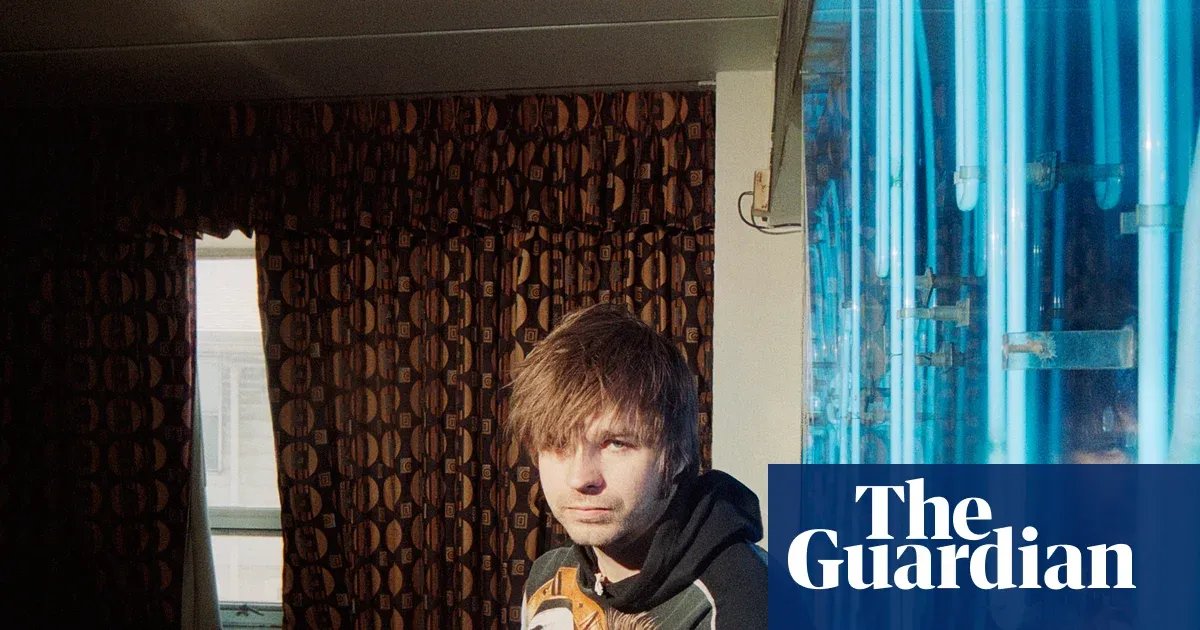
Nate Amos, the singer-songwriter and Water from Your Eyes guitarist behind the This Is Lorelei project launched in 2012, reflects on getting sober and his new album. For decision-makers in creative and creator-economy businesses, his arc is a real-time case study in how dependency can fuel output and then hollow it out.
Nate Amos, the singer-songwriter and Water from Your Eyes guitarist, is 35 now, and he is sober. He talks about what changed after he got sober, and he frames his new album around the songs that helped him turn his life around. The most telling detail is the one he mentions without drama: his tattoo reads “OK N8” on his knuckles, and a friend inked it a few years ago, soon after Amos got sober, a moment he describes as “exactly when you’re not supposed to be making decisions like getting a tattoo on your hand.” It is funny, but it also lands like a diagnostic. Recovery is not a switch. It is a process. And in his case, it comes after years of making music to “get through the day,” even as substances crept into the center of his life.
For most of his life, Amos made music to cope. He was prolific in a way that sounds like inevitability until you see the cost. Since his This Is Lorelei project launched in 2012, he uploaded dozens of self-produced albums and EPs. Bandcamp, the platform that turned bedroom releases into something searchable, shareable, and discoverable, gave him a stage that felt independent and forgiving. Now he is, in his peers’ eyes, almost a folklore figure. The source describes him as “the quintessential Bandcamp artist,” part bedroom-pop whiz, part alt-country troubadour, part indie rock rascal with a big, heavy heart. And crucially, even in the myth, the timeline matters: his sobriety arrives and then, a few years later, his body still remembers the early sobriety phase as a time when decision-making was shaky.
If you zoom out from one artist to how the creator economy actually works, the incentives get clearer. Platforms like Bandcamp reward consistent output. Algorithms do not literally think like humans, but they do reward patterns: new releases, page visits, followers, back-catalog familiarity. For someone like Amos, who was using music as a day-to-day survival tool, that kind of structural reinforcement can become a treadmill. High creativity under pressure is a known phenomenon, and the source makes plain that his prolific output coexisted with a growing dependence on substances. That is the second-order trap: dependency can masquerade as “discipline” or “drive” while the person is still building a volume-based career. Then, eventually, the same system that helped them output can make it harder to step back.
Amos is sitting in the basement of a cafe in Camden Town, north London, cradling an iced matcha. That detail is not just scene dressing. It is a small map of boundaries. He says coffee makes him “feel like shit,” and he no longer indulges such foibles. That line is the kind of quiet behavioral shift that rarely appears in press releases about albums and tours, but it is often the real turning point in sobriety. In other words, the “new album” is not only artistic. It is behavioral evidence that the recovery process has moved from abstract intention into daily choices: what he drinks, what he does, what he avoids.
The source also sketches how his mind works in the sober present. In a tough spot, he will swing back in his chair and search for answers that always seem to be hiding beneath the table. But each time he stumbles upon the truth, he looks up with a hungry smile. That matters because it hints at something that boards, founders, and investors often want to hear but rarely see: identity rebuilding. When Amos says he was making music just to get through the day for most of his life, he is describing an emotional utility function. Sobriety does not erase talent or drive. It changes the input. The question becomes: what does the output serve now? The answer, in his story, is peace.
Now, even though this is a music profile, there are real regulatory and business-adjacent implications worth noting for decision-makers. Addiction is health-related, and while the source does not discuss specific regulations, the structure of care and workplace expectations for artists and creators is becoming more visible across industries. In many markets, employers, venues, platforms, and managers increasingly have to think about duty of care: safety policies, wellness supports, and the practical question of how to sustain a career when a person is managing a long-term condition. Amos’s timeline illustrates what that looks like in lived form: a high-output period driven by need, followed by a sober period that still includes risk and messy decision-making early on. If you are running a label, a booking operation, or a creator platform, the operational lesson is that “rehabilitated” is not the same as “risk-free.”
Second-order, there is also a storytelling lesson for anyone building a brand. His peers treat him like a lost folk hero from a bygone era. That is part of the cultural payoff. But the foundation is authenticity: dozens of self-produced releases since 2012, a tattoo that marks early sobriety decisions, and the candid admission that coffee can derail him. The new album, in this framing, is not a reinvention story that erases the past. It is the songs that helped him turn his life around. For other operators and creators watching from the sidelines, that is the stakeholder reality: you can be prolific and still be hurting, and you can still build meaning after the hurt.
So the strategic stake here is not just “music as therapy.” It is the business of sustainable output. Amos’s arc shows how a creator can be unstoppable, and then how dependence can make that unstoppable pace fragile. It also shows the counter-model: sobriety that changes not only lyrics but routines, choices, and decision-making. For founders, boards, and investors in creator-focused ecosystems, the uncomfortable takeaway is that the culture of constant release can hide the cost of constant pressure. Amos is proof that recovery can restore the craft. The question is whether your systems are designed to support humans, not just content calendars.
This story's Key Insights and Take-aways are locked.
Create a free account to unlock Executive Actions for one credit.
Register to UnlockAlways free for Executives Club members. Join the Club
More in Entertainment

Ali G's 'stooge' says he was in on joke, outplayed Sacha Baron Cohen
A 54-year-old aspiring actor says he recognized Sacha Baron Cohen mid-shoot, kept his MAGA act up, and let the film-makers think they had fooled him.

Entertainer Russell Brand denies 7 sex charges amid accuser's 'couldn't breathe' claim
The alleged victim's account sharpens the reputational and legal stakes for Brand, his platforms, and any business tied to a public figure under criminal scrutiny.

Russell Brand's accuser 'bewildered and confused' as he denies 7 sex charges
The criminal case against the comedian is a live test of how media companies manage talent risk when serious allegations go public.