
Bashar al-Assad names 70 lawmakers, appoints 15 women to post-Assad parliament
The new Syrian parliament fills 70 seats under a post-Assad plan, with women appointments far exceeding elected selections.
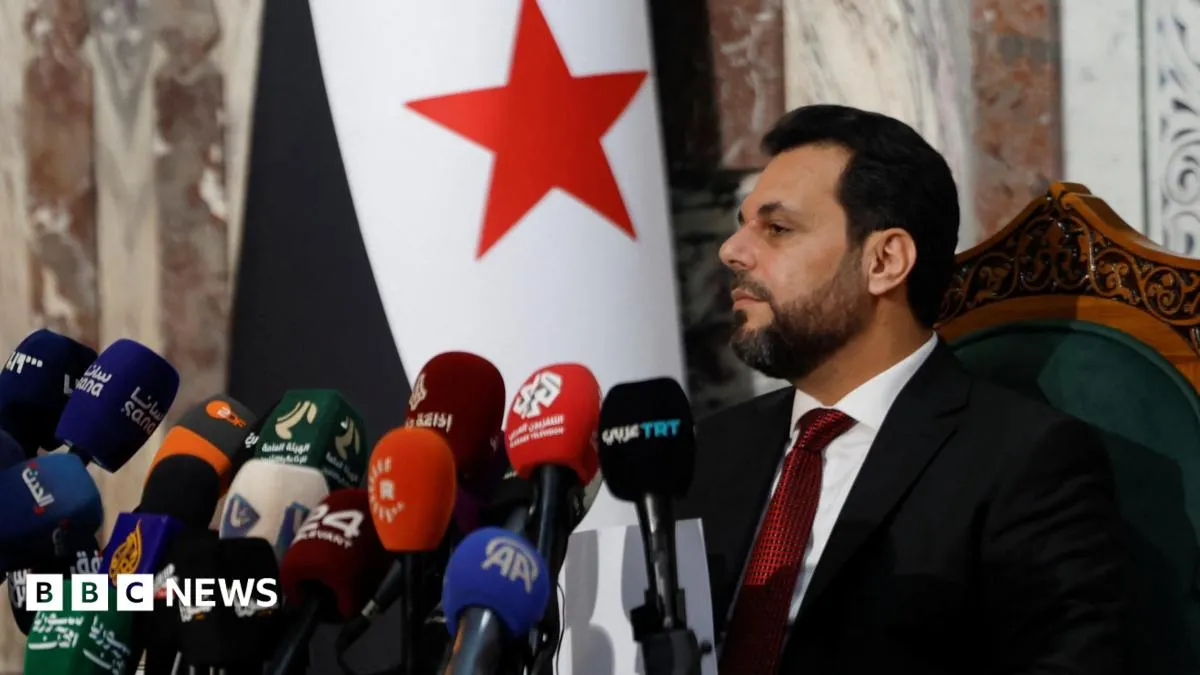
Syria's president Bashar al-Assad has named the final 70 lawmakers for a new post-Assad parliament, including 15 women. The composition shift matters to decision-makers because it changes how representation is determined when elections yield limited results.
Syria's president Bashar al-Assad has named the final 70 lawmakers for a new post-Assad parliament, and 15 women are among those appointments. The BBC reports that this comes after regional electoral colleges selected only six female candidates last October. In other words, the final seat allocation did not simply mirror election outcomes. It significantly amplified women’s representation through appointment.
That math is the whole story. If only six women were selected by regional electoral colleges, yet 15 women were appointed by the president, then the appointment mechanism is acting like a correction factor, not a formality. For executives, policy watchers, and anyone who needs to understand how institutions get built under pressure, this is a concrete signal: when elections produce a narrow candidate pool, the authorities controlling appointments can still rewrite the gender mix of the final legislature.
To understand why that matters beyond symbolism, zoom out to how post-conflict political systems tend to work. When new governing structures are formed, they usually juggle three forces at once: legitimacy from elections, control from appointments, and speed from whatever process can be executed quickly. The reference to regional electoral colleges selecting candidates last October points to a tiered pipeline: regions choose candidates, and then higher-level authorities translate candidate lists into final seats. In this case, the pipeline apparently yielded a small number of women candidates, and the presidential appointments expanded that number.
For boards and leadership teams looking at political risk, capital allocation, or regulatory change, representation is not just culture. It can affect the direction and credibility of institutions, the way constituencies see themselves reflected in governance, and how reliably rules are enforced. Even if the day-to-day regulatory mechanics are not described in the source, the governance structure itself is part of the operating environment. When a parliament is constituted, it becomes a stage where laws are debated and sanctioned, budgets are discussed, and oversight is attempted. Who sits there, and how they arrived, influences how power will be exercised and how quickly new norms can be institutionalized.
There is also a governance legitimacy angle. Elections, even partial ones like candidate selection by regional electoral colleges, can be used to claim procedural legitimacy. Appointments can be used to claim competence, balance, or a desired social outcome. The BBC’s detail that only six female candidates were selected by regional electoral colleges last October sets up a tension that decision-makers will notice immediately: was the pool limited by participation, by candidate recruitment, by barriers to selection, or simply by how regions filled their shortlists? Without additional reporting, you cannot assign blame or cause. But you can say this with confidence: the system produced a gender skew at the electoral-college stage that the presidential appointment stage then materially altered.
Second-order implications show up in how stakeholders plan their engagement. If you are an organization that anticipates dealing with the new parliament, you will treat the appointment authority as a lever. That means mapping not only election outcomes, but also the criteria and incentives that drive appointments. In many systems, the appointing authority may prioritize political alignment, regional balance, expertise, or social representation. Here, the reported outcome suggests that at least one dimension, women’s representation, is being advanced more aggressively via appointment than via the regional selection stage.
There is another practical governance consequence: a parliament made up of appointed members can be perceived as more directly accountable to the president than a parliament composed strictly through election. That perception can influence coalition behavior, negotiation dynamics, and how quickly proposed changes move. Even without speculating on party structures or voting patterns, the institutional design is clear: presidential naming of lawmakers is substantial enough to reshape outcomes from the earlier selection step.
So what should a decision-maker take from this? The BBC’s report is brief, but it contains a usable signal. In a post-Assad transition framework, seats are not only won through regional electoral colleges. They are also granted or adjusted through presidential appointments, and that adjustment can dramatically affect who ends up inside the legislature. When governance is being rebuilt, the “final 70” named lawmakers represent not just a list of individuals, but the formal mechanism that can override limited candidate selection. That mechanism will matter for anyone trying to anticipate how legislation, oversight, and representation will play out in the early days of the new parliamentary order.
This story's Key Insights and Take-aways are locked.
Create a free account to unlock Executive Actions for one credit.
Register to UnlockAlways free for Executives Club members. Join the Club
More in Politics

Glacial collapse, not rain, killed 180 in Nepal's Himalayan flood
The Himalaya's extreme geography hid the true cause of Nepal's catastrophic flood, a glacial collapse that turned a geological battleground into a mass-casualty zone.

Iran’s Esmail Baghaei says Oman talks start shipping via Hormuz, not US talks yet
Temporary route plans with Oman aim to restart commerce while Tehran says Washington dialogue is not on the table.

Standards watchdog opens probe into Reform UK deputy leader Richard Tice over interests
The parliamentary standards commissioner says it began an investigation on 28 July into a possible undeclared interest.