
Battle of Bunker Hill dig turns up wig curlers and musket balls
Archaeologists’ new finds deepen the story of the first major American Revolution clash, and what that means for how we interpret history.
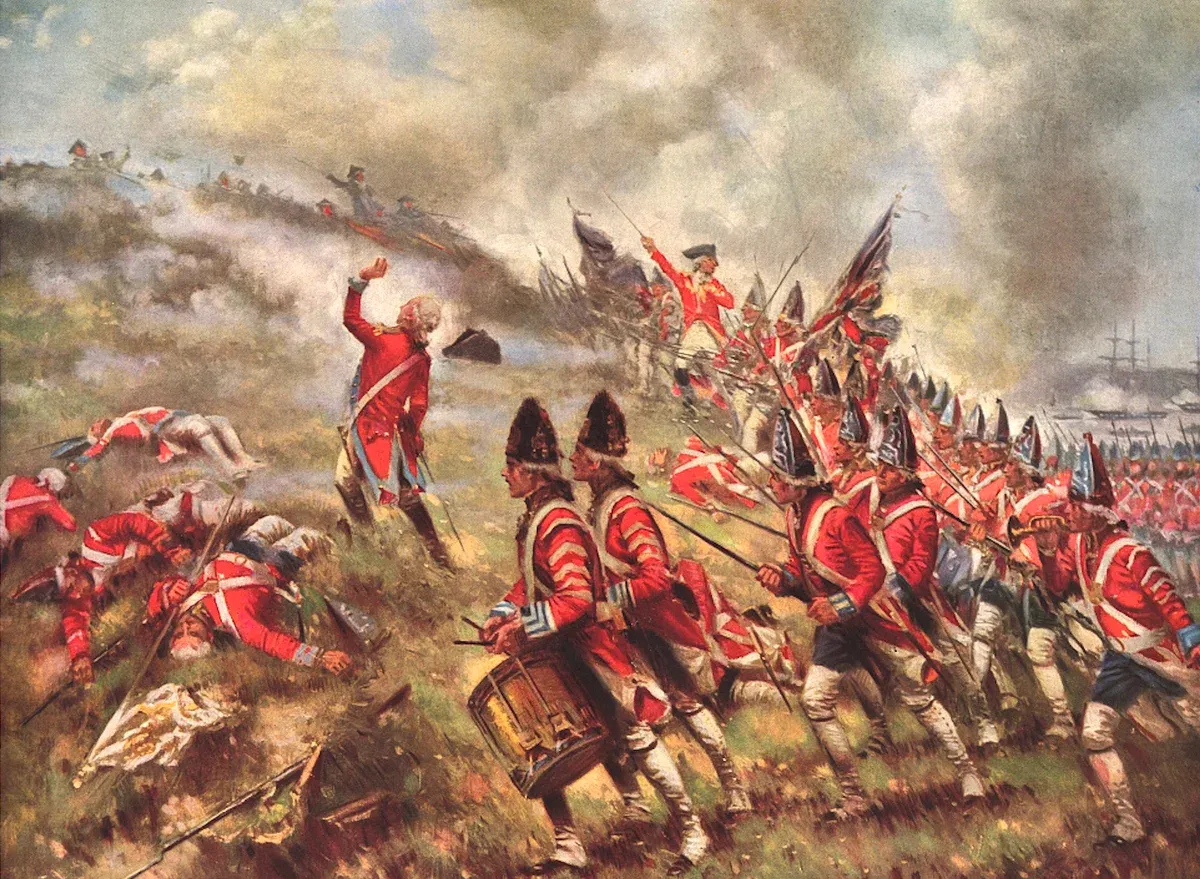
Archaeologists have uncovered new material at the Battle of Bunker Hill site, including musket balls and wig curlers. The consequence for decision-makers is a reminder that “where data comes from” can reshape narratives people rely on.
A new archaeology sweep at the Battle of Bunker Hill is doing something most people never expect from a battlefield. It is not just confirming the expected. Researchers have turned up everything from musket balls to wig curlers at the site of the battle, which was the first major clash of the American Revolution.
That combination matters, because it signals that the dig is capturing both the violence and the everyday life that surrounded it. Musket balls are the obvious evidence of fighting. Wig curlers are the eyebrow-raising evidence of people, routines, and personal belongings, which can make historical reconstructions feel less like a legend and more like a lived scene.
For executives and operators, the immediate lesson is about evidence quality and interpretive power. When archaeologists find only battle debris, the story naturally narrows to tactics and outcomes. When they also find items like wig curlers, the historical “dataset” expands from impact to context. In other words, the artifacts do not just answer “what happened.” They can also influence how we decide what was happening around it, and how confident we should be in particular reconstructions.
This is why modern historical research is increasingly data-driven in its own way. The battlefield is not a spreadsheet, but it behaves like one: the material record is incomplete, biased toward what survives, and shaped by where people walked, fought, and dropped things. A dig that recovers a fuller spread of objects, from weapons-related items to grooming-related items, reduces the risk of building a narrative from a partial slice of reality. You can think of it as lowering the odds of mistaking a “survival artifact” for a “behavioral artifact.”
There is also a second-order implication for anyone who funds, oversees, or communicates research, including boards and investors in culture, education, and heritage. Public attention often clusters around headline-friendly proof points, like musket balls. But the presence of something as specific and personal as wig curlers can shift how institutions tell the story to the public, how educators frame primary sources, and how curators design exhibits.
In practice, that can affect reputations, donor confidence, and partnerships. Heritage projects live or die on credibility, and credibility tends to follow methodological transparency. Even without getting into technical details, the core signal in this report is that archaeologists are uncovering material breadth at a site tied to a foundational moment of the American Revolution. When the findings cover multiple categories of artifacts, they become harder to dismiss as a narrow coincidence.
That matters beyond history buffs. Many industries rely on narrative legitimacy: how science is explained, how data is interpreted, how institutions justify decisions, and how communities maintain trust. The story of Bunker Hill reminds us that interpretation is not independent of evidence collection. If the archaeological “inputs” change, the “outputs” can change too, even if the big historical events remain what they are.
Strategically, this is a clean reminder for peers in knowledge-intensive roles: if you want robust conclusions, you need broad, representative evidence, not just the most dramatic-looking artifacts. Musket balls and wig curlers are not the same kind of information, and that is the point. One tells you about combat. The other hints at daily life and human presence. When both show up in the same site record, the overall picture becomes more textured, and the history people carry forward becomes that much more grounded in objects that were actually left behind.
This story's Key Insights and Take-aways are locked.
Create a free account to unlock Executive Actions for one credit.
Register to UnlockAlways free for Executives Club members. Join the Club
More in Science

2026 Nikon Small World Winners Reveal the Hidden Machinery of Everyday Life
A mycologist's frozen Edinburgh garden became the backdrop for vivid views inside cells, a reminder of what advanced imaging now makes visible to researchers and the industries built on biology.

Study: 1 in 4 depression cases may be a body-clock problem, not a chemical one
A 10,000-person study finds standard antidepressants often fail these patients, but melatonin and morning sunlight may hit the real root cause.

Start-Up Says A.I. Designed a Virus to Attack One Patient's Superbug
If the claim holds up, personalized phage therapy could become a new frontline weapon against antibiotic resistance - but proof is far from final.