
Ben Shapiro calls Chris Nolan's 'The Odyssey' a masterpiece, and roasts the backlash
In an 18-minute YouTube review, Shapiro praises the film while dismissing right-wing complaints about casting and politics.
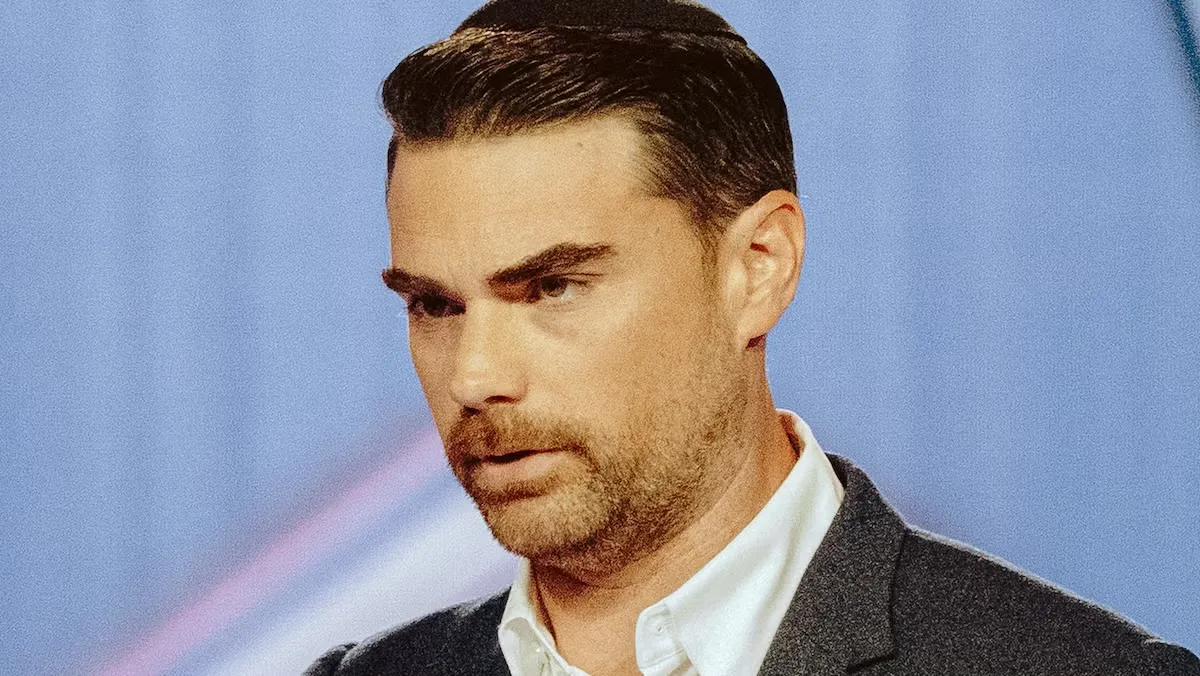
Ben Shapiro posted an 18-minute YouTube video reviewing Chris Nolan's film 'The Odyssey,' which hit theaters on Friday. His critique praises Nolan as unparalleled, calls the movie a masterpiece, and argues that conservative outrage will not sink box office success.
Conservative political commentator Ben Shapiro did not exactly take the high road when discussing 'The Odyssey.' In a video review posted to YouTube the day the film hit theaters on Friday, Shapiro lauded Chris Nolan's work as a “masterpiece,” then went after conservative critics who said the movie would fail because of its casting and politics.
Shapiro’s core claim was blunt: “I mean, the movie is a masterpiece,” he declared, rating it between an 8.5 and a 9. He also called Nolan “unparalleled,” adding: “He’s the best director working today, without a doubt,” before saying Nolan “just creates iconic movie after iconic movie.” That praise was paired with a defense of narrative choices, including the film’s handling of why the war starts and what the story implies about characters like Helen of Troy.
Here is where the story gets more interesting for anyone tracking culture, media narratives, or political brand risk: Shapiro is not just reviewing a film. He is actively trying to reframe how conservatives should interpret art that they think comes with “bad politics.” Toward the end of the review, he acknowledged that many conservatives are “getting pre-whipped up” about the film. His point was that people often show up anyway when the entertainment quality is high.
Shapiro also tackled one of the loudest controversies surrounding the movie, Lupita Nyong’o playing Helen of Troy. He argued the script itself undercuts the simplistic complaint that the war is launched over Helen being “gorgeous.” “Here’s the thing: Actually, in the script, Nolan goes out of his way to explain that the war wasn’t really launched over Helen being gorgeous,” Shapiro pointed out. In other words, he is saying the backlash is missing the movie’s internal logic, which matters because culture-war fights tend to treat summaries as evidence. When the summary fails, the outrage loses traction.
But Shapiro’s critique does not stay purely narrative. He also weighed in on casting, including Elliot Page playing Sinon, calling it an “absolute puzzler.” In the same section, Shapiro misgendered Page, whose pronouns are he/hey, when he said: “She is about 5’2 and 105 pounds soaking wet and has the voice of a woman. It doesn’t work.” Whether one agrees with Shapiro’s take or not, this is the kind of mismatch between cultural assumptions and on-screen choices that can turn a normal entertainment debate into an identity and values flashpoint.
Then Shapiro pivoted from casting specifics to a larger prediction about consumer behavior and political messaging. He argued that right-wing figures were wrong to assume the film “is gonna bomb because of that.” His logic was essentially audience demand vs. ideological packaging: “It turns out that when people want to be entertained, they are willing to entertain even bad flaws in the tooth, if the smile is nice.” He continued: “It turns out the people are willing to undergo some bad politics and some decision making if the film is great.” If you are an executive at a studio, a platform, or even a political media company watching engagement metrics, that mindset is a reminder that controversy can raise awareness without necessarily harming performance.
Shapiro’s review also included a clarifying note: he said the film does not “100-percent stick” to the characterizations of Odysseus and “The Odyssey” by Robert Fagel. That detail matters because it signals he is not trying to pretend the film is a textbook adaptation. Instead, he is leaning into an auteur argument: Nolan can take liberties and still produce something exceptional. In an industry where adaptations are constantly judged on fidelity, Shapiro is effectively telling his side that quality can overrule strict adherence.
Finally, Shapiro offered advice aimed at conservative strategy in culture. “If conservatives want to be effective in the culture, you can’t just label the entire piece of art ‘bad’ because a decision in the art is bad,” he said. That is the real business takeaway for anyone who builds campaigns, launches content, or funds creators: the fastest way to lose influence is to collapse nuance into a blanket verdict. Shapiro’s stance suggests a different playbook, one that distinguishes between what he calls flaws and what he calls excellence, and treats audience payoff as the ultimate test.
For peers trying to anticipate second-order effects, the stakes are clear. When a high-profile political commentator tells conservatives not to write off an art piece, it can shift how attention, debate, and purchasing decisions move across audiences. Even for executives who do not care about politics, this is still a distribution problem. Media controversies can change who shows up, how long they talk about it, and what narratives stick when ticket sales and streaming demand start to tell the story.
This story's Key Insights and Take-aways are locked.
Create a free account to unlock Executive Actions for one credit.
Register to UnlockAlways free for Executives Club members. Join the Club
More in Entertainment

12TB Steam 'teraleak' goes beyond Valve: GTA 3, Mafia 2 prototypes exposed
A 12-terabyte dump of Steam data reveals prototypes and builds of third-party classics like GTA 3 and Mafia 2, plus unreleased Valve content, rewriting game history.

LinkedIn's romance problem: 1 in 4 workers say dating on it is fair game
A new survey shows a quarter of U.S. employees treat the professional network as fair game for romance, even as LinkedIn bans it and removes hundreds of thousands of offending posts.

Enhypen's first No. 1 album breaks K-pop's Billboard 200 streak
The K-pop group's 98,000-unit debut tops the chart while Dolly Parton's catalog reentry shows how death reshapes streaming.