
Bethesda admits it is unsure Fallout 76 goes beyond America, spotlights Fallout London
Fallout 76 leaders say the future of the shared world is uncertain, but a mod-sized bet may prove the path.

Bethesda's Fallout 76 creative director Jon Rush and production director Bill LaCoste discuss infestations, the Fallout TV show's impact, and what comes next for the shared-world RPG. Their comments tie the game's expansion hopes to Fallout London, which they call out as turning a dream into reality.
Bethesda's Fallout 76 leaders, creative director Jon Rush and production director Bill LaCoste, walked right up to a brutally practical question: will Fallout 76 ever move beyond America? They did not give a confident yes. Instead, in the interview, they said they do not know if Fallout 76 will ever move beyond America, while delivering “a special shout-out” to Fallout London for making the dream a reality.
That matters because Fallout 76 is not just another open-world RPG. It is a shared-world game that lives and dies by ongoing community engagement and continuous content. When leadership hesitates to promise a geographic expansion, you are really hearing something operational: planning a live service around new regions is hard, expensive, and politically complicated inside the product pipeline. The shout-out to Fallout London is the tell that Bethesda is watching outside production models closely, even if it will not mirror them one-for-one.
To understand why this is a big deal, zoom out. Live service games have a recurring math problem: you need enough “new” to keep players coming back, but you also need enough predictability to staff and fund the next cycle without blowing your runway. Adding a new setting is not just a skin swap. It tends to require new assets, new gameplay beats, new world logic, and additional QA, all while keeping the existing game stable. If Bethesda does not know whether Fallout 76 will expand beyond America, it is because the trade-off is real.
Rush and LaCoste also talked about infestations, which is a key signal about how Fallout 76 thinks about changing the world. Infestations are one of those systems that can keep the same map feeling alive. The point of a world mechanic like that is not only narrative. It is also retention. These events create new reasons to log in and new stories for players to tell each other, without requiring the studio to rebuild the globe every quarter.
Then there is the Fallout TV show. The interview addresses its impact, and that is a reminder that the franchise is now a multi-front business. A show can spike attention, bring in players who have never touched a controller, and reset what “Fallout” means culturally. For Bethesda, that translates into pressure. A new wave of fans may arrive expecting the game to feel like the franchise they just consumed. If the studio cannot immediately expand beyond America, it still has to deliver franchise coherence through events, mechanics, and content cadence.
The most interesting part of the exchange, though, is how Bethesda positions Fallout London. Fallout London is referenced as making the dream a reality, which is essentially a real-world proof point: players and creators can imagine, build, and sustain a setting outside the base geography. For executives and boards, that creates a second-order question. If a community-led effort can demonstrate demand and execution, how does that change internal priorities? It does not automatically mean Bethesda will copy the approach. But it does mean leadership has evidence to calibrate risk and timing.
This is where incentives inside a studio start to show. Bethesda has to balance the “core” of Fallout 76 with the franchise momentum from TV, and it has to do it without destabilizing the live service. Plans that sound simple in a pitch deck, like “expand to a new region,” can become multi-year engineering and content commitments. Meanwhile, board-level scrutiny tends to reward measurable progress and penalize uncertainty. So the refusal to declare certainty about moving beyond America reads like operational honesty, not marketing vagueness.
For peers managing other shared-world RPGs, the strategic takeaway is straightforward. Geography is one lever, but it is not the only lever. Systems like infestations can refresh engagement within an existing framework, and external fandom energy, amplified by TV, can expand the addressable audience even before a major expansion ships. And if a community project is strong enough to earn a “special shout-out,” it suggests executives should watch how demand forms outside the traditional roadmap. The shared world is not just what a studio builds. It is also what players prove is possible.
This story's Key Insights and Take-aways are locked.
Create a free account to unlock Executive Actions for one credit.
Register to UnlockAlways free for Executives Club members. Join the Club
More in Entertainment

Prime Video’s Raakh leads global charts, while Spider-Noir drops to No. 3
The international run on Prime Video is reshuffling winners fast, and it is not dominated by US hits.

BOYNEXTDOOR launch first world tour with 33 shows across 22 cities
The K-pop sextet starts in Seoul July 17, adding North America and ending in Bangkok January 30, 2027.
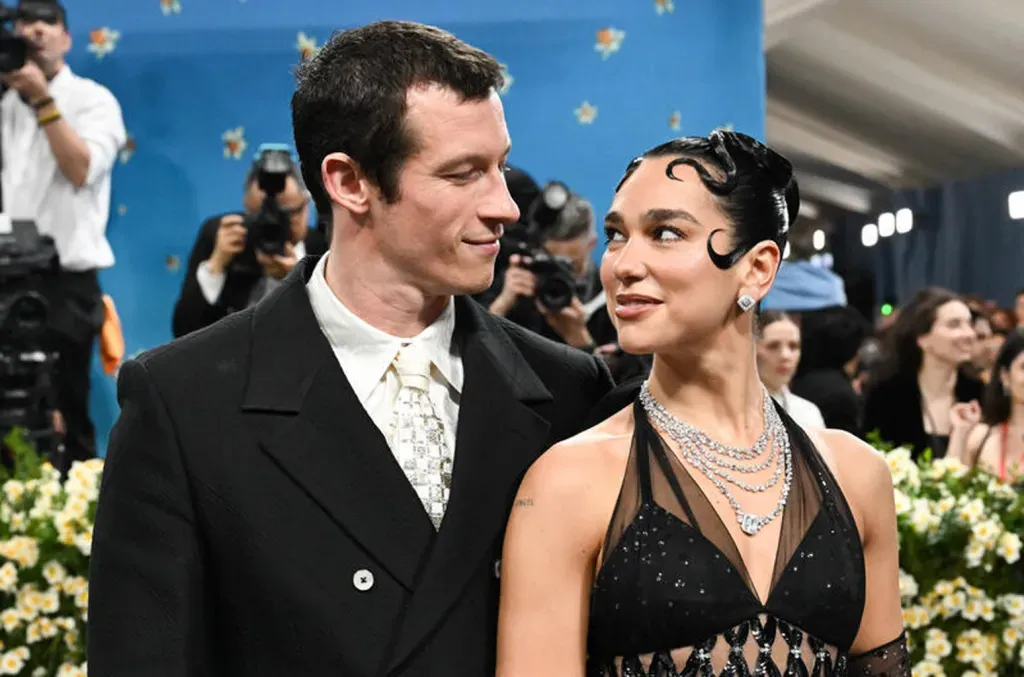
Dua Lipa posts “Mr & Mrs” from Sicily wedding as Elton John serenades “Your Song”
The singer and Callum Turner share second ceremony photos from Palermo, turning a celebrity moment into a brand moment.