
Birmingham council accused of giving Raise the Colours “free rein” on England flags
Campaigners seek an injunction as residents accuse the council and police of “dragging their heels”.
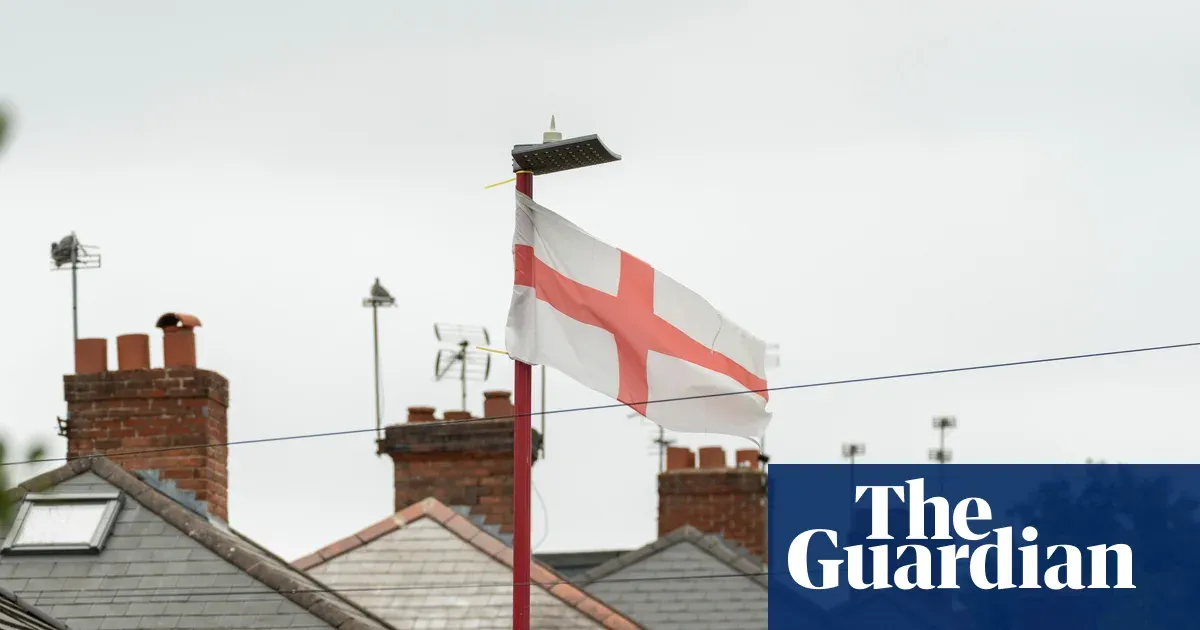
Birmingham campaigners are calling for an injunction against Raise the Colours, a group accused of spreading anti-immigration rhetoric while placing England flags across public spaces. The dispute puts local authorities, police, and city governance under pressure over how quickly they act against alleged hate-adjacent activity.
Birmingham council is facing mounting pressure after campaigners accused it of giving Raise the Colours “free rein” to erect England flags across the city. The allegation comes alongside residents’ claims that both the local council and police have been “dragging their heels” in response to what critics describe as anti-immigration rhetoric.
At the heart of the dispute is a specific, visible practice: Raise the Colours, which describes itself as a grassroots movement, has been placing union jack and St George’s cross flags on lamp-posts, roundabouts and other public infrastructure since last summer. Campaigners are now calling for an injunction, arguing that the situation has gone on long enough and that authorities should take faster action.
For executives and operators who spend time thinking about risk, this is a governance story dressed up as a flag story. The operational question is simple but high-stakes: when a group’s actions are visible in public and wrapped in contested political messaging, how do local institutions decide what to do, and how quickly? Councils and police typically have to navigate legal thresholds around public order, harassment, and whether particular conduct crosses into something that warrants formal enforcement or court-ordered limits. Even when authorities ultimately act, delay can become its own decision, fueling perceptions that institutions tolerate escalation.
The source frames a direct accusation of inaction. Residents say the council and police have been “dragging their heels,” while campaigners want an injunction against Raise the Colours. That matters because injunctions are not vague political statements. They are court tools designed to stop specific conduct. In other words, the dispute has moved from “people are upset” to “please compel or restrain specific behavior.” That shift is often where reputational and legal risk for institutions starts to harden.
Raise the Colours is described as a grassroots movement, a label that can change how both sympathizers and skeptics interpret what is happening. Supporters may see it as community expression. Critics see it as a tactic, especially because the group is accused of spreading anti-immigration rhetoric. The language matters because it signals the nature of the alleged harm. If rhetoric is part of the complaint, then the flags are not just decorations. They become part of a campaign narrative that critics believe is targeting immigration communities and inflaming tensions.
This is also why the choice of public locations is consequential. Flags placed on lamp-posts, roundabouts and public infrastructure are hard to ignore and difficult to treat as purely private activity. They turn the city into a message board, one that commuters, families, and visitors pass every day. From a governance perspective, public space is where authorities have the most legitimacy to set boundaries, but it is also where legitimacy is most sensitive. If residents perceive a double standard, it can quickly become a trust problem, not only a legal one.
For similar boards and leadership teams, the second-order implication is about process and optics. Even if a council or police service believes it is acting within existing powers, critics will evaluate timeliness and consistency. If action comes only after campaigns gather traction, the narrative becomes “dragging their heels.” Once that story takes hold, it can affect everything from community cooperation to future enforcement credibility.
There is also a strategic communications angle. When a group places symbols across a city since last summer, the momentum is already established by the time formal complaints reach decision-makers. Authorities then face a difficult choice: act quickly enough to satisfy critics without prematurely overstepping legal boundaries, and communicate clearly enough to prevent misinformation from filling the gap. In the real world, that balancing act is where small delays can produce outsized controversy.
Finally, the fact pattern has institutional spillover. An injunction request signals that courts may soon be asked to weigh claims about conduct and harm. If the case proceeds, it can create guidance for how authorities should handle comparable situations elsewhere, even beyond Birmingham. That is why this matters to executives, investors in local-adjacent risk, and leaders running public-facing organizations: the lines between expression, enforcement, and public safety are tested not only in high-profile national moments, but in city streets and roundabouts where symbols are planted with intent.
This story's Key Insights and Take-aways are locked.
Create a free account to unlock Executive Actions for one credit.
Register to UnlockAlways free for Executives Club members. Join the Club
More in Politics

LA County: DOJ's 20,000 'noncitizen' voter list is 'unreliable,' includes U.S.-born
Preliminary review by Los Angeles County election officials finds errors in the federal list, raising the stakes for voter roll integrity ahead of November.

Trump's $1.5B Pentagon chip investment lands in North Carolina
A $1.5 billion defense infusion for North Carolina chipmaking signals a new era of Pentagon-backed reshoring - here's what it means for the industry.

Nigeria confirms first Ebola case in Abuja, a woman just off a Uganda flight
Health Minister Muhammad Ali Pate says the patient flew in from Uganda, putting Africa's latest outbreak on Nigeria's doorstep.