
Blade Runner 2099 trailer makes replicants power brokers, humans second-class, November 25, 2026
Prime Video’s SDCC clip confirms a darker, first-movie closer aesthetic, 50 years after 2049.

Prime Video revealed the first Blade Runner 2099 teaser trailer and release date at San Diego Comic-Con 2026, confirming a November 25, 2026 launch. For decision-makers, the show is positioning hard toward the franchise’s original mood while signaling a post-war power shift that could define its audience growth strategy.
Prime Video just flipped the emotional engine of Blade Runner 2099 in its first teaser at San Diego Comic-Con 2026. The clip introduces Cora (Hunter Schafer), a human struggling to survive in a post-war future where replicants have won, then underlines the stakes with the official synopsis: "The war has happened and the humans have lost. Our worst fears imagined. The replicants are now the power brokers of the city. And humans are the second-class citizens." The release date is locked too. Blade Runner 2099 is slated for a November 25, 2026 premiere.
And it does not treat that power reversal like background flavor. In the trailer’s voiceover, Cora asks, "How much longer until we have nothing... until we are nothing?" while the montage leans into chaos and violence, including a jarring moment where her head is smashed against a window that may be hard to watch. Then she meets Olwen (Michelle Yeoh), a replicant near the end of her life, with motives that remain unclear in the teaser. In short, the show is telling viewers the franchise’s center of gravity has moved, and it wants you to feel that shift immediately.
This is a smart kind of sequel calculus, because Blade Runner is not just a setting, it is a mood with rules. The series is set 50 years after the events of Blade Runner 2049. That timeline matters from a programming and brand perspective: you are far enough away to explore new institutions and new social hierarchies, but close enough that loyal fans bring expectations about visual tone, moral tension, and the franchise’s signature ambiguity.
The teaser’s official tagline doubles down: "Welcome to a future we no longer control." That line sets up a world where human agency has collapsed into a system replicants run. In business terms, it is a pitch about control, leverage, and who gets to write the rules. In creative terms, it is a narrative promise: humans are not just endangered, they are marginalized as a class. That is more than aesthetic. It is character motivation at the top level.
Prime Video also signaled how it intends to “sound” like Blade Runner. Star Tom Burke discussed the show’s direction, saying there was "a moment of just letting go… I was like, 'OK, we’re really going out there with this,'" and adding that it will be "much closer to the aesthetic of the first movie than the second movie." He described it as having "that somewhat kind of Baroque, eclectic mix of cultures and time periods." Even if you treat this as a marketing statement rather than a guarantee, it tells you what the creative leadership thinks the differentiator is. The first film’s look and vibe are often remembered as more distinctive and textured, while the second film is frequently associated with a different tone and structure. If the show leans into Baroque eclecticism and first-movie aesthetics, it is essentially choosing a recognizable lane for viewers who want “Blade Runner” in the purist sense.
For executives and investors, this kind of tonal positioning matters because it changes the expected audience behavior. Sci-fi fandom is not passive. It compares, debates, and judges new entries against specific references. A show that explicitly aims for the first movie’s aesthetic is trying to reduce the friction between expectation and delivery. That can improve word-of-mouth quality, especially in a streaming era where viewers churn quickly if the experience fails to match the mental “product spec” people carry into the first episode.
There is also a distribution and timing angle baked into the announcement. The show is coming "this fall" and specifically on November 25, 2026. That date places it firmly in a period when streaming platforms typically face a crowded attention market leading into year-end. When the release is that explicit, it becomes easier for decision-makers on adjacent titles to plan counter-programming, for advertisers to estimate audience availability, and for internal teams to align marketing beats with a known premiere window.
Second-order implications are where things get interesting for boards. If Blade Runner 2099 lands as a tighter aesthetic match to the original film, it could set a template for how studios and streamers handle legacy franchises: not just extend the universe, but recalibrate the creative “North Star.” Conversely, the trailer’s depiction of replicants as "power brokers" and humans as "second-class citizens" suggests the show will likely build tension through political hierarchy, not only personal tragedy. That can broaden the franchise’s appeal beyond core sci-fi watchers to viewers drawn to stories about power distribution and institutional control.
Finally, the teaser’s structure suggests the show is designed to hook early with a clear moral conflict. Cora is introduced as a human fighting for survival, then immediately placed into a world where the power is not in her hands. Her meeting with Olwen introduces the possibility of individual agency within a system that seems immovable. If the series follows through, it is likely to deepen the franchise’s recurring questions about what “human” means when outcomes are controlled by replicants. For peers making bets on IP-driven streaming, the strategic stake is simple: Blade Runner 2099 is not merely launching in 2026. It is testing whether a franchise built on uncertainty can still generate certainty in audience demand through tone, timing, and an unambiguous power reversal.
This story's Key Insights and Take-aways are locked.
Create a free account to unlock Executive Actions for one credit.
Register to UnlockAlways free for Executives Club members. Join the Club
More in Entertainment
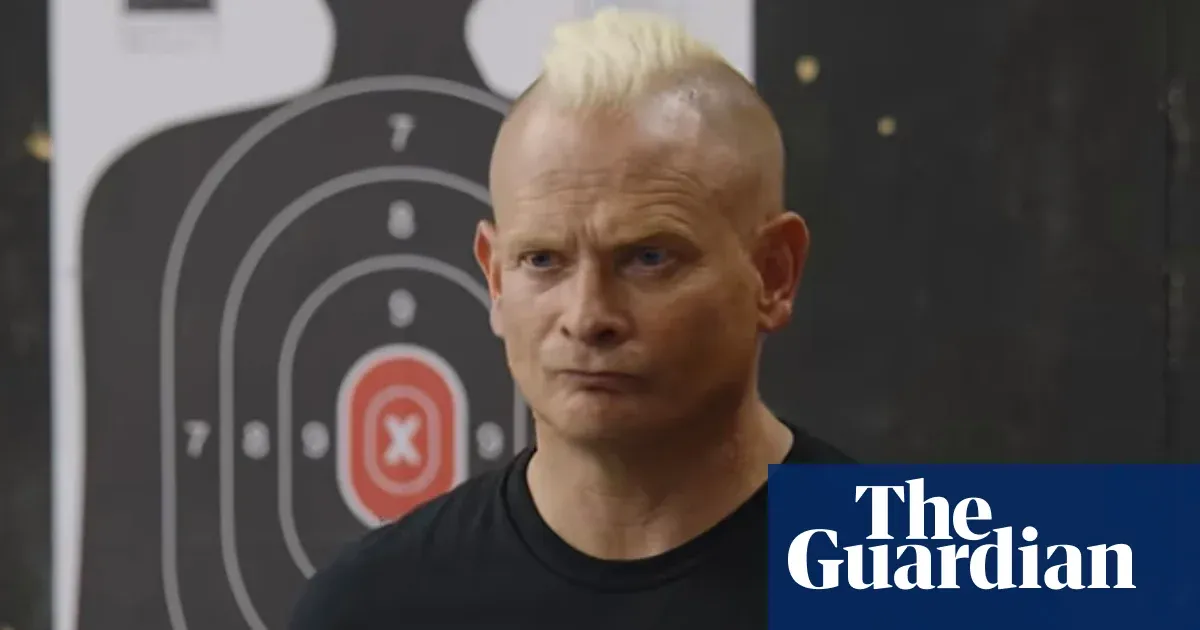
Ali G's 'stooge' says he was in on joke, outplayed Sacha Baron Cohen
A 54-year-old aspiring actor says he recognized Sacha Baron Cohen mid-shoot, kept his MAGA act up, and let the film-makers think they had fooled him.

Entertainer Russell Brand denies 7 sex charges amid accuser's 'couldn't breathe' claim
The alleged victim's account sharpens the reputational and legal stakes for Brand, his platforms, and any business tied to a public figure under criminal scrutiny.

Russell Brand's accuser 'bewildered and confused' as he denies 7 sex charges
The criminal case against the comedian is a live test of how media companies manage talent risk when serious allegations go public.