
Brian Chesky helped return Sam Altman to power. Now he’s building an AI lab
From OpenAI board drama to a new AI lab, Chesky is moving from “kingmaker” to competitor, with real governance stakes.
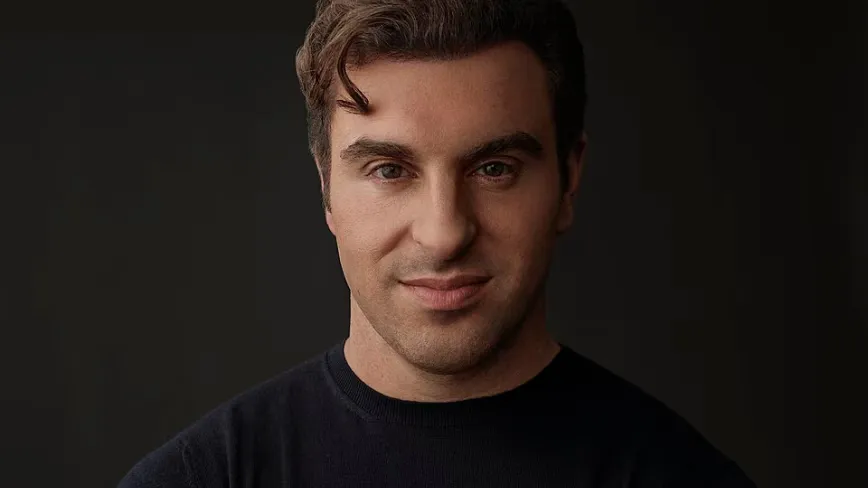
Brian Chesky, Airbnb’s CEO and longtime AI kingmaker, helped broker Sam Altman’s return to power after OpenAI’s board fired him in November 2023. He is now entering competition by building an AI lab aimed at challenging Altman’s influence.
Brian Chesky has spent years as an “AI kingmaker” in the background, but his role is changing fast. The Airbnb CEO met Sam Altman through Y Combinator in 2006, later advised Altman on managing OpenAI’s hypergrowth, and then helped broker Altman’s return to power after the OpenAI board fired him in November 2023.
Now the same Chesky who helped Altman regain control is reportedly stepping into direct competition. The Next Web reports that he is building an AI lab to compete, and that is a bigger signal than it sounds: Chesky is moving from influence via relationships and advice to influence via infrastructure.
To understand why this matters, you have to zoom out to how power typically works in AI. Early on, the most consequential players are not only the model builders, but the ecosystem operators: founders who can open doors, investors who can coordinate capital, and platforms that can turn AI progress into distribution. Chesky fits that profile in a way that is unusual. He has spent years close to the OpenAI story, including reportedly being considered for a seat on OpenAI’s board. That kind of proximity means he is not just watching outcomes. He understands the incentives that drive leadership decisions, partnership dynamics, and the internal governance fights that can reshape entire product categories.
Altman’s November 2023 ouster and subsequent return was not just a drama headline. When a board can remove a CEO, it tells founders, investors, and partners that the control surface is real and can flip quickly. It also tells technical leaders that leadership stability may depend on political coalition-building as much as on performance. Chesky advising Altman on “managing OpenAI’s hypergrowth” signals he was involved in the operational side of that equation, too. Hypergrowth brings scaling pressure: hiring, safety processes, infrastructure, product cadence, and external expectations all accelerate at once. Someone who can help manage that kind of scale becomes valuable not only to the company, but to anyone trying to navigate what “success” looks like under a microscope.
If you are a decision-maker at another AI-adjacent startup, a platform, or an enterprise vendor, Chesky’s shift creates a new kind of uncertainty. It is not the usual competition story where a player launches a similar feature. It is more structural. An AI lab can mean control over model development, data pipelines, tooling, and the ability to ship AI-native experiences faster than partners can. Even if the lab’s outputs are not directly public at first, labs tend to attract talent and create a persistent edge. That edge can show up later as product differentiation, faster iteration cycles, or better economics.
There is also a governance dimension here. When Chesky helped broker Altman’s return, he was effectively participating in a key moment of institutional power: board authority, executive legitimacy, and the coalition that forms around leadership continuity. Reportedly being considered for a seat on OpenAI’s board adds another layer. That kind of board-level proximity usually means someone has seen the arguments, tradeoffs, and risk calculations up close. Now entering competition changes what “advisor” means. It is one thing to counsel a CEO during hypergrowth. It is another to build an AI lab while the same ecosystem is actively renegotiating leadership and influence.
Second-order effects are likely to spill beyond Airbnb. Other platform CEOs and AI founders will notice that someone with Airbnb-scale distribution and years of OpenAI adjacency is willing to turn that influence into a direct capability. That can intensify an arms race where competitors do not just partner with AI providers, they try to internalize the strategic value of AI production. Boards at AI companies will also feel pressure. If major ecosystem operators are building competing internal labs, the “partner dependency” strategy becomes harder to defend.
For executives sitting on either side of these decisions, the stake is straightforward. AI leadership is increasingly shaped by relationships and governance, but it is also increasingly shaped by who builds the next generation of AI capability when the politics shift. Chesky’s path from Y Combinator connection in 2006, to advising during OpenAI hypergrowth, to brokering Altman’s November 2023 return, and now to reportedly building an AI lab is a reminder that in this industry, influence does not stay theoretical for long.
This story's Key Insights and Take-aways are locked.
Create a free account to unlock Executive Actions for one credit.
Register to UnlockAlways free for Executives Club members. Join the Club
More in Technology

OpenAI says 10,000 agents cracked a 90-year math problem in 88 hours
The company's claim is audacious, but one mathematician is pushing back. Here's what it means for AI-driven discovery.

Meta still serves child sexual abuse ads on Instagram in India - BBC report
A new report following the BBC Eye investigation says the ads are still there - what it signals for every platform with a self-serve ad engine.

White House yanks 'Build the Wall' game after Tetris Company copyright warning
The administration's arcade game vanished in hours - and the takedown playbook every brand can learn from.