
Bruno Mars returns to Wembley after 8-year UK absence with a hit-heavy comeback
An eight-year gap ended at Wembley as Mars delivered a polished return show, reshaping how major touring plans are judged.
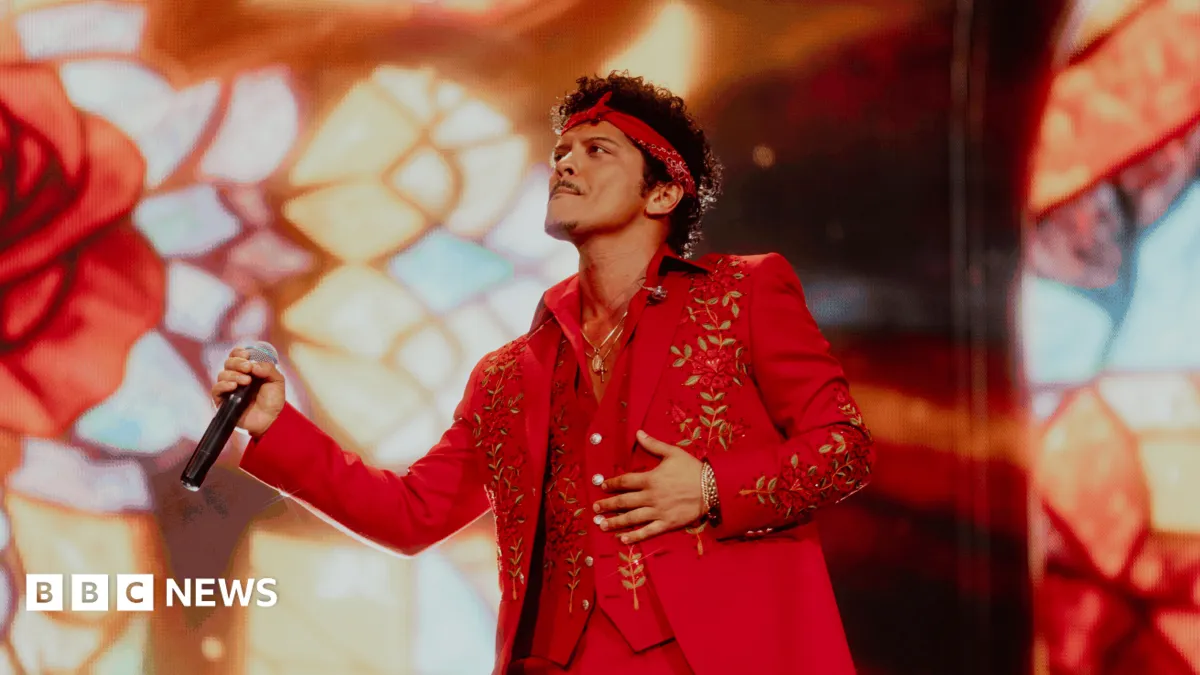
Bruno Mars returned to Wembley Stadium for a polished, hit-filled show after an eight-year absence from UK stages. For decision-makers watching live entertainment, it is a reminder that timing, repertoire, and spectacle still determine demand.
Bruno Mars is back at Wembley Stadium, and the headline fact is simple: he returned to UK stages after an eight-year absence with a polished, hit-filled show. The moment matters because Wembley is not a niche venue. When an artist of this scale returns to a flagship British stage, it is effectively a live stress test for the UK concert market's appetite, logistics, and audience behavior.
Mars' comeback did not arrive as a rough-edged “we missed you” reunion tour. It came as a “polished” performance packed with familiar songs, which is exactly how you de-risk demand when you have been away for years. An eight-year gap can work against you. Fans change. Younger audiences need a reason to show up now. But a show that leans into hits is a direct answer to that risk, turning nostalgia into immediate throughput: people know what to sing, when to cheer, and how to buy tickets with confidence.
From an executive briefing lens, this is a lesson in how touring is managed like a product launch. The UK live market has its own dynamics. Arena and stadium shows live or die by sell-through, churn, and the ability to convert attention into seats at scale. Even without quoting any ticket numbers here, the structure of a Wembley return after years away signals that the planning was built around high recognition. Hit-heavy sets reduce uncertainty because they shorten the “learning curve” for the audience. In practical terms, that can stabilize revenue across categories like premium sections, merch, and sponsor moments, because the show is designed to land instantly.
It is also a reminder that major venues are not just stages, they are infrastructure ecosystems. Wembley exists inside a wider web of promoters, security providers, transport partners, local authorities, and broadcast or media workflows. A return by a global headliner means those systems are activated at full volume. If the show is polished, it is not only artistic. It reflects operational readiness, from rehearsals to stagecraft to crowd flow. When an event runs smoothly, it preserves brand trust for the venue and the promoter, which can matter for future bookings and partnerships.
Then there is the regulatory and compliance layer that usually goes unnoticed by most fans but can decide what is feasible behind the scenes. Big stadium shows typically need tight coordination around licensing, crowd management, and safety requirements. That does not mean every show faces the same hurdles. But after years away, the planning has to clear today’s conditions, not yesterday’s. So Mars returning now, after an eight-year absence, implies that the necessary frameworks and operational standards were met well enough to put on a stadium-scale spectacle.
For peers in the live entertainment space, the second-order implication is that “comeback” is not just a storyline, it is a strategic choice about timing and audience re-engagement. If you are a tour manager, a label executive, or a promoter underwriting a major UK date, you learn something from how Wembley can be won back. The show’s hit focus suggests a preference for certainty over experimentation when the goal is to prove demand at an iconic venue after a long break.
There is also a boardroom angle. Stadium touring can be capital and resource intensive, even when costs and figures are not listed in the story. When you invest in a high-profile date, you want a line of sight to audience turnout. A polished, hit-filled show is essentially a demand signal engineered in real time. It supports the broader thesis that brand power and repertoire familiarity still outperform vague hype, especially when you have not been on the UK stage for years.
In short, Mars returning to Wembley with a polished, hit-heavy set after an eight-year absence is more than entertainment news. It is a measurable narrative about how global stars can re-enter a high-pressure market, how stadium venues and promoters translate operational excellence into audience satisfaction, and how executives should think about reducing uncertainty in touring plans. If you run anything adjacent to major live events, the strategic stakes are clear: your next booking lives or dies on whether the audience feels instant value, not eventual payoff.
This story's Key Insights and Take-aways are locked.
Create a free account to unlock Executive Actions for one credit.
Register to UnlockAlways free for Executives Club members. Join the Club
More in Entertainment

12TB Steam 'teraleak' goes beyond Valve: GTA 3, Mafia 2 prototypes exposed
A 12-terabyte dump of Steam data reveals prototypes and builds of third-party classics like GTA 3 and Mafia 2, plus unreleased Valve content, rewriting game history.

LinkedIn's romance problem: 1 in 4 workers say dating on it is fair game
A new survey shows a quarter of U.S. employees treat the professional network as fair game for romance, even as LinkedIn bans it and removes hundreds of thousands of offending posts.

Enhypen's first No. 1 album breaks K-pop's Billboard 200 streak
The K-pop group's 98,000-unit debut tops the chart while Dolly Parton's catalog reentry shows how death reshapes streaming.