
Burna Boy’s World Cup halftime day links Shakira, Justin Bieber, and Jason Sudeikis
Billboard’s all-access video diary shows the backstage choreography behind the 2026 FIFA World Cup Final halftime show.
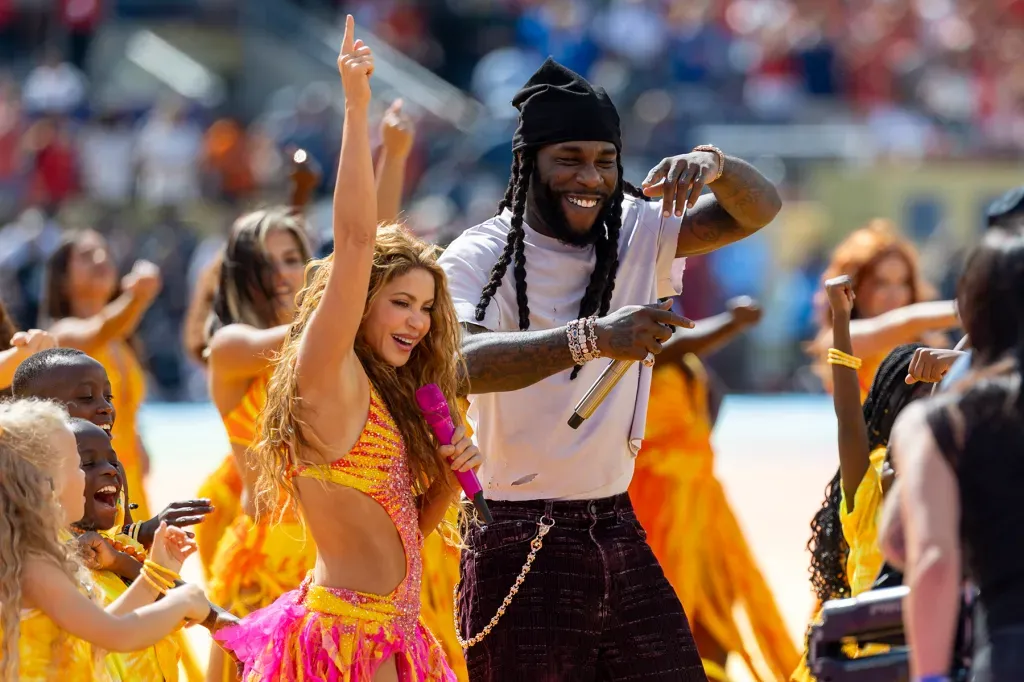
Billboard released an exclusive behind-the-scenes video diary following Burna Boy as he prepared for and performed at the inaugural FIFA World Cup Final halftime show on Sunday at MetLife Stadium in New Jersey. For decision-makers in music, media, and brand partnerships, the moment highlights how major artists, collaborators, and cross-industry cameos package global events into measurable chart and distribution momentum.
Burna Boy didn’t just perform at the inaugural FIFA World Cup Final halftime show on Sunday. In Billboard’s exclusive “day in the life” video diary, the genre-blending artist takes viewers through the full run of his day, starting with a police escort and ending with him stepping onto the field at MetLife Stadium in New Jersey, plus the celebration that follows.
The all-access timeline is built like a high-stakes production schedule. It shows the moments that led up to the halftime performance, including the adrenaline of reaching the venue, then shifts into the interactions people actually talk about: Burna poses for photos with collaborator Shakira, with whom he teamed up on the official 2026 FIFA World Cup anthem “Dai Dai.” The video also captures Burna meeting up with streamer iShowSpeed, embracing Justin Bieber in a hug, and even greeting Ted Lasso star Jason Sudeikis, who made an unannounced cameo to introduce Bieber.
If you are an executive watching this kind of event closely, the important part is not the celebrity list for its own sake. It is the way global entertainment turns into a coordinated distribution engine. “Dai Dai” was performed during Sunday’s halftime, and the source ties that performance directly to chart performance: the song spends a second week atop the Billboard Global 200 and a fourth week at No. 1 on the Billboard Global Excl. U.S. chart. That matters because it turns a one-day spectacle into continuing market demand across territories, not just a viral spike that evaporates after the final whistle.
The behind-the-scenes diary also shows how collaborations stack strategically. Burna’s connection with Shakira is presented as more than a guest moment; they are credited as the duo behind the anthem itself. In the same narrative frame, the video places Justin Bieber inside the orbit of the halftime stage via an unannounced cameo introduction from Jason Sudeikis. These are different kinds of audiences, but they intersect at a global event where the audience is already primed to watch, share, and stream.
There is also an operational lesson hidden in the choreography. After making his rounds, Burna “squeezes in one final practice session right before taking the stage.” Then the camera follows him stepping onto the field, capturing the celebration. In live entertainment, every additional interaction carries risk, but the diary implies tight timeboxing. For media teams and touring operators, that is a reminder that celebrity moments are not only brand assets. They are logistical commitments that must be sequenced around rehearsal windows, camera blocking, and performance readiness.
And the ending reinforces how these events are curated, not accidental. Burna returns backstage through the players’ tunnel, receives praise from Chris Martin, and the source specifies that Martin curated the halftime show and co-wrote the song “We Dance” with his Coldplay bandmates for the finale. That detail matters because it shows the halftime program is designed as a portfolio of musical properties, not one single track. “We Dance” is positioned as the finale, meaning it inherits attention at the exact moment viewers are most likely to rewatch, clip, and search.
For boards, investors, and operators, this is a pattern worth studying: global sports platforms are becoming premium distribution channels for mainstream music, and the winners are the parties that can convert attention into ongoing chart performance. The source does not mention any regulatory approvals tied to the performance itself, but it does highlight the structure around the anthem and finale songs, and that is where the real compliance and rights discipline typically lives, even if this specific diary does not spell it out.
The strategic stake for anyone building in music, media, or event partnerships is clear. A World Cup halftime show is not only a cultural headline; it is a global release window. The diary makes the packaging visible: a police escort and venue arrival set the tone, backstage cameos widen the audience funnel, and the performance content is explicitly connected to chart rankings. If you are betting on the next crossover moment, you are not just buying ad impressions. You are trying to create momentum that lasts more than 24 hours, and the source gives you a concrete example of that kind of sustained takeoff with “Dai Dai” spending additional weeks at the top of the Billboard Global 200 and Billboard Global Excl. U.S.
This story's Key Insights and Take-aways are locked.
Create a free account to unlock Executive Actions for one credit.
Register to UnlockAlways free for Executives Club members. Join the Club
More in Entertainment

12TB Steam 'teraleak' goes beyond Valve: GTA 3, Mafia 2 prototypes exposed
A 12-terabyte dump of Steam data reveals prototypes and builds of third-party classics like GTA 3 and Mafia 2, plus unreleased Valve content, rewriting game history.

LinkedIn's romance problem: 1 in 4 workers say dating on it is fair game
A new survey shows a quarter of U.S. employees treat the professional network as fair game for romance, even as LinkedIn bans it and removes hundreds of thousands of offending posts.

Enhypen's first No. 1 album breaks K-pop's Billboard 200 streak
The K-pop group's 98,000-unit debut tops the chart while Dolly Parton's catalog reentry shows how death reshapes streaming.