
Burnham sketches PM vision in first major leadership speech on Monday
Makerfield’s new MP delivers a Monday morning address that signals how he would lead if politics turns.
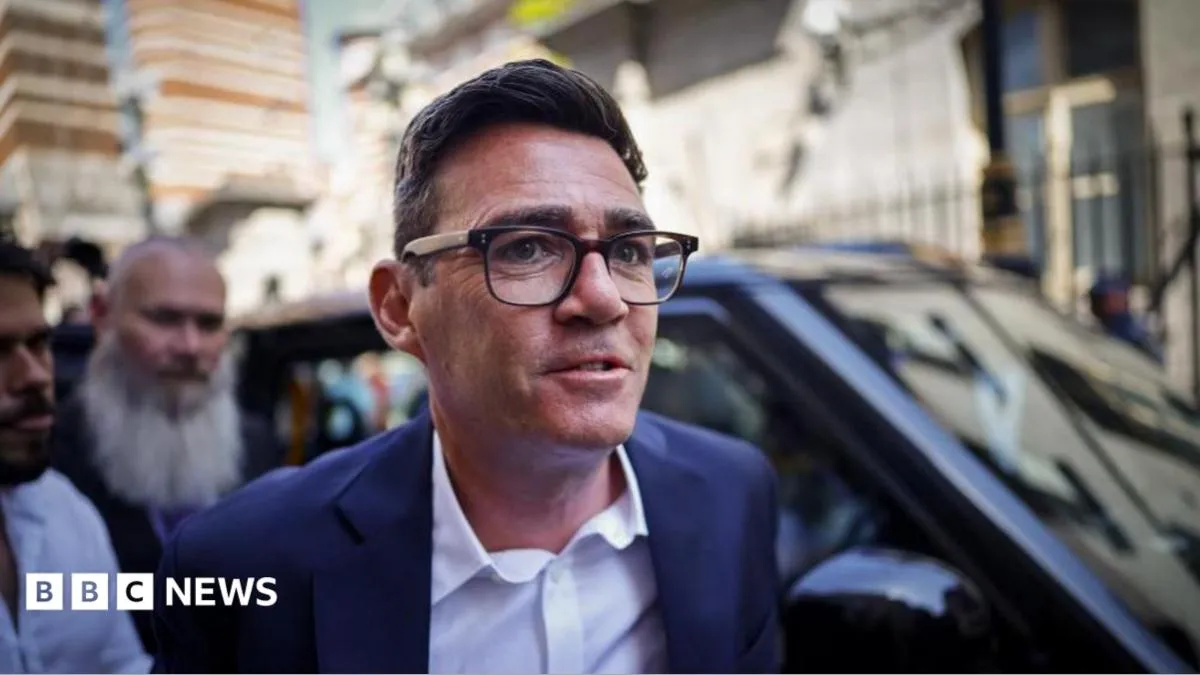
Burnham, the new MP for Makerfield, is set to give what his team calls his first major leadership speech on Monday morning. For decision-makers, this is an early read on leadership style, coalition management, and how quickly a party role could become a prime-ministerial test.
Burnham, the new MP for Makerfield, is preparing to deliver what his team has called "his first major leadership speech" on Monday morning. That matters because leadership speeches are rarely just big-talk theatre. They are the first time an emerging political figure tries to turn private ambition into public structure: priorities, governing posture, and a sense of who he thinks allies and opponents should be.
If you are watching power dynamics inside parties, Monday’s speech is a useful data point. The BBC note is straightforward on the timing and purpose: it is the first major leadership speech from the newly elected MP, and it is scheduled for Monday morning. In politics, that combination often signals an intentional shift from campaigning to commanding. Not yet prime minister, not yet the obvious default, but trying to look like someone who can set the agenda and keep it.
Leadership communication in the UK system usually serves two audiences at once. One audience is voters, where speeches explain why a leader would make different decisions, and what values would drive those choices. The other audience is the machine behind the scenes, where MPs, party officials, donors, and potential coalition partners look for consistency and credibility. A first major leadership speech is the moment a new figure attempts to lock in a narrative. Is he the pragmatist who can broker deals, or the ideologue who can energize a base? Does he sound like a manager of government, or a captain of a movement?
There is also a second-order effect for everyone who has a stake in UK governance, even if they are not primarily focused on party leadership. When opposition or internal challengers begin to articulate a governing vision early, it changes the incentives of policy teams across the political landscape. Civil service and policy units, interest groups, and business stakeholders often prepare for the possibility of different priorities. That does not mean a policy shift happens immediately. It means planning starts earlier, and lobbying efforts can adjust their timing and target.
Think about how UK politics often works around sequencing. A leadership speech is an attempt to shorten the distance between “political profile” and “credible governing option.” If Burnham can define a clear vision in a format designed to sound like leadership, it influences how quickly other figures treat him as a serious alternative in internal debates. It also influences how party factions position themselves. Some will see him as a stabilizer who can unify, others as a disruptor with a different lane. Even without new details beyond the BBC’s description, the fact that his team has branded this as his “first major leadership speech” tells you this is a deliberate moment of positioning.
For business leaders and public-sector executives who pay attention to political signals, the practical takeaway is that communications are early indicators. If you manage regulated industries, procurement-heavy services, or policy-sensitive operations, you learn to treat leadership messaging as a leading indicator for future regulatory and legislative themes. The speech itself, as described here, is not giving new numbers or citing specific policy measures in the provided source excerpt. But it can still affect expectations. Boards and executives do not need to know every proposal on day one to update their risk picture. They need to understand who might drive what kind of priorities and how that might translate into government action later.
Monday morning, then, is less about a single speech being the whole story and more about the start of a storyline that could reshape internal calculations. The BBC frame is clear: Burnham is the new MP for Makerfield, and he will give his first major leadership speech. That is an initiation into a higher-stakes political lane, where language becomes strategy, and strategy becomes alignment. If you are an MP, a donor, a party organiser, or an executive tracking policy risk, the moment you should care about is the first one. Monday is that first moment.
This story's Key Insights and Take-aways are locked.
Create a free account to unlock Executive Actions for one credit.
Register to UnlockAlways free for Executives Club members. Join the Club
More in Politics
House again forces Iran war powers vote after Republicans join Democrats a second time
Second rebuke repeats the same pattern: a cross-party bloc demands authorization, raising new friction for the president.
No 10 North blueprint targets up to 300 staff in 18 months
A think tank plan sketches a sizable No 10 workforce timeline, forcing ministers to confront staffing, cost, and control fast.

Burnham backs 20% cut to English pub business rates, not hotels or restaurants
From next April, some hospitality firms get a discount but hotels and restaurants are left out of the 20% break.