
Charles hosts Harry and family again after years, as the rift tries to heal
The first in-years meeting puts a long-running royal split back on the same calendar, and signals what happens next.
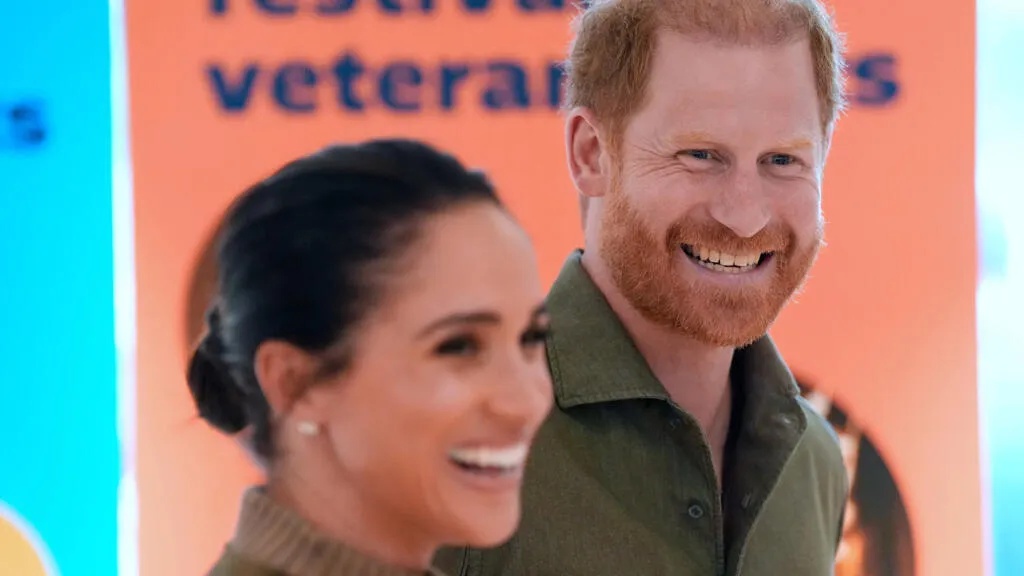
King Charles III hosted Prince Harry and met his family for the first time in years on Friday. For decision-makers watching high-profile institutions, the reunion is a real-time test of reputation management and stakeholder alignment after a public break.
King Charles III hosted Prince Harry and met with his family for the first time in years on Friday, as the family tries to repair a rift that has persisted since a public, high-profile falling out. The meeting includes Prince Harry, and it also covers Meghan and the couple’s children. It marks a reset moment after a rupture that began when Harry and his wife quit royal life and moved to America six years ago.
For readers who track influence like it is a balance sheet, the key is simple: this is not a private moment that stays private. The source frames it as an effort to mend something that has been visible and contested for years, starting with that high-profile departure and continuing through the uncertainty of where the family relationship stands. When Charles invites Harry back into the same room, it is a signal of willingness to reopen dialogue, and it creates momentum around reconciliation rather than continued distance.
There is a broader lesson here for anyone running an institution, company, or brand: long-running public conflicts rarely stay in the same lane. The longer a split lasts, the more each side builds internal justifications, external narratives, and loyal audiences who each expect a certain stance. In royal terms, this is not a disagreement about contract terms that can be settled in a quarterly meeting. It is identity, duty, symbolism, and media gravity. In business terms, think of a firm that has to keep operating while a major leadership relationship is visibly frayed. Even if the operating model still works, the storyline becomes part of the risk.
The source is also explicit about the timeline: the public falling out that led Harry and Meghan to quit royal life and move to America happened six years ago. That matters because it changes the incentives. After half a decade, “repair” is not just about the people involved. It is about institutions and stakeholders who have adapted to a new normal. For Charles’s camp, bringing Harry and family back in person may reduce uncertainty, but it also forces a confrontation with what has already happened during the years apart. For Harry’s side, returning to the palace setting can be read as progress toward stability, but it also comes with expectations that reconciliation is more than a photo-op.
If you want to map the dynamics to boardroom logic, treat the meeting as a governance problem. When relationships break in public, there are often multiple audiences: the internal “team” (staff and advisors who must execute day-to-day), the external “investors” (the public and media), and the “regulators” (in this case, the cultural rules and visibility that determine what is considered acceptable). Even without any formal regulatory process tied to the story, the social constraints function like regulation. High-profile brands do not get to ignore reputational compliance. They must constantly manage trust, consistency, and legitimacy.
There is also a second-order implication for how institutions manage succession of narratives. Charles hosting Harry is a move that tries to collapse distance between competing stories: one centered on departure and autonomy, the other centered on tradition and continuity. When those narratives stay separated for years, audiences stop seeing the possibility of overlap. An in-person meeting can help reintroduce that possibility, but it does not erase the prior fallout. What happens after Friday is where the work lives: whether this becomes a pattern of engagement, whether it reduces friction, and whether it helps the family move from “rift” language to “relationship” language in the public record.
For peers in any sector, this is the kind of moment that can either stabilize or destabilize. Stabilize it if both sides treat reconciliation as a sustained operating rhythm. Destabilize it if the meeting raises expectations that only partially materialize. The source does not claim a full resolution. What it does confirm is the action: Charles hosted Harry and met the family for the first time in years, in an attempt to repair a rift that dates back to the public falling out and the six-years-ago move to America. In other words, this is not the end of the story, but it is a genuine plot movement.
If you are an executive, operator, or board member managing a complex stakeholder landscape, take the incentive alignment lesson seriously. Reconciliation requires not just access, but intent, follow-through, and a clear path from symbolism to outcomes. Friday’s meeting is the symbol. The strategic stake is whether it becomes the beginning of a repeatable mechanism for trust, or remains a one-off gesture trapped in the news cycle.
This story's Key Insights and Take-aways are locked.
Create a free account to unlock Executive Actions for one credit.
Register to UnlockAlways free for Executives Club members. Join the Club
More in Politics

Glacial collapse, not rain, killed 180 in Nepal's Himalayan flood
The Himalaya's extreme geography hid the true cause of Nepal's catastrophic flood, a glacial collapse that turned a geological battleground into a mass-casualty zone.

Iran’s Esmail Baghaei says Oman talks start shipping via Hormuz, not US talks yet
Temporary route plans with Oman aim to restart commerce while Tehran says Washington dialogue is not on the table.

Standards watchdog opens probe into Reform UK deputy leader Richard Tice over interests
The parliamentary standards commissioner says it began an investigation on 28 July into a possible undeclared interest.