
ChatGPT adds a scheduled-tasks hub, turning “prompts” into timed workflows
Engadget reports ChatGPT now supports scheduling prompts, so work that used to require babysitting can run automatically.
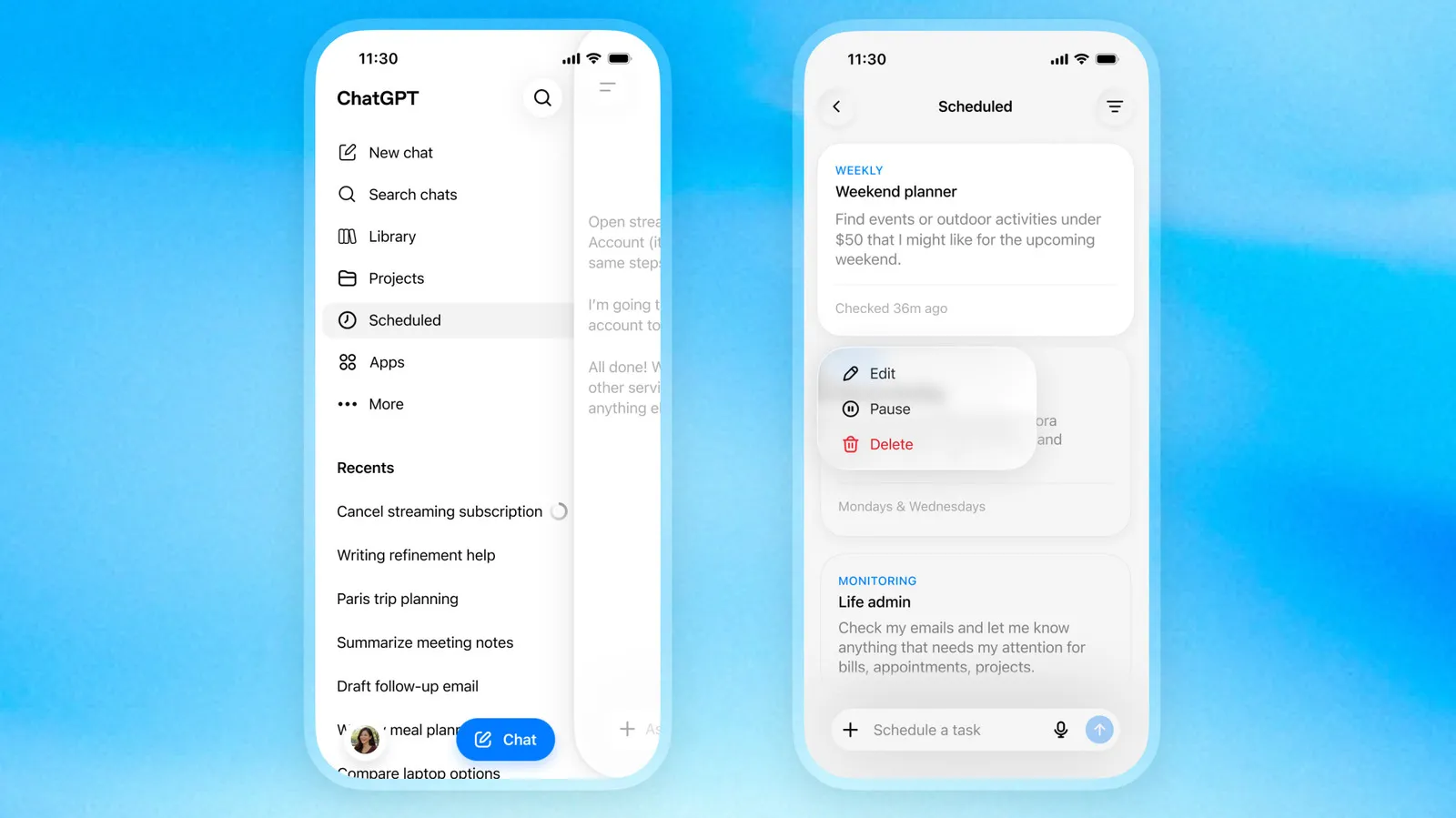
ChatGPT now has a hub for scheduled tasks, allowing users to schedule prompts instead of running them manually. For decision-makers, this shifts AI usage from one-off experiments toward repeatable, operational workflows.
ChatGPT just got a feature that makes AI feel less like a chatbox and more like a work system. Engadget reports that ChatGPT now has a hub for scheduled tasks, letting users schedule prompts rather than triggering them manually every time. In plain English: you can set an instruction once and have it run on a timeline.
That matters because “prompting” has historically meant babysitting. You ask. You wait. You refine. You repeat. A scheduled-tasks hub changes the rhythm. Instead of being present to launch each request, users can queue prompts and let ChatGPT execute them when it is supposed to. The hub is the key detail, because it is not just about saving a message or remembering a thought. It is about turning recurring instructions into scheduled work.
This is a meaningful step in how people actually adopt AI tools. Early adopters tend to test AI with novelty use cases, then quietly abandon them when the process is too manual to scale. Scheduling is what turns novelty into routine. Whether the scheduled prompt is for research, drafting, summarizing, or other tasks, the operational promise is the same: fewer context switches and less human prompting required.
For executives, that can reframe how AI is deployed in teams. Teams often struggle with adoption not because the model is weak, but because the workflow is leaky. If an AI assistant requires constant prompting, it becomes a personal productivity tool rather than a scalable capability. A scheduled tasks hub nudges AI closer to the kind of tooling executives already trust: systems that run on triggers, with predictable timing.
There is also a governance angle. Scheduling pushes AI output into the space where operations, compliance, and auditability get involved. When prompts run automatically, the question becomes: who defined the prompt, what data is included, and how do you ensure the run is authorized? Even without new regulatory language in the source, the feature itself raises the bar for internal controls. The moment AI can fire without a user pressing “send,” companies tend to demand clearer documentation, permissions, and review processes.
Market context matters here too. AI features are moving fast, but the differentiator is shifting from “can it answer?” to “can it integrate into daily work?” Scheduling is one of the first usability bridges from ad hoc conversation to operational automation. In crowded AI tool landscapes, that type of usability upgrade often drives retention. People keep the tool they can rely on when they are busy, not the one that impresses them once.
Second-order implications show up in how teams measure value. If scheduled prompts reduce manual effort, leadership will naturally look at outcomes like time saved, turnaround time, and consistency of deliverables. They may also compare scheduled AI tasks to traditional automation, like rule-based reminders and workflow tools. The competitive question becomes whether ChatGPT’s scheduled outputs can match the predictability teams want, while still delivering the flexibility AI is known for.
Finally, peers in product, operations, and strategy should take note of what this signals about the roadmap of AI assistants. A “hub for scheduled tasks” implies a product direction where chat interfaces become the front end of a broader job scheduler. That is a pivot from interaction-first to workflow-first. For decision-makers, the practical stake is adoption velocity: teams are more likely to operationalize AI when it can run on a timetable without constant oversight.
In short, Engadget’s report is not just a feature update. It is a shift in how ChatGPT can be used. The scheduled-tasks hub takes prompting out of the moment and puts it into the schedule, which is exactly what you need if you want AI to scale from experiments into everyday execution.
This story's Key Insights and Take-aways are locked.
Create a free account to unlock Executive Actions for one credit.
Register to UnlockAlways free for Executives Club members. Join the Club
More in Technology

Nvidia's $89B data center quarter: the 9 companies cashing in
The AI buildout is minting fortunes beyond GPUs, and memory, cloud, and cooling suppliers are riding the same wave.

Google quietly links your phone number to every Android account on your SIM
Adding a SIM now ties your phone number to all Google accounts - and future accounts inherit it. Here's the security and privacy stakes.

Hijacker AI 'Skynet mode' runs 100,000 attack steps against exposed models
Symantec caught a criminal AI agent that borrows other models, steals data, and mines crypto; the only relief is no confirmed victims yet.