
China’s tech rise keeps outranking peers and expanding space bets
Beijing is gaining momentum in research and space ambitions, forcing the U.S. to reassess what leadership means.
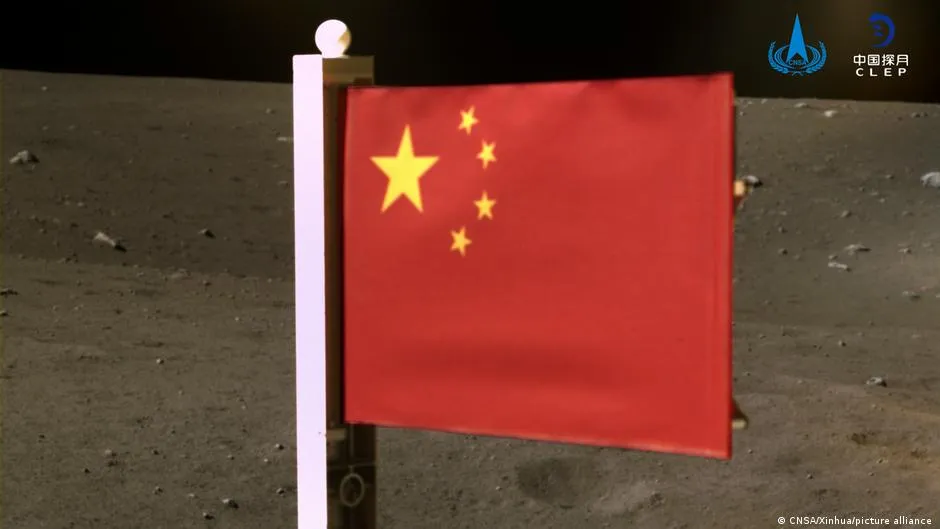
China is pulling ahead in global research rankings while expanding its ambitions in space. The shift raises a strategic challenge for decision-makers who assumed the space race would remain a U.S.-centered contest.
China is pulling ahead in global research rankings while expanding its ambitions in space, and the direction of travel is the point. The story is not just that Beijing wants to launch more rockets or fund more labs. It is that China’s growing technological leadership is translating into a broader, more competitive global posture, with space becoming one of the most visible arenas for that rivalry.
In other words, the “space race” framing is doing real work here, because it ties research output to national capability. As China strengthens its research standing, it can feed that strength into space programs, which then reinforces further technological development. For executives tracking competitive advantage, that loop matters: research rankings are a proxy for where talent, experimentation, and problem-solving capacity are concentrating, and space is an industry where execution speed and systems integration are everything.
This is also where the incentives get sharper. Space is expensive, long-horizon, and hard to do well without sustained technical depth. A country that is improving its research footprint can justify bigger bets, adjust faster when something fails, and attract both domestic and international expertise. Beijing’s expanding ambitions signal that it sees space not only as a scientific endeavor but as a strategic platform. And if the platform becomes reliable at scale, it can reshape how other countries think about security, communications, navigation, and data.
There is a regulatory and policy layer to this that rarely gets the attention it deserves. Space activity sits at the intersection of national security, international coordination, and technology governance. When one actor pulls ahead technologically, the downstream effect is that rules, export controls, licensing expectations, and procurement standards start to shift around that actor’s capabilities. Decision-makers in adjacent industries typically feel this as changing compliance burdens and new partner requirements, even if the company is not “doing space.” The strategic question becomes: are you building for the old baseline, or the new one?
The “rival to the United States” angle is not a marketing line. It is a strategic statement about global positioning. In a competition like this, the U.S. does not only measure success by launches or mission headlines. It also measures whether its ecosystem, including research institutions, contractors, and industrial supply chains, is still setting the pace. If China is pulling ahead in research rankings while expanding space ambitions, that suggests the competitive center of gravity is shifting. The second-order implication is that the U.S. and its partners may need to respond not just with new missions, but with changes in how quickly they can turn research into deployable systems.
For boards and leadership teams, the broader takeaway is how technology leadership turns into strategic leverage. Research rankings are often treated as academic or informational metrics. Here, they are clearly connected to national ambition in a domain where technology and execution combine. If China continues to build that advantage, it can influence how alliances prioritize investments, how governments allocate budgets, and how companies structure partnerships. The space race becomes a template for other strategic technology contests: the country that wins the talent and experimentation race gets to define what “normal” looks like.
Ultimately, this development matters because it compresses timelines. When one player is gaining momentum in research and using that momentum to expand space ambitions, rivals face a choice: match the pace, specialize differently, or accept that some capabilities will be harder to catch up to later. The executives watching from Earth should take the message seriously. In this version of the space race, the competition is not waiting for launch windows. It is happening in research pipelines first, and the rockets are the evidence.
This story's Key Insights and Take-aways are locked.
Create a free account to unlock Executive Actions for one credit.
Register to UnlockAlways free for Executives Club members. Join the Club
More in Science

2026 Nikon Small World Winners Reveal the Hidden Machinery of Everyday Life
A mycologist's frozen Edinburgh garden became the backdrop for vivid views inside cells, a reminder of what advanced imaging now makes visible to researchers and the industries built on biology.

Study: 1 in 4 depression cases may be a body-clock problem, not a chemical one
A 10,000-person study finds standard antidepressants often fail these patients, but melatonin and morning sunlight may hit the real root cause.

Start-Up Says A.I. Designed a Virus to Attack One Patient's Superbug
If the claim holds up, personalized phage therapy could become a new frontline weapon against antibiotic resistance - but proof is far from final.