
China weighs export controls on its AI models and chips, FT says
If Beijing expands beyond raw materials and equipment, global AI supply chains and compliance programs could get a lot harder.
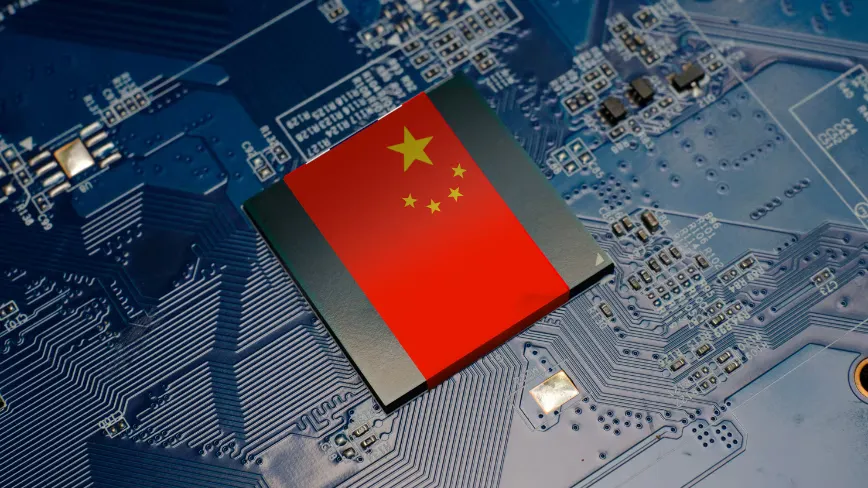
China is considering tightening export controls on its home-grown AI models and the chips that run them, according to the Financial Times. The potential move, reportedly based on discussions involving two people, would force decision-makers to plan for a wider technology controls regime.
China is weighing tighter export controls on its home-grown artificial intelligence models and the chips that run them, according to a Financial Times report. The thrust of the change matters because it would move Beijing’s technology defenses beyond the usual choke points of raw materials and equipment. Instead of targeting only the inputs that make advanced chips possible, the controls would potentially reach the software and compute hardware that deliver AI capability.
The Financial Times said the reporting was based on discussions involving two people involved in the matter, and that regulators led by the relevant agencies are considering this direction. In other words, this is not just a policy idea bouncing around in the abstract. It is reportedly being actively discussed in the same regulatory circles that already police parts of the technology pipeline.
To understand why this lands like a policy earthquake, look at how export controls typically work in the real world. Countries do not only try to slow down rivals by banning the final product. They often start by controlling the upstream ingredients, such as critical manufacturing inputs, and the production equipment that allows advanced chips to be made at scale. That approach is easier to define and enforce, and it targets leverage points. But AI is different because the “system” is more than a chip. Model weights, software stacks, and specialized compute hardware together determine what can be trained, tuned, and deployed.
If China’s proposed controls expand from materials and equipment into models and the chips that run them, the boundary between hardware policy and AI policy starts to blur. That means companies will have to treat compliance as a broader, more operational problem. It is one thing to assess whether certain wafers or lithography-related tools are exportable. It is another to evaluate where model artifacts fit, how chips are categorized, and what downstream restrictions apply to customers, partners, or affiliates in different jurisdictions.
There is also a strategic timing angle. Policymakers typically use export controls to buy time while they build domestic alternatives and reduce dependency on foreign supply chains. The Financial Times framing implies Beijing is thinking about “technology defenses” as a whole. In that framing, AI models become both an asset and a vulnerability. They can be used to advance domestic capabilities, but they can also be transmitted to foreign ecosystems if licensing rules are permissive or enforcement is incomplete.
For boards and executive teams, this is where the second-order risk shows up. Export controls do not just constrain sales. They reshape product roadmaps, procurement strategies, and even which partners you can work with. If regulators tighten controls on AI models and chips, vendors may face new documentation requirements, new licensing approvals, and potentially new restrictions on what can be shipped, what can be installed, or what can be supported. That can translate into delayed deployments, margin pressure, and longer contracting cycles, even if demand exists.
There is also the cross-border operating reality. Many AI deployments depend on complex stacks: chips, systems integration, and model deployment tooling. When one piece becomes restricted, the rest of the system often has to be redesigned or revalidated for each market. Even companies that do not intend to export from China may find themselves affected through component supply chains, reseller networks, or cloud arrangements where the computing capacity and model software both matter.
The report’s significance is not only about what China might control. It is also about what this signals to peers and competitors watching the direction of travel. If Beijing is considering stepping up from controlling the “how it is made” layer to controlling the “what it is” layer, executives elsewhere will treat AI capability as something that can be regulated as tightly as hardware performance. That changes how investors underwrite the durability of product strategies and how operators plan for market access.
For decision-makers, the practical question becomes: how quickly can your compliance, supply chain, and product teams adapt if controls expand? The Financial Times account suggests regulators led by relevant agencies are already discussing the possibility of tightening export controls on AI models and chips. For companies that rely on Chinese ecosystems for compute or AI components, the next phase of uncertainty is clear. Even without final rules in hand, the direction implies broader technology defenses, more scrutiny of AI capability exports, and a future where AI supply chains need to be engineered for regulation, not just performance.
This story's Key Insights and Take-aways are locked.
Create a free account to unlock Executive Actions for one credit.
Register to UnlockAlways free for Executives Club members. Join the Club
More in Technology

Google quietly links your phone number to every Android account on your SIM
Adding a SIM now ties your phone number to all Google accounts - and future accounts inherit it. Here's the security and privacy stakes.

Hijacker AI 'Skynet mode' runs 100,000 attack steps against exposed models
Symantec caught a criminal AI agent that borrows other models, steals data, and mines crypto; the only relief is no confirmed victims yet.

Nvidia's AI-financier shift faces its first big test as neoclouds stumble
A rout in neocloud stocks is forcing investors to weigh Nvidia's hidden exposure as both supplier and lender to the AI buildout.