
Chris Matheson builds a Bill & Ted live rock opera with a 2027 Boston premiere target
A veteran Bill & Ted screenwriter is teaming up onstage music with students and industry partners for a 2027 debut.
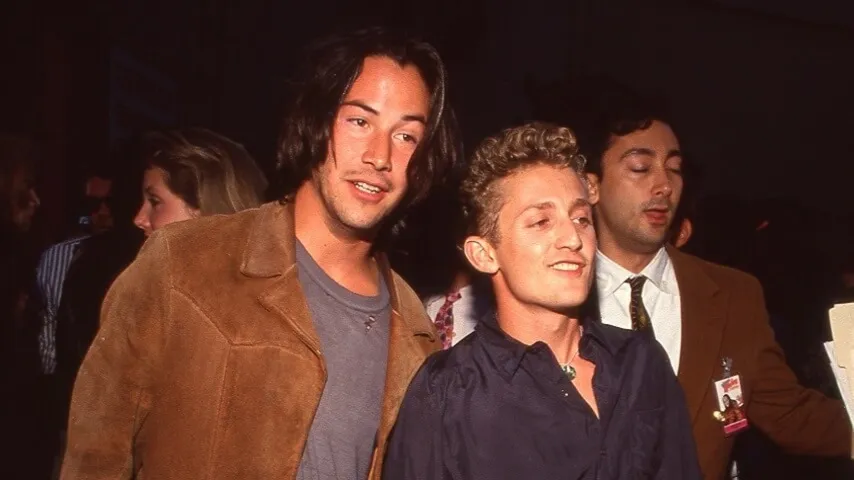
Chris Matheson, known for co-writing all three Bill & Ted films, is developing Bill & Ted's Most Excellent Rock Opera. The production aims for a 2027 premiere in Boston, collaborating with Jason Lytle and multiple major music schools.
Chris Matheson is back in development for Bill & Ted's Most Excellent Rock Opera, a new live rock opera built to run through the franchise's time-travel history in musical form, with a currently targeted 2027 premiere in Boston. The pitch, per Playbill, is straightforward but fun: the show will follow Bill and Ted as their legendary time-travel report gets turned into a live rock opera. The key point for decision-makers is that this is not just a nostalgia reboot. It is an attempt to translate a film franchise into a stage property with a defined creative process, industry collaboration, and an explicit geographic launch plan.
Matheson, best known for co-writing all three Bill & Ted films, most recently returned to the franchise for 2020's Bill & Ted Face The Music, which he co-wrote with Ed Solomon. In the stage version, Matheson is collaborating with Grandaddy's Jason Lytle on the show's score. The production also includes partnerships with Emerson College, Berklee College of Music, and Boston Conservatory, reportedly set up so that students at those schools can work with industry professionals on the musical. That means the development model is part creative work, part pipeline building. And yes, it is also exactly the sort of situation where someone will eventually be asked to produce the best rhyme possible for “San Dimas High School football rules.”
Why does this matter beyond fans cheering in their seats? Because stage adaptations and franchise extensions are basically a stress test for how well IP can move across formats. Film narratives are designed for camera, pacing, and performance captured once. Live musical theater adds constraints: rehearsal schedules, orchestration, licensing workflows, stagecraft, and the long-term economics of ticket demand over multiple runs. Even when the story is familiar, the operational reality is different. That is why the development decision here is interesting: it is using a score collaboration and a multi-school structure to produce the kind of creative labor that theater requires, rather than treating the project like a simple licensing exercise.
This also lands in an industry moment where “franchise in new formats” has become a survival strategy. Film franchises have the advantage of global reach and repeatable distribution. Theater, by contrast, is local and schedule-bound, and it often takes more time to realize revenue. A 2027 premiere in Boston is therefore both a creative choice and a risk-management choice. Boston gives a credible theatrical ecosystem and a ready-made tie-in to the very institutions involved: Emerson College and Boston Conservatory are local partners, while Berklee is a major music brand with national influence. The institutions are not just decorative names in the announcement. They are positioned as talent and training nodes, which can reduce friction in building a production-ready creative team.
There is another continuity question floating under the surface. It is not clear yet if the musical will exist in the continuity of the films, which followed Keanu Reeves and Alex Winter's characters into their middle-aged years and introduced their daughters, Thea and Kelly, as the musical geniuses of the family. For now, press materials promise “the return of such franchise-favorite historical figures as Beethoven, Joan of Arc, Abraham Lincoln, Genghis Khan, Napoleon, and Sigmund Freud.” If the show is flexible about continuity, it can prioritize the franchise's time-travel-history premise and the onstage band concept over strict timeline fidelity. That flexibility can help a production avoid creative dead-ends that sometimes happen when stage versions attempt to mirror film plots beat-for-beat.
The most corporate-sounding detail in the announcement is also the most operational: the partnership network. Emerson College, Berklee College of Music, and Boston Conservatory are being used to create a version of Bill & Ted that allows students to work with industry professionals. For boards and executives, that structure can matter as much for talent sourcing and reputational signaling as for creative output. It can also create a feedback loop, where students become a source of rehearsal talent and innovation, and industry partners gain a recruiting pipeline. The second-order implication is that a production like this can become harder to replicate for competitors if it matures into a sustainable training-and-production model, not just a one-off show.
Matheson’s statement frames the creative intent clearly. He says the project gave them “an opportunity to revisit Bill and Ted in a way that feels true to the spirit of the films that Ed and I created together,” while creating “something entirely new and organic for the stage.” He adds that “At its heart, the story is still about friendship, music, and the idea that optimism can change the world,” and emphasizes that “we need to play with each other, in the end that’s what Bill and Ted is all about.” While those are artistic points, they are also strategic: theater audiences can sense when a property is merely transplanted, versus when it is translated. This project is betting it can be both familiar and stage-authentic.
For peers in entertainment leadership roles, the strategic stake is simple: can a beloved IP become a durable live asset without losing what made it work onscreen? A targeted 2027 Boston premiere gives time to develop score, script, and production partnerships, but it also forces early decisions about creative direction and execution model. If the show lands, it could demonstrate a repeatable approach for converting film properties into theater experiences with embedded industry-school collaboration. If it misses, it could reinforce the notion that not all franchises survive the leap. Either way, Matheson and team are leaning hard into the “most excellent” part of the brand, and they have set a deadline you can actually mark on a calendar.
This story's Key Insights and Take-aways are locked.
Create a free account to unlock Executive Actions for one credit.
Register to UnlockAlways free for Executives Club members. Join the Club
More in Entertainment

12TB Steam 'teraleak' goes beyond Valve: GTA 3, Mafia 2 prototypes exposed
A 12-terabyte dump of Steam data reveals prototypes and builds of third-party classics like GTA 3 and Mafia 2, plus unreleased Valve content, rewriting game history.

LinkedIn's romance problem: 1 in 4 workers say dating on it is fair game
A new survey shows a quarter of U.S. employees treat the professional network as fair game for romance, even as LinkedIn bans it and removes hundreds of thousands of offending posts.

Enhypen's first No. 1 album breaks K-pop's Billboard 200 streak
The K-pop group's 98,000-unit debut tops the chart while Dolly Parton's catalog reentry shows how death reshapes streaming.