
Christopher Nolan aims to “do away” with ancient-world “cultural prejudice” for The Odyssey
The director explains why he refused stuffy dialogue, chased “earthy” Homer, and cast contemporary faces.
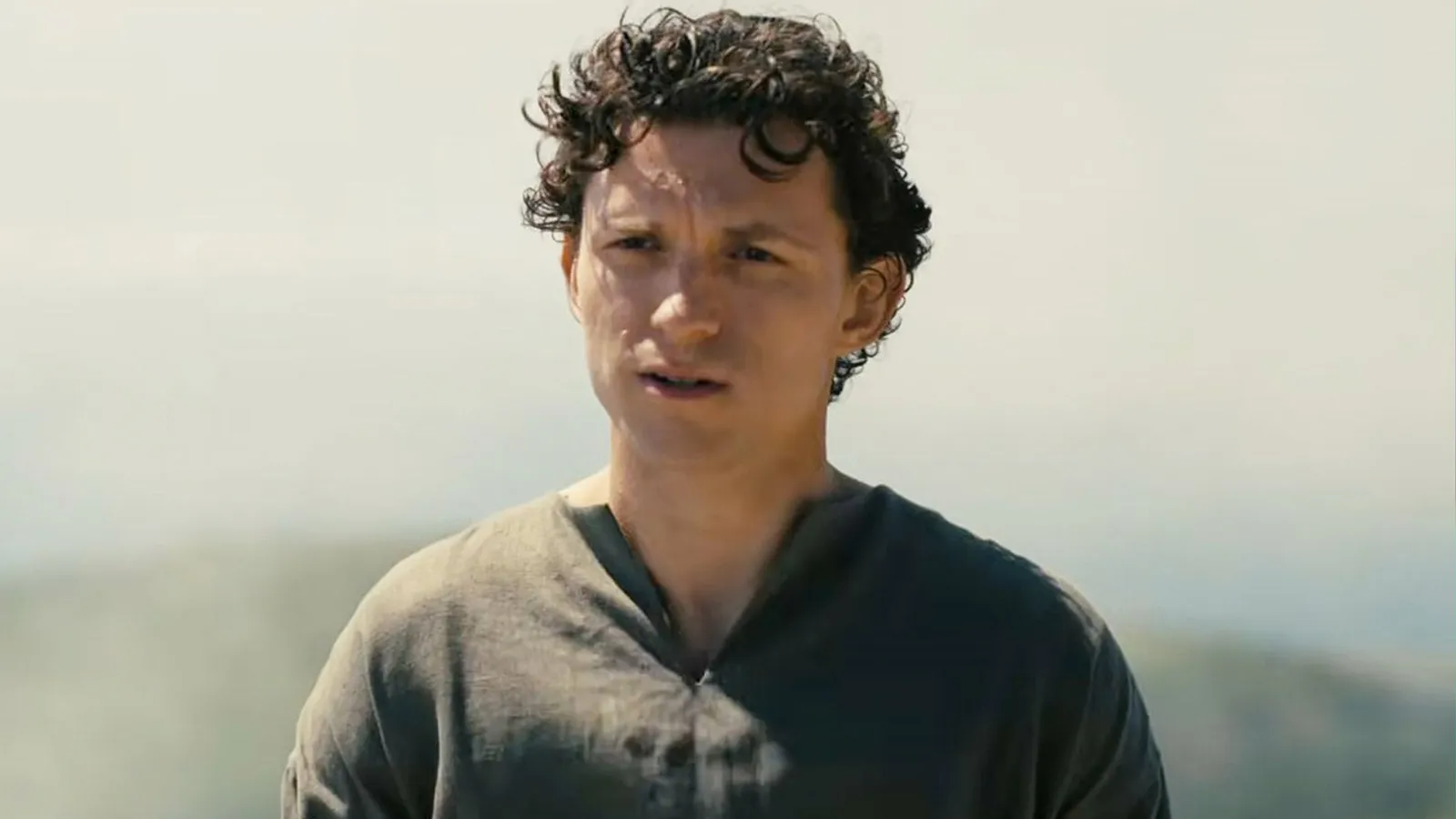
Christopher Nolan, director of The Odyssey, says his goal was to make it “very fresh for modern audiences” and “do away” with cultural prejudice about the ancient world. The consequence for leaders in media and audience strategy: authenticity claims and “historical accuracy” debates are being reframed into accessibility and narrative logic.
Christopher Nolan is making a not-so-subtle pitch to the audience before The Odyssey even releases: stop treating the ancient world like a museum exhibit, and start treating it like a living story. In an interview with Channel 4’s Krishnan Guru-Murthy, Nolan argued that people “elevat[e] it because it’s old,” then said he set out to go the other way. His stated approach is to “do away with some of those assumptions that aren’t based on anything logical,” presenting “a consistent and accessible world” that feels “vital and credible and exciting to be in.”
That’s not just aesthetic taste talk. Nolan’s comments land directly in the middle of a very public debate sparked by the film’s dialogue. In The Odyssey, Spider-Man star Tom Holland plays Telemachus (son of Odysseus, played by Matt Damon). Telemachus tells villainous Antinous (Robert Pattinson) that, “my dad is coming home.” Online debate erupted over whether that line fits the setting. Nolan and others point to the adaptation’s genre reality: it is a “mythic action epic” involving a giant one-eyed monster and enchanting bird-women whose irresistible songs lure sailors to their deaths on rocky shores. In other words, the film is not taking a documentary vow of historical accuracy.
Nolan’s response is essentially an argument about how audiences miscalibrate “accuracy” expectations. In the Channel 4 interview, the actor Tom Holland backed the line with a neat, blunt logic: “Because I wouldn't have even said ‘Father’ back in the day, would I? I would have been Greek, so it's no less correct.” That’s not a scholarly citation, but it is a direct rebuttal to the “only formal language is valid” instinct. Nolan then expands the lens. He claims there’s a prejudice that attaches to ancient settings, where viewers assume authenticity equals elevated speech, old-master visuals, and period architecture that may not even match the specific era depicted.
To explain what he meant, Nolan points to how people often picture the ancient world by borrowing from later artistic styles, especially the Romantic era. He says people look back at paintings where figures are wrapped in bedsheets and presented in ways that do not reflect the architecture of the Mycenaean period. His method, he says, was to “go back to what’s in the archeology,” then ask what the evidence supports and what gaps it leaves. That framing matters because it turns “accuracy” from a binary into a design constraint: you can only build what the records allow, and you can only make choices that feel consistent.
This is where strategy meets craft. Nolan is aiming for contemporary dialogue rather than artificially elevated speech, and he said he wants “language that has emotional not intellectual meaning to people,” a comment he made in a recent interview with the Los Angeles Times. He also admitted there’s risk in that decision. “I was maybe being naïve, it might bite me on the ass,” he said, but he wanted an “earthy narrative” and called it a “no-brainer.” That kind of acknowledgment is a big tell for leaders watching entertainment ecosystems: Nolan is not pretending this will silence critics. He’s calculating that audience immersion and emotional legibility will outweigh purist discomfort.
The same accessibility-first approach shows up in casting. Nolan defended his decision to use contemporary faces for mythic characters, saying he wanted to cast “big,” with “the finest bunch of actors,” because recognizable performers help modern audiences “feel at home in an ancient story.” The film casts Lupita Nyong’o as Helen of Troy, Jon Bernthal as Sparta’s King Menelaus, and Zendaya as Athena. That choice is a specific response to a recurring industry problem: if you strip away modern points of reference, you may preserve “period feel,” but you can also shrink the audience that can enter the story quickly. Nolan’s bet is that familiarity can be an access tool, not a betrayal.
If you want the parallel case study, look back at how Nolan defended The Odyssey when controversy hit earlier. In December last year, the debut trailer showed Agamemnon’s imposing, all-black suit, and jokes spread that it looked out of place. One commenter said: “Had no idea Ancient Greeks used Batman helmets and sailed in Viking ships. Seriously, how hard is it to look at the picture of what the real thing looked like?” Nolan responded in a Time magazine profile with an argument rooted in materials and era depiction. The film is set at the end of the Bronze Age, a period of societal collapse in the Mediterranean basin during the late 13th to early 12th century BC, and Nolan noted that knowledge of the era is based on “very fragmentary archeological records.” He argued the armor is feasible: “There are Mycenaean daggers that are blackened bronze.” His costume designer Ellen Mirojnick is trying to convey how elevated Agamemnon is relative to everyone else through expensive-looking materials. Nolan’s explanation includes the theory that blackened bronze could be made using sulfur in a process involving bronze plus gold and silver.
Nolan also tied this to how Homer’s story was first received. He said Homeric characters were initially depicted “in the manner of people living in Homer’s time,” roughly 400 to 500 years after the collapse of the Late Bronze Age. So, he says, there’s “a pretty strong case” for portraying things that way because that’s how the first audiences experienced the narrative. The argument is consistent: you choose what “truth” means for the story, not just what modern viewers wish it meant.
One more strategic layer: Nolan uses his own earlier work to normalize public critique. He drew parallels to Interstellar (2014), which used real-world science to depict interactions with black holes. Some criticized Interstellar’s physics, and Nolan’s philosophical response about historical accuracy for ancient stories was basically the same logic with different subject matter. “For Interstellar, you’re looking at, ‘What is the best speculation of the future?’ When you’re looking at the ancient past, it’s actually the same thing. ‘What is the best speculation and how can I use that to create a world?’” He added, “Hopefully they’ll enjoy the film, even if they don’t agree with everything. We had a lot of scientists complain about Interstellar. But you just don’t want people to think that you took it on frivolously.” The strategic stake here is clear: The Odyssey hits theaters July 17, 2026, and Nolan is trying to preempt a familiar trap where aesthetic risks get framed as laziness instead of as informed speculation.
For executives, creators, and investors, this isn’t just about one director. It’s about how the “historical accuracy” debate functions as an attention engine, and how today’s mainstream audience demands immersion fast. Nolan’s approach reframes cultural prejudice into a design principle: make it emotionally accessible, use evidence where possible, accept gaps, and create internal consistency. If you’re building audience strategy in 2026, the lesson is that credibility is not only about matching the past. It’s also about making the present feel welcome in the story.
This story's Key Insights and Take-aways are locked.
Create a free account to unlock Executive Actions for one credit.
Register to UnlockAlways free for Executives Club members. Join the Club
More in Entertainment

12TB Steam 'teraleak' goes beyond Valve: GTA 3, Mafia 2 prototypes exposed
A 12-terabyte dump of Steam data reveals prototypes and builds of third-party classics like GTA 3 and Mafia 2, plus unreleased Valve content, rewriting game history.

LinkedIn's romance problem: 1 in 4 workers say dating on it is fair game
A new survey shows a quarter of U.S. employees treat the professional network as fair game for romance, even as LinkedIn bans it and removes hundreds of thousands of offending posts.

Enhypen's first No. 1 album breaks K-pop's Billboard 200 streak
The K-pop group's 98,000-unit debut tops the chart while Dolly Parton's catalog reentry shows how death reshapes streaming.