

Christopher Nolan says generative AI is “hitting at exactly the wrong time” for Hollywood
The filmmaker praises Gen Z for rejecting “AI slop,” while also acknowledging AI is not universally “useless of meaningless.”
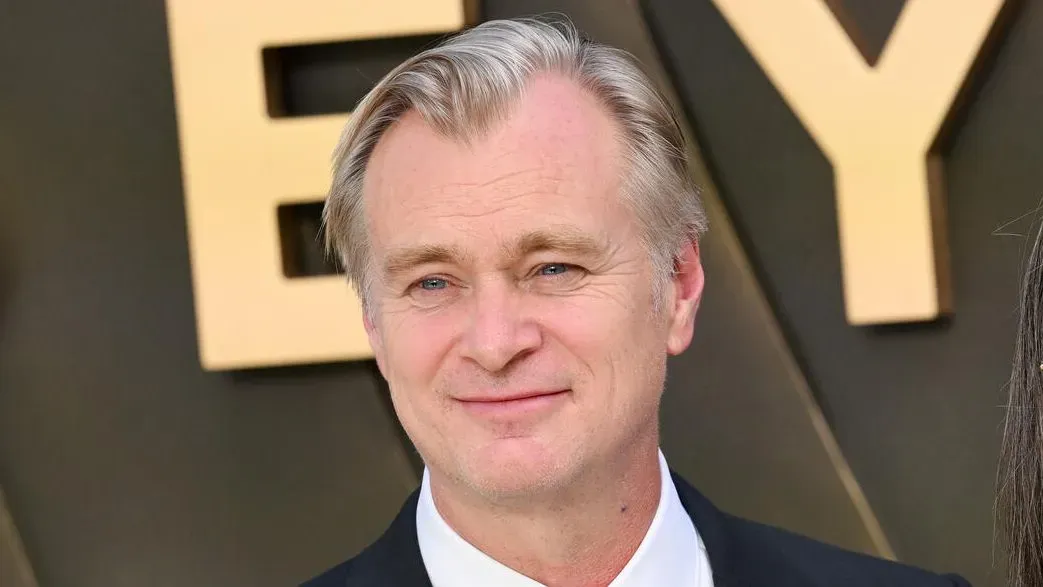
Christopher Nolan, the 2-time Oscar winner, criticized generative AI’s current wave as “hitting at exactly the wrong time” for Hollywood, while praising Gen Z filmmakers for “utterly rejecting” “AI slop.” His remarks matter to decision-makers because they signal rising audience and talent pressure on production workflows, IP risk, and brand trust.
Christopher Nolan, the 2-time Oscar winner, is gearing up to bring audiences on an Imax odyssey, and he is making a surprisingly clear argument about the state of filmmaking right now: generative AI is “hitting at exactly the wrong time” for Hollywood.
Nolan also praised Gen Z filmmakers for “utterly rejecting” “AI slop,” a phrase that is doing a lot of work. In the same conversation, he admitted that not all applications of artificial intelligence are “useless of meaningless.” So this is not a blanket anti-technology rant. It is a timing and quality judgement, aimed at the specific kind of AI content that feels disposable, rushed, or obviously synthetic.
That distinction matters, especially for executives who are trying to decide what to greenlight, what to pilot, and what to avoid. In most industries, AI adoption tends to follow a familiar path: early enthusiasm, then cost pressure, then an internal shift from “can we do it?” to “should we ship it?” Nolan is basically warning Hollywood that the second shift is arriving before the ecosystem has matured. If audiences start recognizing and rejecting low-quality AI outputs, the reputational cost can hit faster than the productivity gains. In other words, even if AI can be used, it can still fail the market test.
There is also the talent and workflow angle. When Nolan praises Gen Z for rejecting “AI slop,” he is highlighting how creators are setting norms in real time. Generative AI tools can shorten certain loops, but they can also collapse creative standards if production teams feel forced to keep up. A generation that signals rejection is effectively pulling the industry’s quality bar upward, not just its ethics bar. For boards and studio leadership, that translates into a new kind of risk: not just legal or regulatory risk, but a legitimacy gap. If filmmakers believe AI is being used as a shortcut for sameness, they may resist pipelines, delay adoption, or demand review controls that slow down production.
This is where the “useless of meaningless” admission becomes a business point. Nolan is conceding that some AI applications can have real value, even if the generative part currently being marketed and deployed is failing to land. That is a nuance executives can build policy around. The question is not “AI or no AI.” The question is whether your company can draw a bright line between tools that enhance craft and tools that manufacture noise. If you cannot draw that line, you wind up in the worst of both worlds: higher operational complexity with lower audience trust.
From a regulatory framing perspective, the industry is heading toward more scrutiny of how AI-generated or AI-assisted content is labeled, licensed, or tied to existing rights. While Nolan does not lay out any policy details in this source, his comments reflect the broader tension that regulators often respond to: downstream consumer harm and upstream uncertainty. When the market floods with unclear, questionable, or low-quality AI outputs, lawmakers and agencies typically follow the complaints that become impossible to ignore. Executives should treat sentiment like a leading indicator of future compliance burdens, because the same controversies that spark backlash can later become audit requirements.
The second-order implications extend to IP and distribution. If audiences increasingly treat “AI slop” as a category you can smell instantly, streaming platforms and theaters may face pressure to manage quality or disclosure. That can create platform-specific rules. It can also affect how investors underwrite production slates. Capital tends to move toward projects that look durable, not projects that are likely to be dismissed as technically clever but creatively dead on arrival. Nolan’s framing suggests that durability will depend partly on whether AI outputs meet evolving expectations.
Finally, Nolan is not speaking from the sidelines. He is preparing to release work in a high-experience format, Imax, where the whole promise is that cinema still delivers something computers cannot replicate: scale, immersion, and human intention. When he says AI is “hitting at exactly the wrong time,” he is implicitly arguing that Hollywood should be investing its attention in the opposite direction, toward storytelling craft rather than synthetic speed. For executives and board members, the strategic stake is simple. If the industry gets this wrong, the backlash does not just spoil a marketing campaign. It changes who trusts the brand, who signs the next slate, and which production teams feel valued. And in entertainment, trust is the only budget line that never replenishes itself.
This story's Key Insights and Take-aways are locked.
Create a free account to unlock Executive Actions for one credit.
Register to UnlockAlways free for Executives Club members. Join the Club
More in Entertainment

12TB Steam 'teraleak' goes beyond Valve: GTA 3, Mafia 2 prototypes exposed
A 12-terabyte dump of Steam data reveals prototypes and builds of third-party classics like GTA 3 and Mafia 2, plus unreleased Valve content, rewriting game history.

LinkedIn's romance problem: 1 in 4 workers say dating on it is fair game
A new survey shows a quarter of U.S. employees treat the professional network as fair game for romance, even as LinkedIn bans it and removes hundreds of thousands of offending posts.

Enhypen's first No. 1 album breaks K-pop's Billboard 200 streak
The K-pop group's 98,000-unit debut tops the chart while Dolly Parton's catalog reentry shows how death reshapes streaming.