
Clarity Act stalls in Senate bid as parties debate barring President from selling crypto
The crypto-backed bill nears a Senate vote, but a fight over presidential crypto sales threatens to derail bipartisan momentum.

The Clarity Act, a major bill pushed by the crypto industry, is moving closer to a Senate vote as Democrats and Republicans negotiate its details. The key consequence for decision-makers is whether the bill gains enough support without triggering a high-stakes ethics and control debate.
The Clarity Act is nearing a Senate vote, but its path is getting snarled in a single question that cuts deeper than policy language: should the President be barred from selling crypto if the bill passes? Democrats and Republicans are haggling over that provision as the crypto industry pushes the bill forward, turning a seemingly technical legislative effort into a fight about power, optics, and enforcement.
In other words, the bill is not just about whether crypto needs clearer rules. It is about who gets to participate in the market while those rules are being written, and what guardrails Congress should demand of the most influential person in the room. As negotiations continue, the “Clarity” promise is colliding with a political reality: a vote requires consensus, and consensus is hardest when the issue touches the President’s personal holdings and the appearance of conflicts.
To understand why this matters, zoom out to how crypto regulation typically moves in the U.S. The industry has long argued that it needs “clarity,” meaning more defined legal boundaries and more predictable enforcement. Lawmakers, meanwhile, often want to avoid both extremes, either letting the market grow without guardrails or cracking down so broadly that innovation and investment freeze. That tension creates a legislative opening for big, umbrella bills like the Clarity Act, especially when a coalition believes there is enough room to compromise.
But the moment a major bill approaches a floor vote, the internal mechanics of politics kick in. Even if members agree on the economic goal, they may disagree on the high-sensitivity details that can be weaponized during election cycles. The question of barring the President from selling crypto is one of those details. It is not simply regulatory. It is personal, visible, and framed as either basic ethics or political overreach depending on where you sit.
This is why the “debate” around the Clarity Act is more than a parliamentary side quest. When Democrats and Republicans are both involved, and the issue is explicitly about presidential selling, it signals that multiple factions see strategic value in the provision. For one side, it is a way to prevent conflicts of interest and reduce skepticism about motives. For the other, it can become a litmus test for whether the bill respects limits and constitutional boundaries. Either way, the negotiation is likely to shape the final version more than the crypto industry initially expected.
For executives and board members in crypto-adjacent companies, the stakes are direct even if the bill sounds distant. When legislation is mired in debate, the market does not just wait. Uncertainty can affect capital formation, hiring, and strategic partnerships because companies want to know what “compliance” will mean in practice. That is not about predicting price moves. It is about understanding whether risk models can be built around stable rules or whether teams have to plan for shifting enforcement priorities.
The second-order effect reaches beyond companies themselves. Boards overseeing regulated business lines, fintech compliance, custody operations, or token-related products need to anticipate that legislative outcomes can also change the posture of regulators. Even if agencies do not instantly rewrite their guidance, congressional clarity often influences how regulators justify actions, how courts interpret disputes, and how investors evaluate legal exposure. If the Clarity Act emerges from the Senate process with a controversial presidential provision, it could lead to extra scrutiny, extra messaging battles, and extra delay in follow-on steps.
The strategic stake for decision-makers who are watching from the sidelines is timing. A bill near a Senate vote can look close enough to matter, but the final package still has to survive the politics of floor debate. If the President-selling question becomes a sticking point, it can slow, dilute, or reshape the bill in ways that affect everything built on top of it. For the executives trying to turn regulatory uncertainty into a competitive advantage, the most valuable skill may be preparing for multiple outcomes, because the difference between “moving closer to a vote” and “actually passing” often comes down to exactly the kind of debate Democrats and Republicans are now having.
This story's Key Insights and Take-aways are locked.
Create a free account to unlock Executive Actions for one credit.
Register to UnlockAlways free for Executives Club members. Join the Club
More in Politics
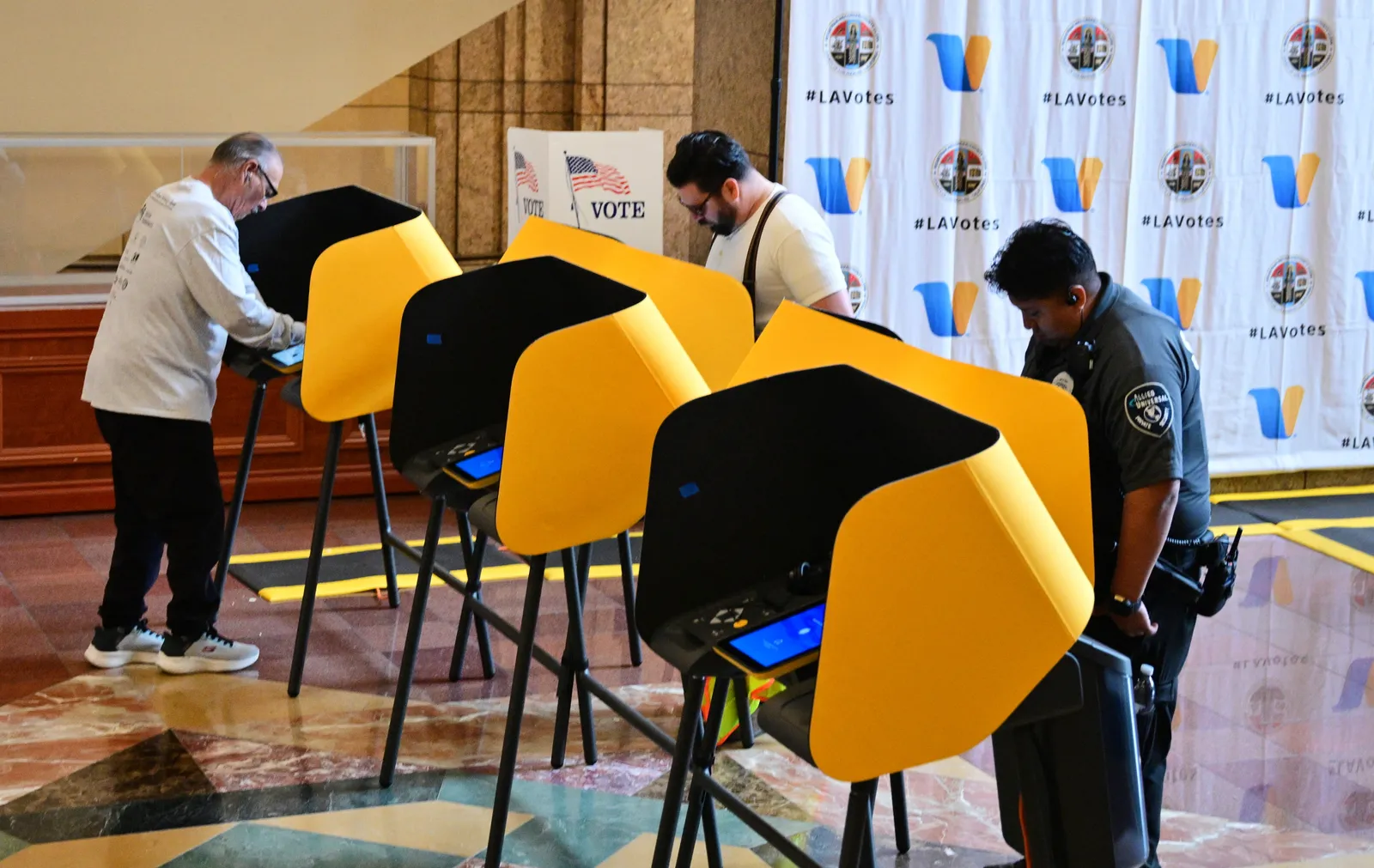
LA County: DOJ's 20,000 'noncitizen' voter list is 'unreliable,' includes U.S.-born
Preliminary review by Los Angeles County election officials finds errors in the federal list, raising the stakes for voter roll integrity ahead of November.
Trump's $1.5B Pentagon chip investment lands in North Carolina
A $1.5 billion defense infusion for North Carolina chipmaking signals a new era of Pentagon-backed reshoring - here's what it means for the industry.

Nigeria confirms first Ebola case in Abuja, a woman just off a Uganda flight
Health Minister Muhammad Ali Pate says the patient flew in from Uganda, putting Africa's latest outbreak on Nigeria's doorstep.