
Climate evidence reframes Polynesians' eastward jump after 1,700 years of Pacific stability
New climate context helps explain why Polynesian voyagers suddenly began settling far to the east.
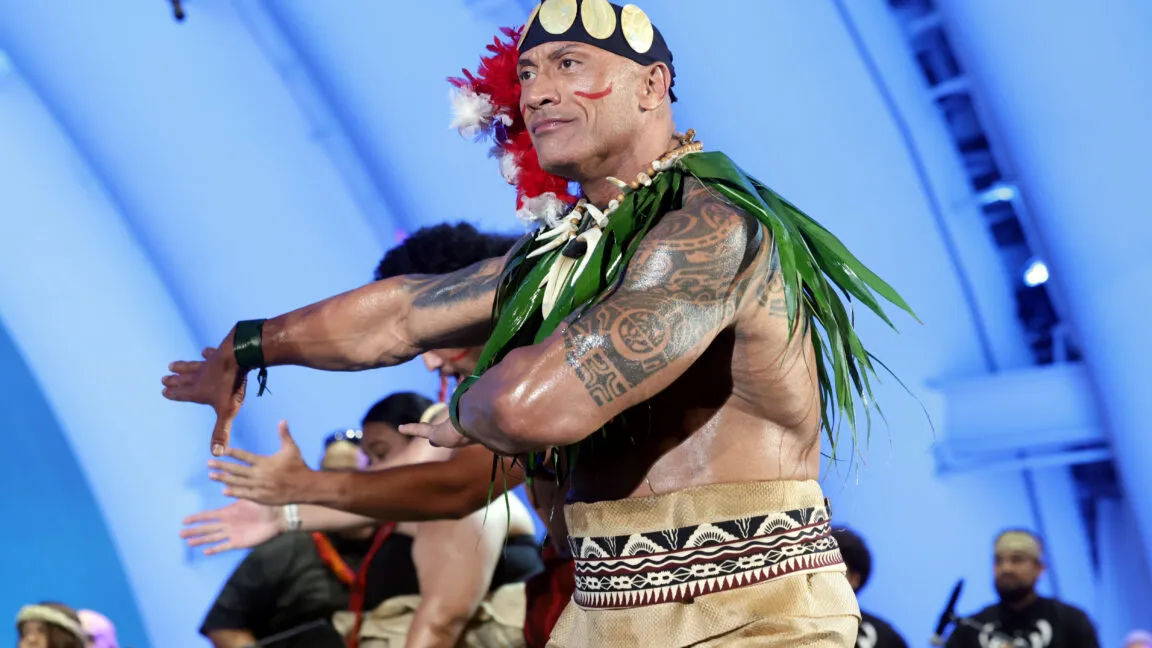
Ars Technica draws a line from the plot question behind Moana to archaeology and the latest climate evidence on Polynesian migrations. The consequence for decision-makers is clear: environmental drivers can rapidly reorganize long-running human movement patterns, not just slowly shape them.
If you remember the big Moana question, here it is in real life: after centuries of relative stability, why did Polynesian voyagers suddenly start settling islands thousands of kilometers away across the Pacific, and especially to the east? That is the same mystery that has animated decades of archaeological research, and it is exactly the kind of long-arc “why now?” that climate science is trying to answer. Ars Technica points to new climate evidence as a missing piece of the timeline, offering context for why these voyages happened when they did.
The reason this is getting attention now is simple. The films are fiction, and Moana the movie is a live-action adaptation of Disney’s animated Moana. But the story’s underlying inspiration comes from the seafaring heritage of Polynesian peoples, whose ancestors undertook one of the greatest episodes of maritime exploration in human history. The archaeological question is not “did they sail?” It is “why did the direction and settlement pattern shift when it did?” The new climate context aims to explain the timing of that shift after a long stretch of relative stability.
To understand why the timing matters, it helps to frame how Pacific voyaging typically worked. Large-scale ocean travel on this scale is not a casual hobby. It requires navigation skill, social coordination, and enough external conditions to make the journey and subsequent settlement plausible. For centuries, there were “relative” baselines: not that nothing changed, but that conditions may have been stable enough that big discontinuous moves were not necessary or were harder to justify. Then something changed enough to make a new pattern of movement make sense, and that is where climate evidence comes in.
Climate evidence is particularly persuasive here because it can connect the invisible with the decisive. Ocean and atmosphere do not care about human plans. Wind systems, sea-surface conditions, and broader climate patterns can influence whether long voyages are feasible, whether routes are reliable, and whether islands offer sustainable prospects. In other words, climate does not just set the mood. It can set the logistics. So the second-order implication for how we read history is that “stability” can end abruptly. The voyages were not just a cultural choice floating free of the environment. They were likely a response to changing constraints and opportunities.
There is also a useful lesson for today’s leadership, even if your company is not planning trans-Pacific migration. Boards and executive teams spend a lot of time building models that assume slow change, then get blindsided when systems cross thresholds. The Polynesian migration puzzle is basically an ancient version of that risk management problem: if the governing conditions were stable for a long stretch, then any new evidence of a climate shift can change how we interpret cause and effect. The timing becomes part of the evidence. “Why now?” stops being a narrative flourish and becomes a testable question.
Ars Technica’s framing matters because it refuses to treat the mystery as purely academic trivia. It positions archaeology and climate science as the best tools for answering questions that mythology and movies can only approximate. That matters for how decision-makers allocate attention and funding in the real world too. When researchers add context to long voyages, they are not just filling in a footnote. They are improving the explanatory model that future research can build on. Better models help people avoid repeating the same mistake: seeing outcomes without understanding the conditions that made them likely.
Finally, the Moana reference is not just a cultural hook. It is a reminder of how real-world evidence can sharpen how society interprets the past. When new climate evidence adds context to long voyages, it can shift public understanding from “mysterious adventure” to “adaptive navigation of changing systems.” For executives and investors, that translates into a broader strategic stake: environmental drivers can restructure human behavior faster than expected, and when they do, the impacts show up as changes in movement, settlement, and network formation.
So while the movies are fictional, the underlying question is real. After 1,700 years of relative stability, Polynesian voyagers began settling islands thousands of kilometers away across the Pacific, including to the east. New climate evidence is helping to explain why the timing looked like a sudden break. If you oversee strategy in any domain where conditions matter, that is the takeaway: assume change is possible, and when evidence emerges, update the “why now” story as rigorously as the “what happened.”
This story's Key Insights and Take-aways are locked.
Create a free account to unlock Executive Actions for one credit.
Register to UnlockAlways free for Executives Club members. Join the Club
More in Science
2026 Nikon Small World Winners Reveal the Hidden Machinery of Everyday Life
A mycologist's frozen Edinburgh garden became the backdrop for vivid views inside cells, a reminder of what advanced imaging now makes visible to researchers and the industries built on biology.

Study: 1 in 4 depression cases may be a body-clock problem, not a chemical one
A 10,000-person study finds standard antidepressants often fail these patients, but melatonin and morning sunlight may hit the real root cause.

Start-Up Says A.I. Designed a Virus to Attack One Patient's Superbug
If the claim holds up, personalized phage therapy could become a new frontline weapon against antibiotic resistance - but proof is far from final.