

Colin Farrell leads Andrew Haigh’s 5-part miniseries The North Water, pure sea-horror
Why Andrew Haigh’s aquatic throwback with Colin Farrell is the weekend binge for executives who still crave substance.
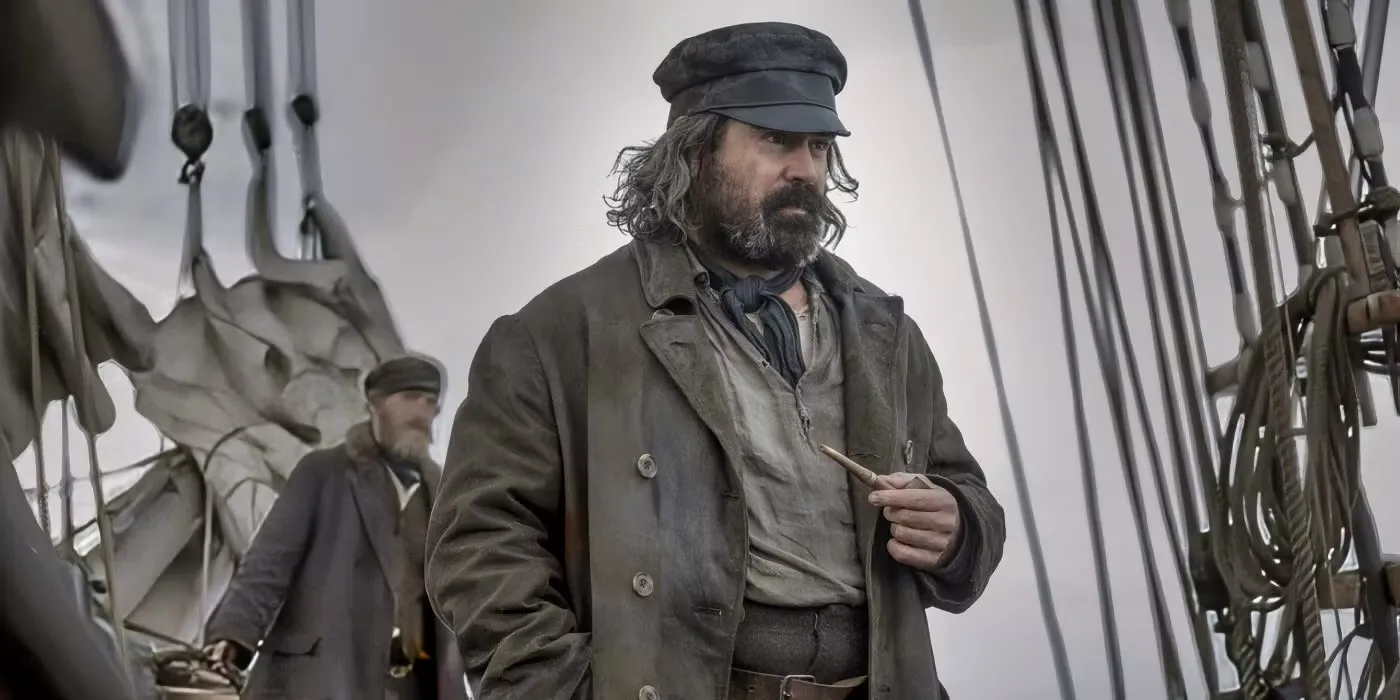
Colin Farrell and Jack O'Connell star in the overlooked five-part miniseries The North Water, created and directed by Andrew Haigh. For decision-makers, it is a reminder that prestige can still win with craft, even in formats that drowned before the money chase.
Colin Farrell and Jack O'Connell are back at the center of a genuinely unnerving expedition in The North Water, a five-part miniseries that uses an ocean voyage as a delivery system for dread. This is not just “watchable TV.” It is grounded horror built around the grim reality of pre-20th century aquatic travel, where exploration is not a vibe, it is a highly dangerous form of transportation requiring the coldest of hearts. The hook, the payoff, and the tone all land because the series treats the sea like a pressure chamber. It squeezes people until what is under the surface shows itself.
The creative engine behind that atmosphere is Andrew Haigh, who created and directed The North Water. The Collider piece points out that Haigh’s earlier work leaned primarily into the social drama genre, but here he applies the same emotional gravity to a historical epic filled with graphic horror. That crossover matters, because it explains why the miniseries feels both old-world and specific. You are watching an emotional story framed inside a period adventure, with horror that is not sprayed on for shock value, but anchored in scale, stakes, and the bodily risk of being on the water.
Here is why this resonates beyond the entertainment aisle, especially for executives thinking about attention, product format, and audience trust. The article explicitly notes that there have been relatively few oceanic adventure epics made in recent years. That scarcity is strategic. When an entire category cools off, what returns is often either nostalgia cosplay or a safe re-skin of something already proven. The North Water instead aims at grounded horror and the kind of pre-20th century authenticity that makes the danger feel procedural, not theatrical. For leaders, the meta lesson is that the “what if people are tired of X” problem does not have to be solved by more of X. Sometimes it is solved by narrowing the promise to a specific emotional experience and executing it with confidence.
The series also gets credit for cinematic qualities that are framed as equivalent to classic Golden Age Hollywood scope and scale. That is not a small compliment. It suggests the production is not treating television as a budget consolation prize. It is treating it like cinema, with a scope and scale that earn the adjective “epic.” From a decision-making perspective, that has second-order implications: if audiences can tell when a project is made with care and craft, then the market value shifts away from raw franchise math and toward authenticity, tone consistency, and execution quality. Even if an industry is chasing cost efficiency and algorithmic predictability, viewers still reward work that feels deliberate.
Then there is the writer-director positioning that the source underscores. Haigh has primarily fallen in the social drama genre up until this point. The North Water applies the same emotional gravity, but changes the wrapper to a historical epic and the genre fuel to graphic horror. In business terms, that is the equivalent of a leader transferring a core capability across product categories. The “core” is emotional gravity. The “surface area” is boats, history, and horror. When boards talk about talent and repeatability, they often struggle with how to quantify “emotional control.” This series quietly suggests a framework: keep the emotional discipline, then expand the setting and genre around it.
And yes, the ocean setting is doing heavy lifting. The article contrasts high-octane swashbuckling crowdpleasers with the grim reality that sea exploration was historically dangerous and required cold hearts. That distinction matters because it changes the type of suspense you get. Instead of relying on spectacle alone, The North Water leans into the lived consequences of aquatic travel. The second-order effect for leaders is that realism in stakes can outperform novelty in format. People can scroll past a hundred “adventure” thumbnails. They stay for danger that feels earned.
Finally, think about what this means for peers and portfolio teams in media. If a miniseries can feel like Golden Age Hollywood in scope and still deliver horror that is grounded and graphic, then the ceiling for episodic storytelling is higher than many executives assume. It also raises the question of what categories are “overlooked” because they were not marketed like they deserved to be. The North Water being described as overlooked is a reminder that distribution and packaging can bury great craft, even when the product itself is strong. For decision-makers, the strategic stakes are simple: build with intent, match tone with craft, and do not assume the audience only wants either comfort food or spectacle. Sometimes what wins is a voyage into the heart of darkness, told with emotional gravity and cinematic scale.
This story's Key Insights and Take-aways are locked.
Create a free account to unlock Executive Actions for one credit.
Register to UnlockAlways free for Executives Club members. Join the Club
More in Entertainment

Ali G's 'stooge' says he was in on joke, outplayed Sacha Baron Cohen
A 54-year-old aspiring actor says he recognized Sacha Baron Cohen mid-shoot, kept his MAGA act up, and let the film-makers think they had fooled him.

Entertainer Russell Brand denies 7 sex charges amid accuser's 'couldn't breathe' claim
The alleged victim's account sharpens the reputational and legal stakes for Brand, his platforms, and any business tied to a public figure under criminal scrutiny.

Russell Brand's accuser 'bewildered and confused' as he denies 7 sex charges
The criminal case against the comedian is a live test of how media companies manage talent risk when serious allegations go public.