
Colin Farrell says Sugar season 2 drops the veil: he was “unburdened” after secrecy
Apple TV’s June 19 start gives Farrell permission to stop tiptoeing, and it changes how the sci-fi twist lands.
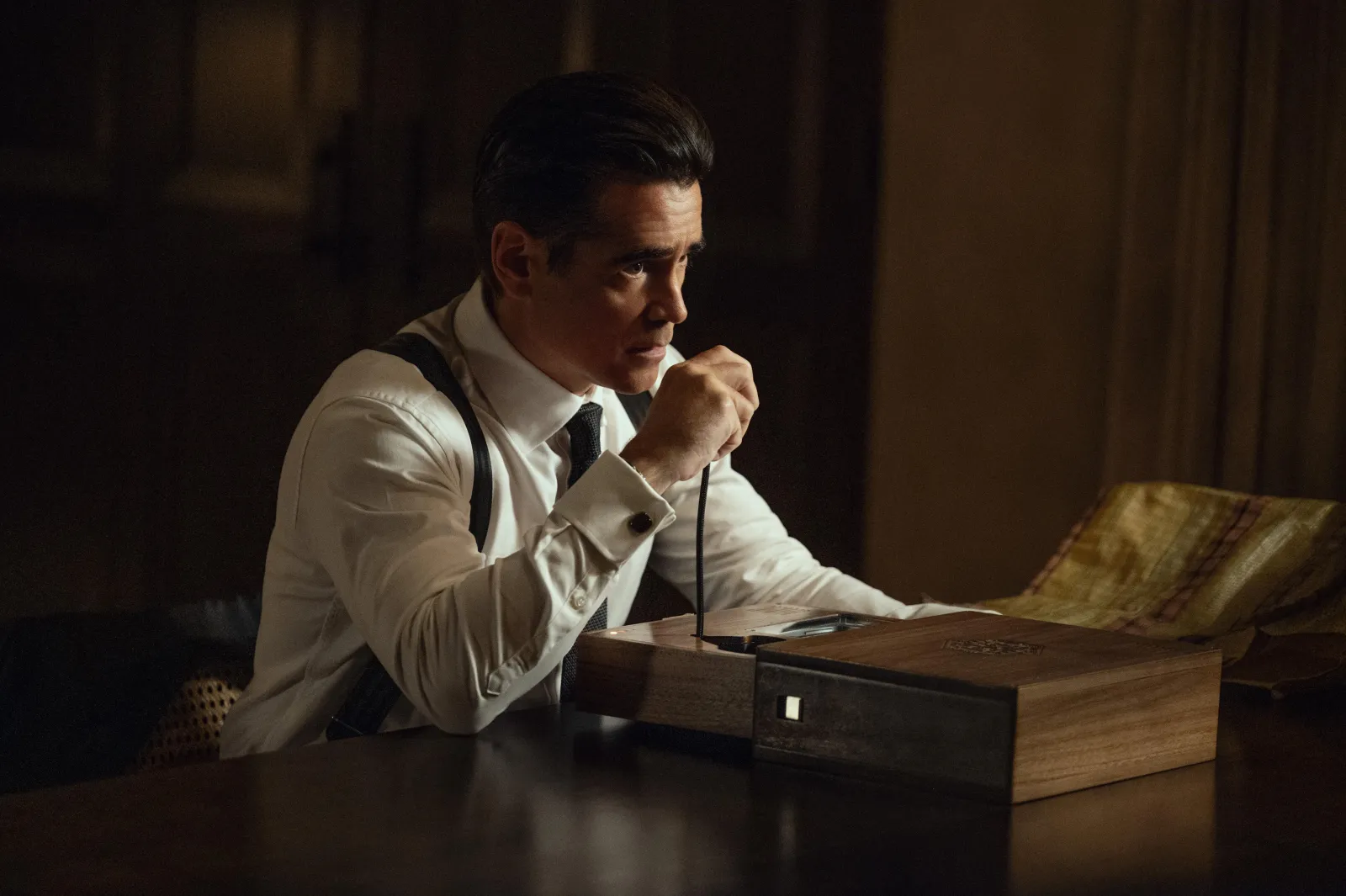
Colin Farrell, star of Apple TV detective series Sugar, says he had to be careful in press for season 1 because the show is “secretly a work of science fiction.” For season 2, streaming starts June 19, and Farrell says he feels “unburdened” by the earlier secrecy.
When Colin Farrell did press for the first season of Apple TV detective series Sugar, he had to be very careful about how he spoke. The reason is deliciously inconvenient: Sugar is a quirky private detective story, but it is also “secretly a work of science fiction.” That science-fiction angle does not become clear until halfway through the season, and Farrell explicitly warned that he could get the show “in deep shit” by revealing the wrong things.
Now, with Sugar heading into its next season, streaming begins on Apple TV on June 19. Farrell says he feels “unburdened” by the previous veil of secrecy, and he draws a careful line for what he can say. “There are certain things I wouldn’t mention here about season 2,” he says, “but nothing as big a …” The key point for viewers and anyone paying attention to how shows are marketed: the same discovery structure that made season 1 a controlled reveal is still there, but Farrell is signaling that season 2’s secrecy pressure is lower. In plain English, he is telling you that he can talk more freely now that the show has already trained audiences to expect the twist.
That sounds like an acting anecdote until you zoom out to the actual business mechanics. TV marketing is basically a high-stakes negotiation between anticipation and spoilers. If you are too vague, the audience may not show up. If you are too explicit, the surprise gets deflated. Farrell’s comment about avoiding “deep shit” captures the incentive problem: once press coverage gives away the halfway-turn sci-fi layer, you risk turning a structural storytelling advantage into a choreographed disappointment.
In season 1, Sugar used delayed revelation as a storytelling engine. The science-fiction reality was “secretly” present, but the show withheld the context until halfway through. For a network or streamer, that is both a creative flex and a commercial risk. The flex works only if viewers do not get a shortcut through interviews, trailers, podcasts, or social media threads. The risk is not abstract. Farrell’s phrasing implies that there were concrete consequences for disclosing certain facts too early, whether those consequences come from creative stakeholders, audience reaction, or the show’s own internal expectations for how the twist should be experienced.
Second-order implications are everywhere in a modern streaming ecosystem. When a series has a delayed identity shift, it becomes harder for everyone in the marketing chain to do their job. Press teams want clean soundbites and crisp premises. Creative teams want controlled discovery. Platforms want scalable messaging that travels across regions and formats. And the talent, like Farrell, becomes the human boundary layer, the person who can either keep a secret intact or accidentally broadcast it. His “unburdened” framing for season 2 suggests that the show has crossed a threshold: audiences now share a baseline understanding of what this series is doing, so the cost of discussing it is lower.
There is also a broader regulatory and compliance angle, even when the subject is entertainment. Studios and streamers operate under platform policies and advertising norms that often require clarity and avoid misleading viewers. While the source does not mention any regulator, the underlying reality is that marketing claims and public messaging have to be managed tightly. With an in-season twist, “misleading” can happen unintentionally, simply by implying the wrong genre or mechanics too strongly. Farrell’s carefulness during season 1 is a reminder that communications discipline is not just creative prudence. It is part of how companies avoid reputational damage when audiences feel they were played.
So what matters for decision-makers now? For executives running series strategy, the takeaway is that “secret” storytelling is a product feature that needs operational support. If the show requires controlled reveals, you need to align talent, PR, and platform promotion with the narrative timeline. Farrell’s comments for season 2, especially his suggestion that he can say more without the same level of risk, indicate that Sugar’s communications strategy can evolve as the audience learns the rules.
For peers building similar hybrid genres, the strategic stakes are simple: preserve the surprise when it is the product, then loosen the constraints once the product is understood. Farrell’s shift from caution to “unburdened” is basically a roadmap for that evolution. Get the twist landed once. Train audiences to enjoy the discovery. Then, in the next season, you can talk more openly without torching the very thing that made the first run work.
This story's Key Insights and Take-aways are locked.
Create a free account to unlock Executive Actions for one credit.
Register to UnlockAlways free for Executives Club members. Join the Club
More in Entertainment
Chris Meledandri confirms Sing and Secret Life of Pets sequels are in active development
Illumination founder Chris Meledandri lays out which franchises are next, plus Nintendo collabs and Shrek 5.

O.T. Fagbenle joins Eleven Missing Days as Allen Lane, starring Vincent Cassel and Felicity Jones
Deadline reports the Emmy-nominated The Handmaid's Tale actor takes on Agatha Christie’s eccentric publisher in a real-life mystery thriller.

Pragmata staff leaned on “Diana Police” to sell Diana’s innocence convincingly
A development detail explains how Capcom designed Diana's child-like vibe to land emotionally with players.