
Craft CEO Israel Slodowitz says first-time buyers skip starters for $10M+ jets
A “completely new money” wave from AI and tech is reshaping how private aviation customers enter the market.
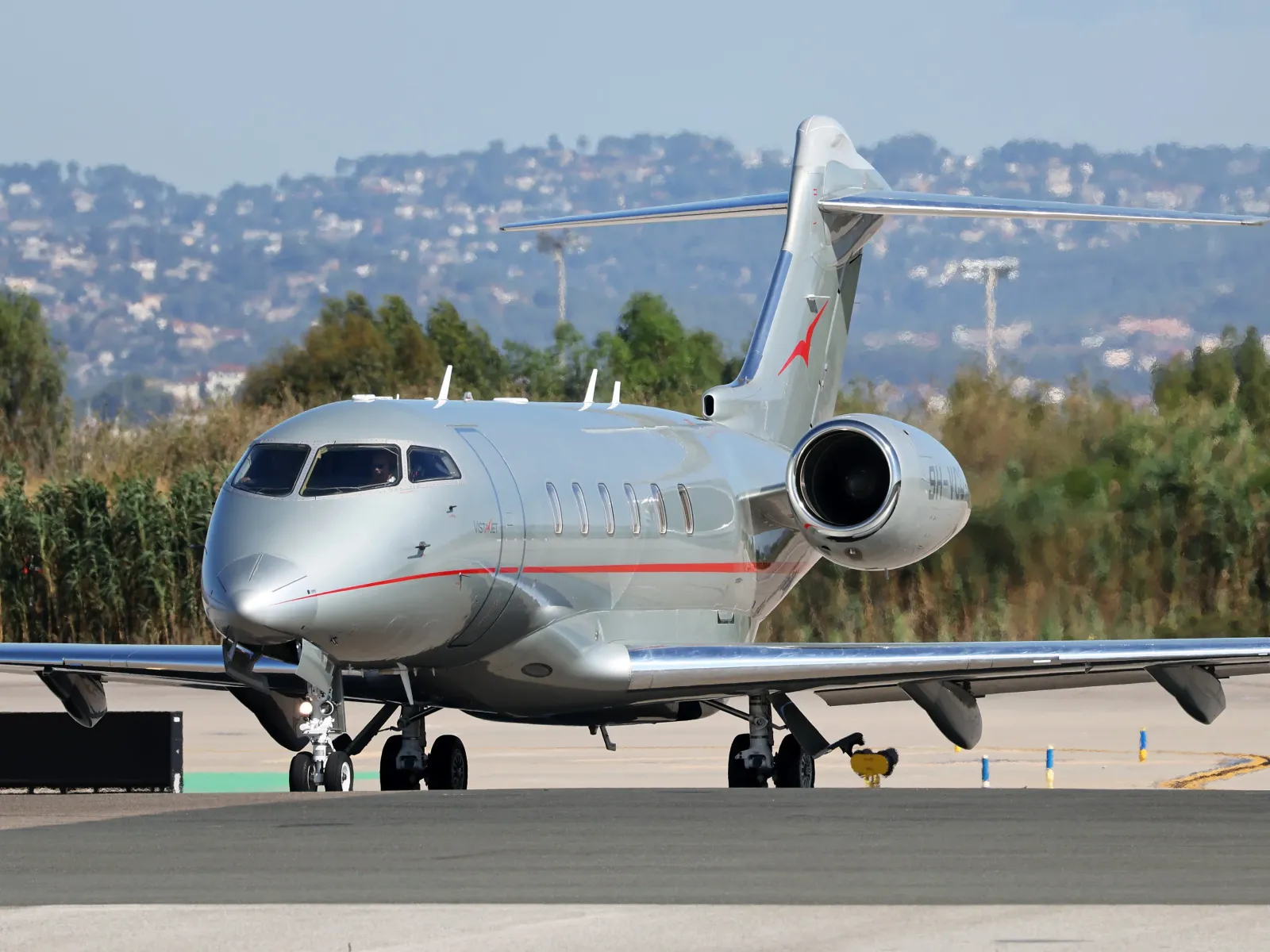
Craft CEO Israel Slodowitz said first-time private jet buyers are bypassing smaller aircraft and going straight to larger, pricier jets. The consequence: growing demand could trigger a jet shortage, plus price fluctuation and uncertainty as the industry adjusts.
Craft CEO Israel Slodowitz says first-time private jet buyers are skipping the starter step and instead buying or chartering bigger aircraft from day one. Speaking on the “Sourcery with Molly O’Shea” podcast, Slodowitz described a market where newcomers increasingly gravitate toward super-midsize options like the Bombardier Challenger 350, and sometimes even larger heavy jets such as the Gulfstream G450, with aircraft in these categories “cost[ing] in the tens of millions of dollars range.”
That is the core shift: the entry-level pattern that used to funnel new customers into private aviation is being bypassed. Slodowitz said some buyers previously would have started by chartering flights or purchasing a smaller aircraft, but now they are going straight toward “buying or even chartering the latest and greatest.” The result, he warned, is a potential imbalance between demand and supply, because he expects the population of PJ users to more than double, creating what he called a “huge cataclysmic effect” that could lead to a jet shortage.
So what is actually driving this behavior change? Slodowitz tied it to what he called an “insane wealth creation moment,” pointing specifically to AI and technology. He referenced Elon Musk’s rocket company SpaceX making its historic Nasdaq debut earlier this month, and he pointed to OpenAI’s anticipated IPO as examples of the broader wealth creation cycle. His framing was not only that new fortunes are forming, but that they are forming in a way that changes purchasing priorities. He described this as “completely new money,” and argued the market is seeing a “massive tsunami” hitting private aviation, showing up in “the preferences of what people are choosing” and “how they’re accessing private aviation.”
If you are an operator, financier, or board member in adjacent aviation or travel businesses, the timing matters. Jet buying and fleet planning are not short-cycle decisions. Even without quoting any regulators or government bodies, you can still see the operational logic: when customers shift toward higher-end models immediately, the bottleneck is not just demand, it is the availability of specific airframes, delivery slots, maintenance capacity, and crew readiness that fit those larger jets. Slodowitz’s warning about a coming shortage is essentially a supply chain statement disguised as a consumer behavior story. When the wealthy arrive in larger aircraft categories faster than the market can scale those categories, shortages are less about “people wanting jets” and more about whether the right jets can be sourced or delivered when and how the buyers want them.
There is also a financial twist that Slodowitz highlighted, and it matters for how assets get valued in the real economy of private aviation. Airplanes are generally considered depreciating assets, but he said that dynamic is starting to shift. He described the change this way: “They don't go up in value normally, but we're seeing them go up in value for the first time almost ever, especially in the higher end of the market.” His argument is that even a small change in how the market prices aircraft value can be “huge” for an industry that, as he put it, “is not at all ready for” this kind of wealth-driven repricing.
That “not ready” phrase is the second-order danger. When asset values start behaving differently, downstream decisions do too. Buyers may become more comfortable treating jets as scarce, appreciating assets rather than purely depreciating utilities. Operators may adjust pricing and inventory strategy. Lenders, lessors, and insurers may reassess risk. Slodowitz added that there will be “a lot of adjustment and price fluctuation and uncertainty until the new wave sort of takes effect.” Even though he did not offer a timeline beyond “until,” the implication is clear: boards should expect volatility during the transition, not smooth sailing.
Finally, it is worth noting what is absent. Slodowitz did not respond to a request by Business Insider for further comment, so we do not have extra details on whether Craft sees near-term order data, delivery pipelines, or how quickly buyers are changing preferences in percentage terms. But the directional claim is specific: first-time buyers are moving to larger, pricier jets, and that behavior shift is tied to AI and tech wealth creation. For any executive tracking private aviation demand, luxury travel spending, or high-end asset markets, the takeaway is not just “more wealthy people want jets.” It is that they may want a different tier of jet earlier than the industry historically prepared for, increasing the odds of a shortage and a messy period of pricing uncertainty before supply catches up.
This story's Key Insights and Take-aways are locked.
Create a free account to unlock Executive Actions for one credit.
Register to UnlockAlways free for Executives Club members. Join the Club
More in Business

Accenture’s $4.18bn play fails as AI fears spark a 20% worst-ever stock plunge
On Thursday, Accenture hit its biggest one-day drop on record after forecasting worries that AI could hollow out consulting.

SpaceX stock jumps 3% after it overtakes Amazon’s market cap
CNBC says SpaceX’s shares surge following its IPO Friday, forcing investors to reprice what “space” and “AI” are worth.

SpaceX’s first options day breaks U.S. records after a $85B IPO win
Big IPO, bigger options debut: what it means for investors, risk teams, and anyone benchmarking market appetite.