
Cuba’s Communist Party greenlights private banks and real estate, Diaz-Canel pushes through
After submitting an emergency package to the National Assembly, Cuba signals a structural shift that investors and banks will price in.
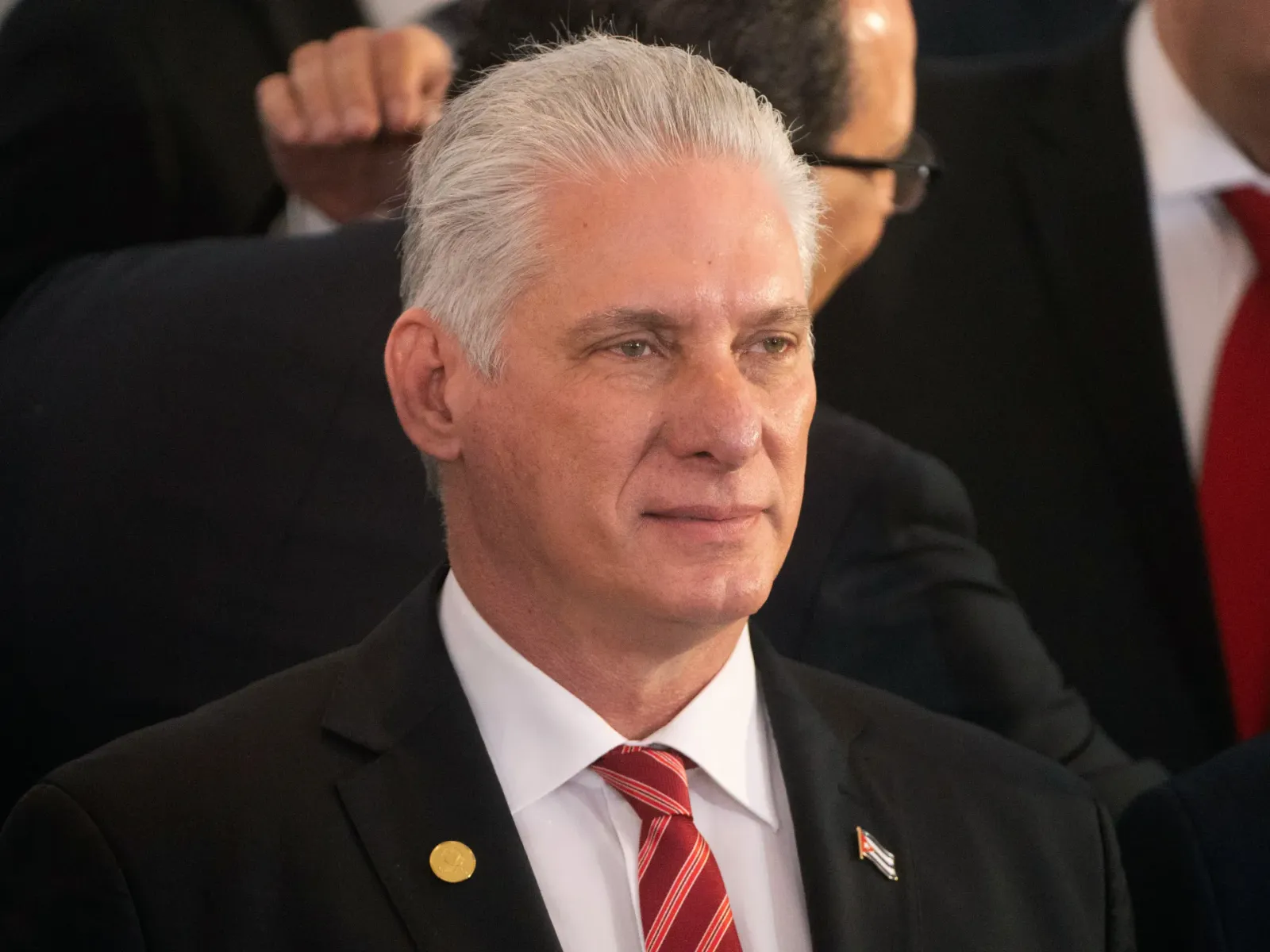
Cuba’s Communist Party has approved an emergency economic package that expands private enterprise, aims to attract foreign investment, and would allow private banks to enter Cuba’s finance sector. The move, submitted to the National Assembly on Thursday and described by President Miguel Diaz-Canel as urgent, could reshape how international capital and business risk is assessed for the island.
Cuba’s Communist Party has approved an emergency economic package packed with unprecedented free-market measures, including a plan to let private banks enter a once state-dominated finance sector and to open the door to private real estate development. The package was submitted to Cuba’s National Assembly on Thursday and is described as all but assured to pass.
For decision-makers, the headline stakes are simple: this is not a small tweak. The reform plan would expand opportunities for private enterprise and add measures to attract additional foreign investment, including from Cubans abroad. It also lays out a potential route for private real estate development on the Caribbean island and for state-owned businesses to transform into private commercial ventures with shares and equity stakes.
To understand why this matters, you have to understand how Cuba’s economy has historically been structured. The island has been led by the Communist Party, which has governed Cuba officially since 1965. Under that system, much of the economy has been dominated by the state, including the finance sector. So measures that would allow private banks to enter that sector, plus equity stakes in transformed enterprises, represent a shift in the basic “who owns and who allocates capital” model.
The package arrives amid a pressure campaign that has left Cuba reeling, but President Miguel Diaz-Canel made the point that Cuba’s dire economic situation cannot be blamed on external pressure alone. Speaking to the party’s Central Committee in a broadcast on Thursday, Diaz-Canel said the country’s economic problems included “slowness, bureaucracy and norms that impede those who want to produce” and “decisions that we have put off.” In his framing, the situation demands “urgent and necessary changes,” and he indicated some internal resistance is likely among hardliners in the Communist Party. He said some reforms “will not have absolute consensus, but cannot be postponed.”
At the same time, external pressure is part of the backdrop. The source notes that for decades the US has imposed a trade embargo on Cuba, weakening its economy. It adds that since January, US pressure against Cuba has increased, including the Trump administration blocking fuel deliveries to the island. That matters because financial systems and real estate development depend on stability, liquidity, and predictable access to inputs and capital. When those are constrained, even well-designed reforms can hit friction as banks, developers, and investors demand clarity on rules, risk, and enforcement.
Still, Diaz-Canel is not positioning the reforms as purely defensive. The plan was also submitted as a response to both domestic constraints and a changing pressure environment, including from Europe. On Thursday, the European Union increased pressure on Cuba by passing a resolution calling for sanctions on Diaz-Canel and the leadership of Grupo de Administracion Empresarial SA, a business conglomerate operated by the Cuban military. The EU resolution condemned what it described as “the systematic repression” by the Cuban government and called for “profound economic and political change.” In other words, Cuba is facing a combined squeeze: economic pressure paired with political demands.
The reform package is also landing in a political moment involving US signaling and Cuban legacy support. The source reports that former Cuban leader Raul Castro has backed the plan, even as he was indicted by the US in May. On the US side, Trump administration officials have repeatedly said economic reforms could ease Washington’s pressure campaign against the island, and notably US Secretary of State Marco Rubio is mentioned in that context. The US did not immediately respond to the latest moves, but the broader messaging is that Washington is watching whether reforms translate into change.
There is also a “what next” question hanging over the island for US policy. Vice President JD Vance was asked on Thursday whether the Trump administration would now turn its sights to Cuba after reaching a memorandum of understanding to end the war on Iran. Vance responded that Washington wanted Cubans to be “happy and successful,” and he said the US is talking to the Cuban government about how it could change its ways, adding that “If they make smart decisions, we’re going to have a much better relationship with that island.” The source notes Trump has repeatedly floated both military attacks and what he described as a “friendly takeover” of Cuba.
For executives, investors, and boards tracking emerging-market reform plays, the second-order implications are hard to ignore. Private banks entering Cuba would reshape how credit is allocated, what collateral and underwriting look like, and how cross-border finance is structured, even if constraints remain from the US embargo. Transforming state-owned businesses into ventures with shares and equity stakes could create new pathways for capital, but it also raises governance and valuation questions that private-sector participants will want answered. And private real estate development introduces its own rulebook issues, from land rights and permitting to dispute resolution and investment protections.
Cuba’s Communist Party is signaling that it intends to move quickly: reforms were pushed to the National Assembly Thursday and are described as all but assured to pass. Diaz-Canel’s framing suggests the party understands a key risk of delay, and his insistence that reforms “cannot be postponed” reads like an internal reset. The outside pressure may continue, but now the island is also making a bid to change its internal operating system. For any executive evaluating business, banking, or investment in tightly regulated or politically pressured markets, this is the kind of moment that can redraw risk models overnight, and the kind that rewards whoever can move from “watching reforms” to “pricing them” fastest.
This story's Key Insights and Take-aways are locked.
Create a free account to unlock Executive Actions for one credit.
Register to UnlockAlways free for Executives Club members. Join the Club
More in Business
Accenture’s $4.18bn play fails as AI fears spark a 20% worst-ever stock plunge
On Thursday, Accenture hit its biggest one-day drop on record after forecasting worries that AI could hollow out consulting.

SpaceX stock jumps 3% after it overtakes Amazon’s market cap
CNBC says SpaceX’s shares surge following its IPO Friday, forcing investors to reprice what “space” and “AI” are worth.

SpaceX’s first options day breaks U.S. records after a $85B IPO win
Big IPO, bigger options debut: what it means for investors, risk teams, and anyone benchmarking market appetite.