
Cyle Larin’s late equaliser gives Canada its first ever World Cup point
A substitute scoring moment turns the co-hosts’ campaign against Bosnia-Herzegovina from bleak to survivable with 1-1.
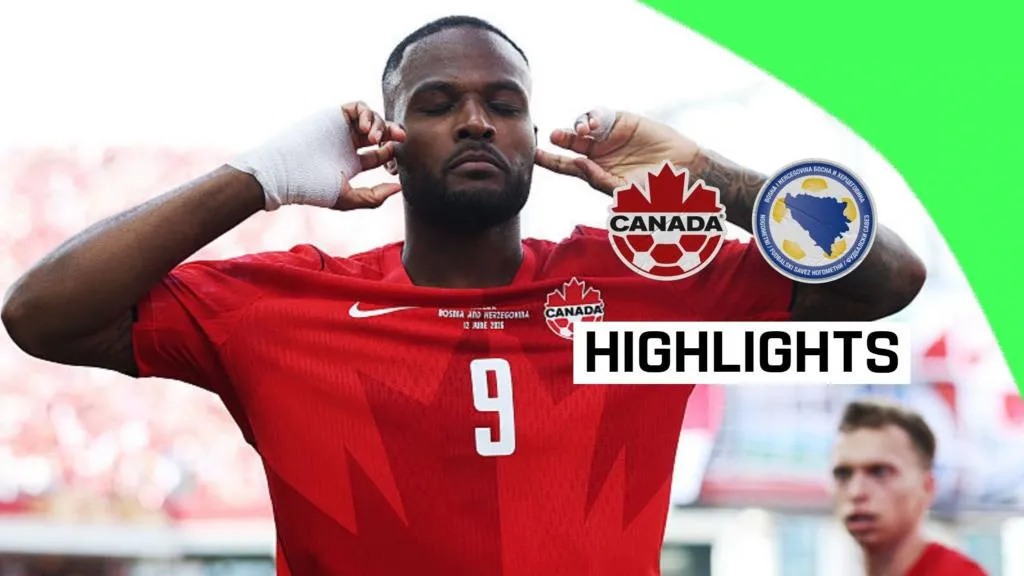
Cyle Larin came off the bench to score for Canada against Bosnia-Herzegovina, earning a 1-1 draw. The result gives the co-hosts their first ever World Cup point, a meaningful reset for stakeholders tied to tournament momentum.
Canada’s first World Cup point arrived in the most straightforward way possible: Cyle Larin came off the bench and scored against Bosnia-Herzegovina, turning the co-hosts’ match into a 1-1 draw. That goal matters because it is Canada’s first ever point at a World Cup, and in tournament football, “first” often defines the tone for everything that follows, from player confidence to how supporters and decision-makers interpret the next few games.
The “co-hosts” label is not just a fun fact. It is a spotlight and an expectation bundle. Hosting teams typically carry a mix of pressure and opportunity, with the expectation that the tournament will be a platform for growth and visibility, not a prolonged struggle that ends in early exit. So when Canada finally gets something on the board, even if it is “only” a draw, it changes the storyline. The match ends 1-1, but the real scoreboard is psychological and operational: they showed they can respond under pressure, and they secured a point that keeps the campaign alive in the only way football allows, by converting moments into math.
To understand why this kind of result reverberates beyond the pitch, it helps to translate how tournaments work. A World Cup is a short competition with high variance. There is no slow improvement window like in a league season where you can absorb a few bad weeks. Points are scarce, and momentum can amplify performance. When a team gets its first point, it tends to unlock more than one thing at once: belief in the game plan, patience with the coaching process, and a clearer sense of what is working. You can feel the difference between “we are still learning” and “we are extracting points,” even if the play on Saturday looked messy at times.
Larin’s role also underlines a key tournament principle: substitutes can be decisive when teams run out of clean legs and tactical options narrow. In World Cup settings, benches are not just depth. They are strategy, the ability to change the texture of a match when the starting plan is not producing the necessary edge. A late equaliser is the cleanest evidence of that. It tells everyone watching, including the technical staff, that the roster can impact games at the margins, and that the team is not trapped by its opening lineup.
For boards, sponsors, and executives connected to national teams, tournament outcomes are rarely only about results. They are also about maintaining engagement, protecting reputations, and preserving future leverage. When a co-host earns its first World Cup point, it can reduce reputational risk. It can also influence internal decision-making for the next match, including how aggressively staff and players lean into their training emphasis and how they manage risk in game management. A draw is not a trophy. But for a team at this stage, it can be a turning point that changes how resources and attention are allocated within the tournament environment.
There is also a structural, regulatory flavor to what this point represents, even though the source does not detail the rulebook. World Cup group play has a simple and ruthless mechanism: points decide standings. That means each match can be a compounding event. A first point can change tie-break scenarios, group math, and what “must win” looks like next. In practical terms, Canada can now approach upcoming fixtures with a slightly different burden. Instead of being forced entirely into recovery mode, they can plan for outcomes with more options.
Second-order implications are where this becomes interesting for the broader sports ecosystem. When a co-host avoids the psychological trap of prolonged failure, it can keep the narrative around the tournament broader than one team. Broadly, it supports broadcaster storytelling, fan participation, and the commercial ecosystem that relies on meaningful games continuing into the later stages. And for other teams in similar tournament positions, Canada’s first point is a reminder that “being behind” is not always permanent. Football often rewards the team that survives the early shock and capitalizes on the next controllable moment.
In the end, the BBC Sport summary is concise, but the signal is loud: Cyle Larin, coming off the bench, scored for Canada against Bosnia-Herzegovina to earn a 1-1 draw. That earns the co-hosts their first ever World Cup point. For anyone managing people, incentives, or expectations tied to a tournament, this is the kind of result that keeps the system from unraveling and gives the next week a fighting chance.
This story's Key Insights and Take-aways are locked.
Create a free account to unlock Executive Actions for one credit.
Register to UnlockAlways free for Executives Club members. Join the Club
More in Entertainment
West Ham co-chairs back BBC women, then hand Czech billionaire the biggest stake
Daniel Kretinsky and Vanessa Gold back the women speaking in the BBC investigation and approve an ownership deal with Daniel Kretinsky’s co-chairs' preferred outcome.

Death Stranding director Michael Sarnoski won’t retell the game, sets a film “corner of the world”
The A24 adaptation will use some game characters at most, but centers Sarnoski’s own story and worldbuilding.

Beeban Kidron: big tech needs its “tobacco moment” or risks children getting harmed
Director-turned-online safety campaigner argues platforms must act like tobacco regulators did, before tragedies force action.