
Dangote’s Kenya coastal refinery could redraw East Africa fuel trade
A Dangote Industries project off Kenya’s coast may shift regional supply, prices, and the pace of economic growth.
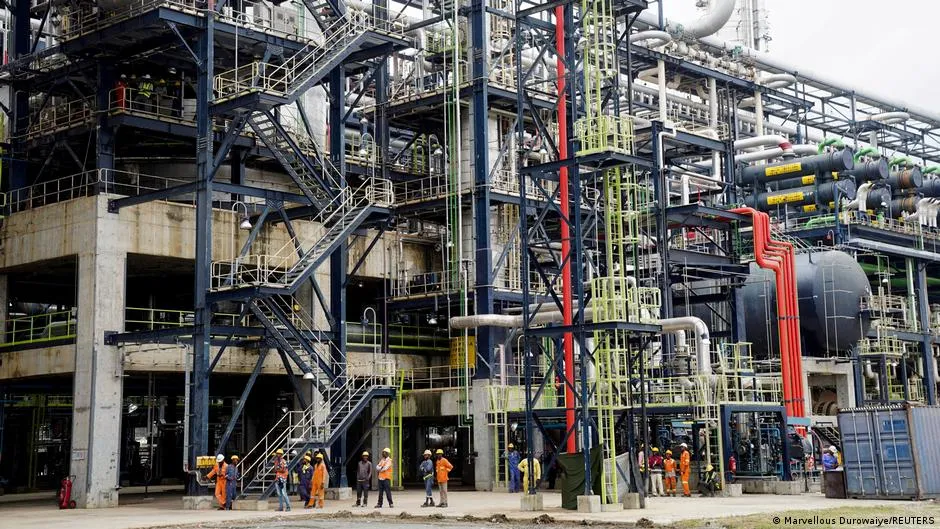
Dangote Industries is planning a massive refinery off Kenya’s coast, positioning Kenya as a potential new energy hub in Africa. For decision-makers, the project could reshape how fuel is supplied and traded across East Africa and influence investment and growth decisions.
A plan from Dangote Industries to build a massive refinery off Kenya’s coast is raising a big question in East Africa: is Kenya about to become Africa’s next major energy hub?
If it happens at the scale being discussed, the refinery would not just change Kenya’s energy balance. It could reshape fuel supply and trade flows across East Africa, which matters to governments, oil traders, manufacturers, logistics firms, and investors who plan around stable input costs and predictable imports.
To understand why this is such a pressure point, zoom out to how regional fuel markets typically work. Many countries in East Africa depend heavily on imported fuels, which means prices and availability are tied to global oil movements and shipping timelines. In that kind of environment, a large new refinery can become a magnet. It can reduce reliance on distant suppliers, alter routing and procurement strategies, and change how quickly firms can replenish inventory. Even when the refinery takes time to build and ramp up, the market tends to start repricing expectations around it early, because everyone wants to know who will control supply once capacity exists.
That is also why the “off Kenya’s coast” detail is consequential. Coastal siting is usually about access: easier import of crude and export of refined products, plus integration with maritime logistics. For Kenya, the upside is not only energy. A refinery at the center of the region can support related economic activity, from port operations and storage to shipping services and industrial users that need steady fuel and feedstock. The original framing from the source is straightforward, but the implication is broad: the project could reshape trade and economic growth across East Africa, not just the refinery’s own balance sheet.
Dangote Industries is essentially betting that regional demand and economics will justify building large-scale refining capacity in Kenya. For decision-makers, that is a capital allocation question. Big refinery projects often require long timelines, careful procurement, and regulatory clarity. Even small changes in permitting, licensing, environmental standards, or grid and water constraints can alter schedules and costs. And because refining is downstream infrastructure, the project has to fit into a wider system: where crude comes from, how products are distributed, what fuel standards apply, and how competition will respond when a new player enters.
Regulation and policy also matter because energy infrastructure is a strategic asset. Governments tend to care about energy security, affordability, and the distribution of benefits across the economy. If Kenya aims to position itself as a regional hub, decision-makers will likely focus on how the refinery interacts with existing import channels, how it affects pricing dynamics for consumers and businesses, and whether it can support broader industrial ambitions. Done well, a refinery can become a platform for further investment. Done poorly, it can lock in costs and create friction with existing players.
There is also an investor and board-level lens here. A project that could reshape fuel trade across East Africa forces competitors and counterparties to ask uncomfortable questions. Will their procurement strategy remain valid if supply becomes more local? Will shipping and storage contracts need rewriting? Will downstream margins compress or expand if refined product availability changes? These are second-order effects that show up later as renegotiated terms, restructured operations, or new partnerships.
So the strategic stakes for peers are clear. If Kenya becomes the energy hub the source is pointing toward, it could change where industrial activity concentrates and how cross-border trade is organized. Firms in logistics, power, manufacturing, and trading will have to model a future where fuel is less about distant imports and more about regional capacity. And for policymakers and capital allocators watching the region, the refinery plan is a test case: whether East Africa can transition from import dependence to domestic or regional refining-led growth.
In short, the Dangote Industries plan off Kenya’s coast is being framed as a potential pivot point for supply, trade, and economic growth across East Africa. For decision-makers, the question is not only “Will it be built?” It is “What happens to the regional energy map if it is?”
This story's Key Insights and Take-aways are locked.
Create a free account to unlock Executive Actions for one credit.
Register to UnlockAlways free for Executives Club members. Join the Club
More in Politics

Glacial collapse, not rain, killed 180 in Nepal's Himalayan flood
The Himalaya's extreme geography hid the true cause of Nepal's catastrophic flood, a glacial collapse that turned a geological battleground into a mass-casualty zone.

Iran’s Esmail Baghaei says Oman talks start shipping via Hormuz, not US talks yet
Temporary route plans with Oman aim to restart commerce while Tehran says Washington dialogue is not on the table.

Standards watchdog opens probe into Reform UK deputy leader Richard Tice over interests
The parliamentary standards commissioner says it began an investigation on 28 July into a possible undeclared interest.