

Danny Glover says Alzheimer’s diagnosis began soon after his 2022 honorary Oscar
The 79-year-old actor links his diagnosis timeline to an award milestone and details how symptoms have progressed.
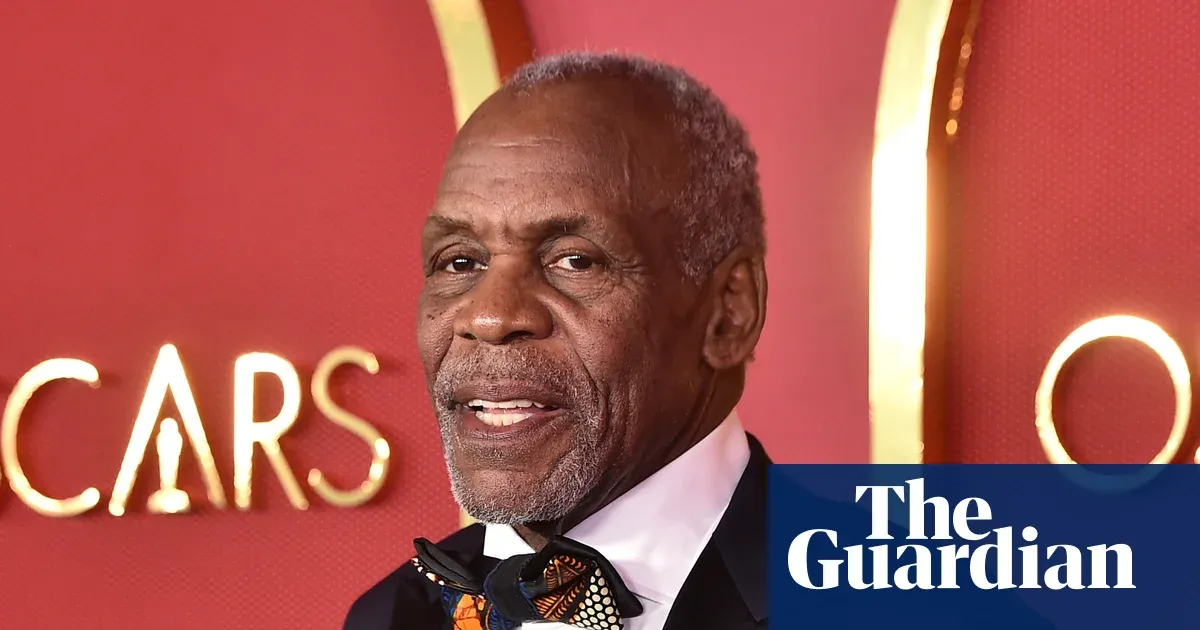
Danny Glover, 79, shared on NBC’s Today Show that he has been living with Alzheimer’s for several years. For leaders, his remarks spotlight how caregiving capacity, disclosure timing, and health uncertainty can reshape planning long before a public timeline.
Danny Glover is 79, and he has been living with Alzheimer’s for several years. In an interview on NBC’s Today Show, the Lethal Weapon actor revealed that he was diagnosed “not long” after receiving an honorary Oscar in 2022. He framed it as part of an ongoing life and work, saying, “I don’t feel like it’s the end of my life. There’s work to do. Your life continues.”
Glover also described how the condition has changed him over time. He said that as Alzheimer’s advances, “things are going to be different and changing,” and he noted that his movements, speech, and memory have slowed. He added that his family, saying “have got my back,” was helping him through. That combination matters: a public figure putting a real clock on diagnosis and then explaining what the clock looks like day-to-day.
For executives, the story lands far outside celebrity headlines. Health conditions, especially neurodegenerative diseases, often unfold in stages that do not neatly match a calendar. There is the initial diagnosis, then the slow operational friction: recall gets harder, speech patterns change, coordination becomes more effortful. In a workplace, those shifts can be invisible at first, then suddenly impossible to ignore. Even if the setting is not a corporate office, the operational theme is the same: performance, communication, and memory are the core inputs to decision-making and execution.
There is also a governance and incentive layer to disclosure. Glover said the diagnosis occurred “not long” after his 2022 honorary Oscar. That places the announcement timeline alongside an industry milestone that normally signals career momentum. In other words, the award is not a finish line, and the diagnosis does not wait for applause to end. For boards, producers, and any leadership team managing high-visibility talent, this raises a practical question: when someone’s role is tied to public moments, what planning happens behind the scenes so support is not reactive once symptoms become obvious?
The source does not name Glover’s exact diagnosis date, but it does confirm he has been living with Alzheimer’s for several years and that his symptoms include slowed movements, speech, and memory. That is enough to connect to the real-world constraints around continuity. In many organizations, continuity depends on documentation, delegation, and redundancy, particularly for functions that rely on verbal precision and recall. Alzheimer’s does not just affect an individual. It affects the surrounding network: who can interpret messages quickly, who can remember what was decided, who can maintain context when a person’s wording or timing changes.
Caregiving and support networks are the other big issue hiding in plain sight. Glover specifically credited his family for support, saying they “have got my back.” At an executive level, that phrase is not sentimental fluff. It points to a structural truth: people rarely manage chronic conditions alone, and the capacity of family or close support can determine how much functioning is sustained. For organizations, the second-order impact is that personal support needs can translate into professional constraints, scheduling changes, or the need for accommodations. Those pressures often show up before any formal workplace adjustment is made.
There is also a cultural implication for how public narratives shape expectations. Glover’s quote, “I don’t feel like it’s the end of my life,” is a refusal to frame illness as a shutdown switch. He emphasized “There’s work to do. Your life continues.” That messaging has real-world spillover. When influential figures publicly describe ongoing purpose, it can affect how communities talk about Alzheimer’s, how families discuss caregiving, and how institutions plan rather than panic. It can reduce the stigma that delays support and makes the first intervention happen too late.
Finally, this is a reminder that for leaders, uncertainty is not a theoretical risk. It is personal, biological, and time-sensitive. Even though Glover is an actor and not an executive running a company, his remarks are a live case study in the same categories decision-makers manage: timing, communication reliability, and the capacity of support systems. In a world where leadership is judged on output and clarity, hearing a 79-year-old describe slowed speech and memory, while still asserting “work to do,” should challenge every boardroom to ask a quieter question. If someone’s operating capabilities change, do you have plans that keep the mission moving, and do you support the person, not just the performance?
If you lead a team, manage a high-profile project, or govern an institution with human-centered work, Glover’s disclosure is both a human story and an operational signal. The diagnosis is not an abstract headline. It changes movements, speech, and memory. It changes how support works. And it changes what “continuing” actually requires.
This story's Key Insights and Take-aways are locked.
Create a free account to unlock Executive Actions for one credit.
Register to UnlockAlways free for Executives Club members. Join the Club
More in Entertainment

Sony Pictures takes international distribution for Nitesh Tiwari's two-part Ramayana
All territories outside India go through Sony, while Dharma Productions handles India distribution for the Rama and Sita epic.

Avatar sequel “Seven Havens” trailer drops at San Diego Comic-Con, signaling Paramount’s reset
Paramount unveils the first trailer for Avatar: Seven Havens, setting up what this reboot means for streaming and IP strategy.

Avatar: Seven Havens drops SDCC 2026 teaser footage, and it ties directly to Korra
The first real look lands months before release, and the SDCC teaser hints at how Korra’s story carries forward.