

Dario Gil tells sceptical researchers to give US AI and quantum plans a chance
As Nature reports, the US push for massive AI and quantum ambitions hinges on turning academic doubt into execution muscle.
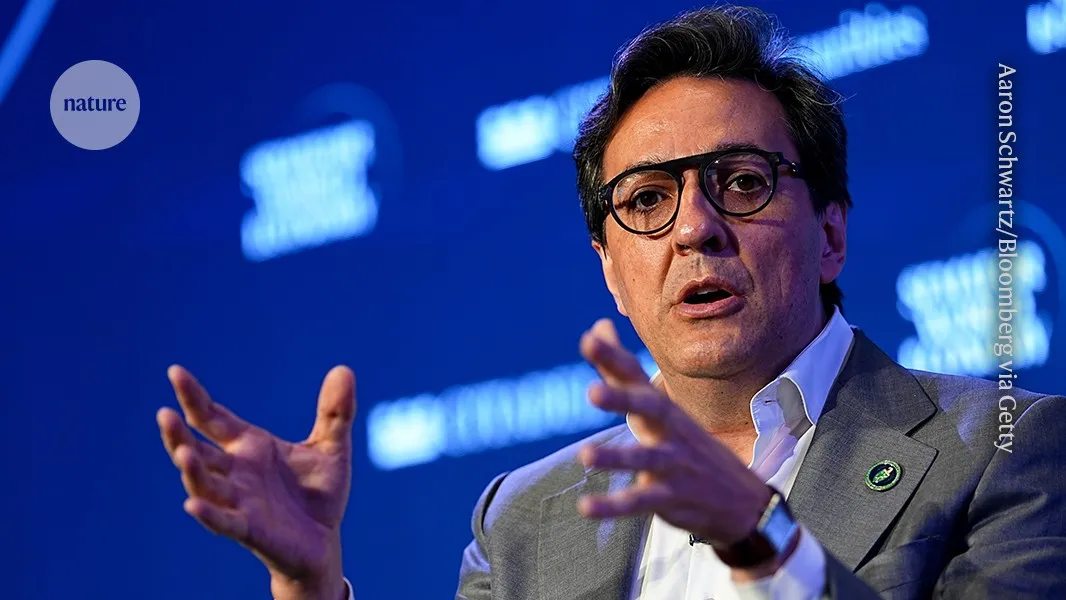
Dario Gil, associated with the massive US AI and quantum push, is asking researchers to keep an open mind. For decision-makers, the key consequence is whether skeptical research communities can be converted into reliable development and implementation.
Nature reports that Dario Gil knows researchers are sceptical of the massive US artificial-intelligence push. In the same context, he is urging scientists to keep an open mind, with the goal of making the country’s big AI and quantum ambitions reality.
That framing matters because it points to the actual bottleneck behind most high-profile tech agendas: not just computing resources, but trust and collaboration. If researchers dismiss the effort as unrealistic, political, or hurried, the pipeline of ideas, talent, and validation slows down. Gil’s job, as described by Nature, is essentially to prevent that collapse of momentum before it starts.
Zoom out for a second, and you can see why scepticism is predictable. Big AI pushes often arrive with huge expectations and short timelines, while academic and deep research communities are optimized for careful replication, slow-burn breakthroughs, and peer scrutiny. That mismatch creates friction: researchers ask, “Show me the science that holds up,” while policymakers and funders ask, “Show me the impact fast enough to matter.” Nature’s note that Gil “knows” about this scepticism signals he understands that the problem is not attention. It is credibility.
There is also an incentive and governance angle. Large national ambitions for AI and quantum usually pull in multiple stakeholders, including research labs, industrial teams, and public institutions. In any such multi-party effort, board dynamics and oversight become critical. When different groups have different definitions of success, scepticism becomes a rational risk management tool. Researchers worry that they might be pulled into politics, misaligned objectives, or deliverables that do not match technical reality. Meanwhile, decision-makers worry that hesitation equals lost time. Gil’s request to keep an open mind is a bid to align expectations early enough that institutions can coordinate without burning time on mistrust.
Then there is the regulatory backdrop, even if this Nature excerpt does not list specific agencies or rule changes. AI and quantum are both areas where regulation tends to follow capability, not the other way around. With AI, the regulatory question is often about safety, governance, and accountability, and with quantum it is usually about strategic capability, security concerns, and the pace of deployment. In practice, regulators and policymakers often need real-world progress to justify standards, and researchers need clarity about what will be evaluated, audited, or protected. Skepticism can therefore turn into a compliance problem: if research communities think the program is underspecified, they can withhold engagement or push back.
Second-order implications are where executives should pay attention. When a prominent figure like Dario Gil calls out researcher scepticism, he is implicitly admitting that execution depends on more than funding and hardware. It depends on whether researchers believe the program will respect scientific process, not just announcements. For boards, this matters because the “risk register” for AI and quantum initiatives should include institutional buy-in and the credibility of the roadmap. A well-funded program can still stall if technical communities do not collaborate.
It also has spillover effects across the ecosystem. If the massive US push gains traction with credible research partners, it can shift global talent allocation, set benchmark timelines, and influence where capital goes next. Conversely, if scepticism remains unmanaged, investors and industrial leaders face a frustrating scenario: they build on assumptions that academic validation cannot meet quickly. That leads to schedule risk, reputational risk, and potentially regulatory risk if public expectations outrun what can be demonstrated safely.
Nature published the piece online on 29 June 2026, with the DOI 10.1038/d41586-026-02023-4. The takeaway for executives in adjacent roles, whether they are funding AI labs, building infrastructure, or overseeing quantum R&D, is direct: national-scale AI and quantum ambitions live or die on trust between policymakers and researchers. Gil’s request for an open mind is not a platitude. It is a recognition that the path to “make them reality” requires turning scepticism into shared execution, one research community at a time.
This story's Key Insights and Take-aways are locked.
Create a free account to unlock Executive Actions for one credit.
Register to UnlockAlways free for Executives Club members. Join the Club
More in Technology

Nvidia's $89B data center quarter: the 9 companies cashing in
The AI buildout is minting fortunes beyond GPUs, and memory, cloud, and cooling suppliers are riding the same wave.

Google quietly links your phone number to every Android account on your SIM
Adding a SIM now ties your phone number to all Google accounts - and future accounts inherit it. Here's the security and privacy stakes.

Hijacker AI 'Skynet mode' runs 100,000 attack steps against exposed models
Symantec caught a criminal AI agent that borrows other models, steals data, and mines crypto; the only relief is no confirmed victims yet.