
David Holz unveils Midjourney’s first hardware: a full-body ultrasound scanner
Midjourney Medical’s “The Midjourney Scanner” moves beyond cat images, targeting MRI-like image quality and daily checkups.
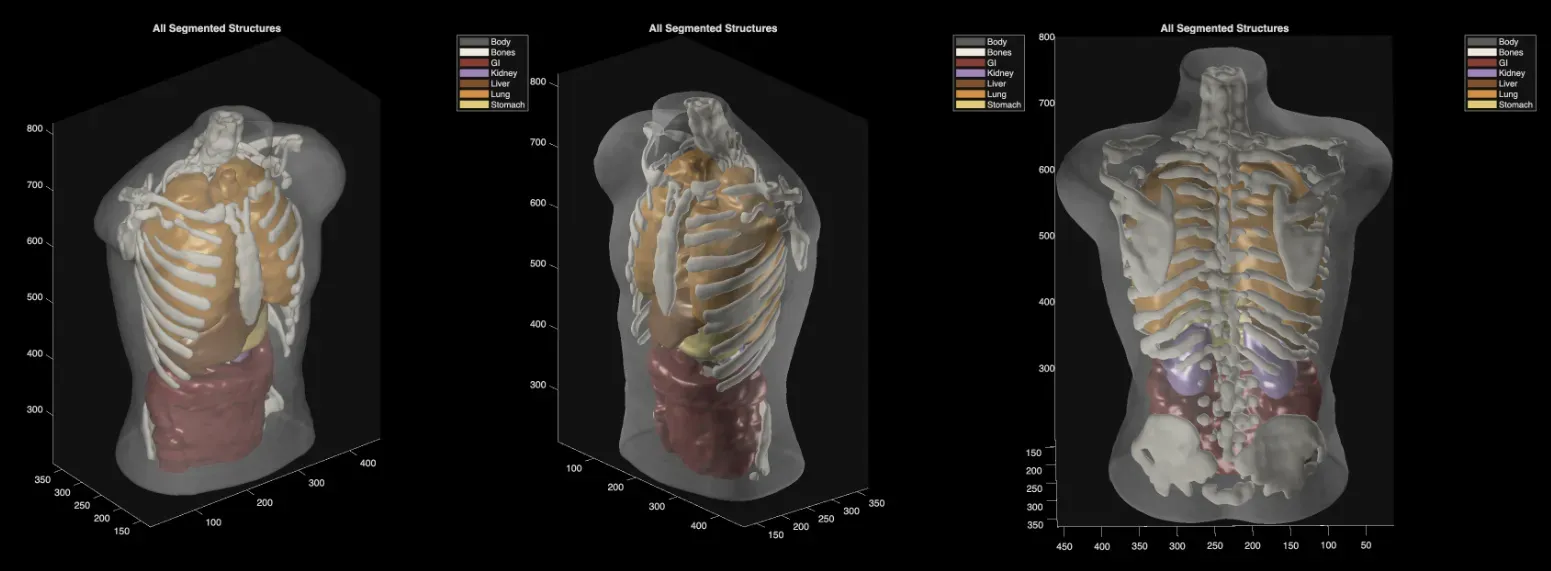
Midjourney CEO David Holz just debuted Midjourney Medical’s first hardware product, The Midjourney Scanner, an ultrasound-based full-body scanner. For decision-makers, it signals an AI company betting on medical imaging hardware and an imaging cadence that could reshape how clinicians and consumers think about scanning.
Midjourney CEO David Holz did not just show a new AI prompt. He unveiled the company’s first hardware product: The Midjourney Scanner, a full-body ultrasound scanner designed to look inside your body with something closer to the frequency of everyday checking than occasional imaging.
The basic pitch is straightforward but potentially huge. The scanner uses a ring of sensors to capture vertical slices of the inside of your body, then assesses the composition of muscle, fat, bone, and organs. Holz also said the ideal use case is once a year or even every day, aiming for image quality “comparable to MRI in many ways.” That is a sharp departure from the “cat pictures” Midjourney is known for, and it reframes the company’s identity from image generation to imaging technology.
There are two tracks to understand here. Track one is product ambition: ultrasound is typically associated with specific use cases in clinical workflows, often centered around anatomy that is easy to image and scenarios where sound waves are a practical fit. Track two is an AI-adjacent bet: Holz positions The Midjourney Scanner as a system that could deliver MRI-like quality “in many ways,” which implies not just hardware, but also the ability to interpret and produce clinically meaningful reconstructions from ultrasound data. In other words, this is not presented as a standalone gadget. It reads like the beginning of a full imaging stack, where data capture, segmentation, and validation all matter.
Even the way the debut is described underlines that validation mindset. The Verge notes an image captioned as “A scan of an imaging phantom, segmented to validate how cleanly structures separate under controlled conditions.” That phrase is a quiet tell. Imaging phantoms are controlled objects used to test whether boundaries and structures can be distinguished reliably, which is exactly the kind of evidence you need when you want an imaging system to be more than a demo. Segmentation is also central to how many modern medical imaging workflows translate pixels into something clinicians can measure and track over time.
This is where regulation and reimbursement inevitably come into the conversation, even though the source excerpt focuses on the unveiling. Full-body scanning at high frequency touches multiple regulatory questions: what claims are being made about diagnostic accuracy, what kind of clinical outputs are produced, and how the system performs across different body types and conditions. In the real world, ultrasound devices and software used for medical decisions must satisfy strict requirements. Decision-makers should assume the path will not be “hardware launch equals clinical impact.” Instead, it is more likely to look like a stepwise journey, starting with technical performance and constrained use cases, then expanding as evidence accumulates.
The other constraint is operational. Holz mentioned plans to build a San Francisco spa, which he admitted is “a bit different” from Midjourney’s cat-picture brand. That detail matters because it suggests a go-to-market concept that blends consumer-facing experience with medical-adjacent capabilities. If you want scans once a year or every single day, you need a process that feels accessible, not like a hospital appointment. But you also need to keep the boundary between wellness and healthcare clear, because the moment you cross from “informational imaging” into “medical diagnosis,” the stakes, oversight, and liability get real.
Strategically, this move also highlights how boards and investors should think about AI companies expanding downstream. Most AI businesses can scale distribution with software. Medical imaging hardware is harder. It requires manufacturing, quality control, and the slower cadence of validation. But it also offers a potential moat: if you can pair a capture system with segmentation approaches and build confidence in repeatability, you can become part of a recurring clinical or consumer routine. That is a very different economic engine than generating one-off images.
If Holz’s framing holds, the second-order implication is not just “new scanner, cool tech.” It is a potential shift in the scanning cadence itself, from sporadic imaging to a more frequent rhythm. That could change how data is generated for longitudinal monitoring and how people and clinicians interpret changes over time. The longer-term competitive pressure could ripple outward to traditional imaging device companies, medical software vendors, and even AI image companies that have so far stayed in the safer world of non-medical outputs.
For executives in adjacent sectors, the message is simple: Midjourney is no longer only making images. With The Midjourney Scanner, it is trying to build an imaging system, chase MRI-like quality “in many ways,” and explore an accessible entry point through a planned San Francisco spa. Whether it becomes a regulated clinical tool, a wellness-adjacent product, or both, the direction is clear, and it is moving from pixels on a screen to scans inside the body.
This story's Key Insights and Take-aways are locked.
Create a free account to unlock Executive Actions for one credit.
Register to UnlockAlways free for Executives Club members. Join the Club
More in Technology

Nvidia's $89B data center quarter: the 9 companies cashing in
The AI buildout is minting fortunes beyond GPUs, and memory, cloud, and cooling suppliers are riding the same wave.

Google quietly links your phone number to every Android account on your SIM
Adding a SIM now ties your phone number to all Google accounts - and future accounts inherit it. Here's the security and privacy stakes.

Hijacker AI 'Skynet mode' runs 100,000 attack steps against exposed models
Symantec caught a criminal AI agent that borrows other models, steals data, and mines crypto; the only relief is no confirmed victims yet.