

Denshattack! turns rail-riding into anti-establishment trick therapy
A dystopian Japan platformer with kickflipping trains, Tony Hawk-style grinding, and Jet Set Radio energy.
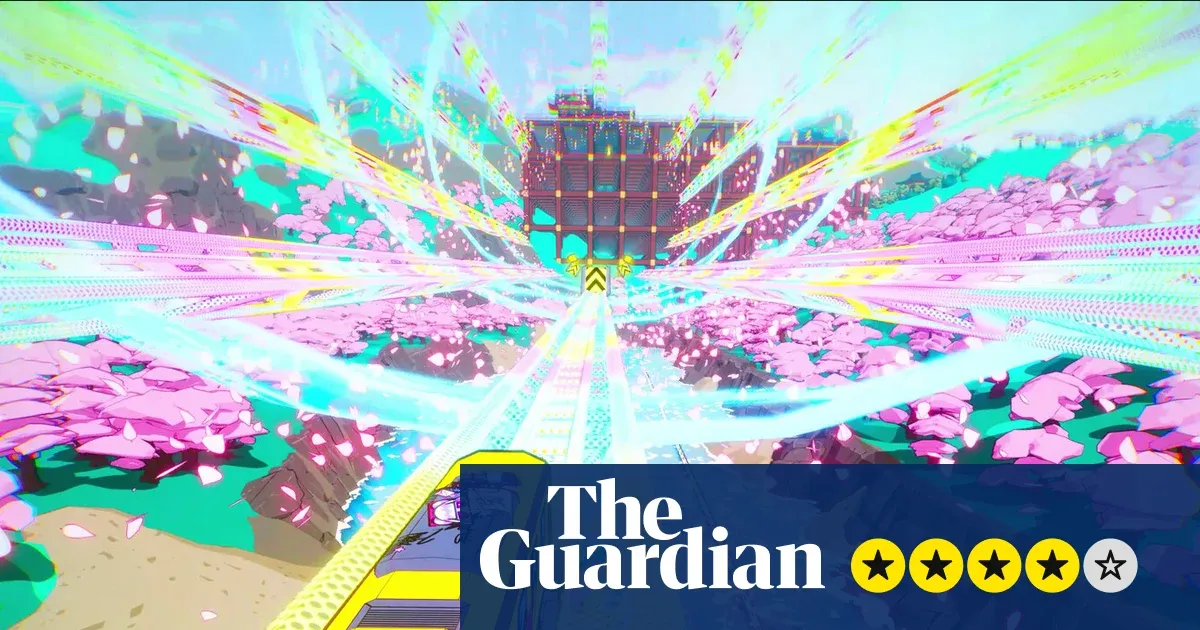
Undercoders’ Denshattack! is a rail riding game built around kickflipping trains in a dystopian future Japan, starring naive upstart Emi. For decision-makers watching what players actually reward, it is a clear signal that “weird” premises plus sharp mechanics can still scale.
Every now and again, a game premise is so outrageous you stop moving for a second. Denshattack! is exactly that. It is a rail riding game where you kickflip trains across a dystopian future Japan, and it is as weird as it is exhilarating.
The pitch matters because Denshattack! is not just being strange for attention. It sets up a specific world and a specific player fantasy: a post-climate disaster Japan where people live in corporate-owned domed cities in “air-conditioned, ignorant comfort,” while outside, broken infrastructure and rival gangs turn the ruins of the rail network into a battleground. Into that chaos steps Emi, a naive upstart with one goal: become the best Denshattacker there is, one sick nosegrind at a time. That is the kind of straightforward motivation that keeps the chaos playable.
Now the real question for anyone funding, partnering, or building in games: how do you make an absurd mechanic feel tight enough to keep people coming back? Undercoders’ answer is to take the grinding, flipping, and spinning joy of the Tony Hawk’s Pro Skater series and combine it with the anti-establishment, counter-cultural spark associated with Jet Set Radio. That mix is the design logic behind the game’s identity. You get a system built for trick execution, but you also get a tone built for rebellion. It is less “stunt show” and more “stunt show with a point.”
In games, the best mechanics do not just entertain. They create a language. Denshattack! is described as pushing on-rails platforming to an extreme conclusion, with an entire dictionary of tricks. That is the long-term retention play hiding in plain sight. The more vocabulary a movement system has, the more players can set personal goals that feel like mastery, not chores. In a market where live service cycles and content cadence often dominate boardroom conversations, a trick library can be a quieter but durable engine for replay.
And then there is the roster of rivals, which is where the game’s tone becomes more than a skin. The source frames these opponents as coming from “the history of Japanese misfits,” with fights against ageing rockabillies and violent girl gangs, “without a shred of judgment.” For players, that signals a respect for character-driven subcultures. For studios and investors, it is also a reminder that authenticity cues matter. When a game frames its community as something messy and specific rather than generic “cool kids,” it tends to earn stronger identity loyalty, the kind that shows up in word of mouth.
There is also the staging of conflict. Denshattack! imagines a country where corporate comfort and dystopian neglect coexist. The domes keep people insulated. Outside, infrastructure has decayed, and the rail network becomes both lifeline and turf. That matters because it changes how you read the play loop. Tricks are not just goals. They are survival-style movement in a world where systems are broken and power is contested. That is a theme players tend to feel in their hands, not just on a loading screen.
Platform presence is another real-world consideration. The game is on PC, PS5, Xbox Series X/S, and Nintendo Switch 2. For decision-makers, that breadth reduces the risk of betting everything on a single audience segment. It also suggests Undercoders is targeting the mainstream console crowd while keeping the counter-cultural design identity intact, which is often where indie-sized creativity gets diluted. Here, the source describes it as “colourful, counter-cultural and captivating,” implying the art direction and tone are not being sanded down.
If you are operating in the games ecosystem, the second-order takeaway is not just “people like cool tricks.” It is that “outlandish premise plus coherent mechanics plus a rebellious thematic spine” is a repeatable formula. Board dynamics in publishing and funding often chase certainty, but certainty is not what this game leans on. It leans on craft. The way it borrows the most resonant parts of Tony Hawk’s Pro Skater and fuses them with the attitude associated with Jet Set Radio is a reminder that successful hybrids can still feel original when they share a common heartbeat. Denshattack! is telling players: the rail is for more than getting from A to B. It is for expressing who gets to take up space in a broken world.
This story's Key Insights and Take-aways are locked.
Create a free account to unlock Executive Actions for one credit.
Register to UnlockAlways free for Executives Club members. Join the Club
More in Entertainment

12TB Steam 'teraleak' goes beyond Valve: GTA 3, Mafia 2 prototypes exposed
A 12-terabyte dump of Steam data reveals prototypes and builds of third-party classics like GTA 3 and Mafia 2, plus unreleased Valve content, rewriting game history.

LinkedIn's romance problem: 1 in 4 workers say dating on it is fair game
A new survey shows a quarter of U.S. employees treat the professional network as fair game for romance, even as LinkedIn bans it and removes hundreds of thousands of offending posts.

Enhypen's first No. 1 album breaks K-pop's Billboard 200 streak
The K-pop group's 98,000-unit debut tops the chart while Dolly Parton's catalog reentry shows how death reshapes streaming.